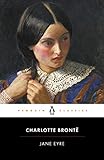
Pride and Prejudice vs Jane Eyre: Which First?
Two of the most assigned and most loved novels in British literature — compared on tone, romance, difficulty, and which one to pick up first.

The two novels most assigned in British literature surveys and most pressed into strangers’ hands by devoted readers are, by most accounts, Pride and Prejudice by Jane Austen and Jane Eyre by Charlotte Brontë. They were published thirty-three years apart — Austen’s novel in 1813, Brontë’s in 1847 — and the distance between them is not only one of decades but of sensibility, form, and what each writer believed the novel was for.
Both are love stories. Both centre on intelligent women navigating a world designed to limit them. Both have given literature some of its most enduring characters: Elizabeth Bennet and Mr Darcy, Jane Eyre and Edward Rochester. Both have been read continuously since publication, adapted into more versions than anyone can count, and argued over by readers who feel with unusual intensity that their preferred novel has been underrated in favour of the other.
What they do not share is almost everything else. Pride and Prejudice is a comedy of manners written in polished third-person irony, concerned with the social rituals of marriage, money, and class in Regency England. Jane Eyre is a Gothic novel written in urgent first-person confession, concerned with the moral and emotional life of a woman determined to preserve her selfhood at any cost. Reading both, in either order, is one of the essential experiences that British fiction offers.
Quick Comparison
| Pride and Prejudice | Jane Eyre | |
|---|---|---|
| Author | Jane Austen | Charlotte Brontë |
| Year | 1813 | 1847 |
| Protagonist | Elizabeth Bennet | Jane Eyre |
| Romance type | Enemies-to-lovers; comedy of manners | Gothic romance; moral drama |
| Tone | Witty, ironic, satirical | Intense, passionate, confessional |
| Difficulty | Moderate (requires tuning to irony) | Moderate (Gothic density; introspective) |
| Length | ~430 pages | ~500 pages |
Pride and Prejudice: What Makes It Work
Pride and Prejudice opens with one of the most famous sentences in English fiction — “It is a truth universally acknowledged, that a single man in possession of a good fortune, must be in want of a wife” — and the joke is already running. The sentence sounds like a fact. It is a diagnosis. Austen is telling you, in her most reasonable tone of voice, exactly how absurd the world she is about to describe actually is.
Elizabeth Bennet is the second of five daughters in a family whose modest estate is entailed away from the female line, which means that the Bennet girls must marry or face genteel poverty when their father dies. Their mother, Mrs Bennet, understands this with perfect clarity and pursues eligible husbands for her daughters with the focused energy of someone who has correctly identified the only resource available to her. Elizabeth finds this mortifying. The reader finds it hilarious. Austen manages to make both responses simultaneously correct.
What makes Pride and Prejudice work, at the deepest level, is the Darcy-Elizabeth dynamic. They meet, dislike each other, misread each other comprehensively, and then — through a series of carefully orchestrated humiliations and revelations — revise every assumption they have made. Darcy is proud in a way that reads as contempt. Elizabeth is prejudiced in a way that reads as clear-sightedness. Neither is entirely wrong about the other; both are wrong about what matters. The architecture of their relationship — pride meeting prejudice, each forcing the other toward self-knowledge — is so perfectly constructed that virtually every enemies-to-lovers romance written since has operated in its shadow.
The social satire is inseparable from the love story. Austen uses the marriage plot to expose the economic realities facing women who had no other means of securing their futures, but she does it with such lightness that the exposure feels like entertainment rather than argument. Mrs Bennet’s obsessive matchmaking, Mr Collins’s pompous self-importance, Lady Catherine’s baronial condescension — these are comedy, but they are also documentation. The world Austen describes is funny precisely because it is real, and real precisely because it is so small, so constrained, so entirely organised around the question of who will marry whom and for how much.
Jane Eyre: What Makes It Work
Jane Eyre begins with a child locked in a room. Jane Eyre is ten years old, an orphan tolerated by her aunt’s household, and she has been punished for fighting back against her bullying cousin. In the Red Room — the room where her uncle died — she sees, or thinks she sees, something supernatural. The terror is real. The injustice is real. And the reader understands immediately that this is not the kind of novel where the protagonist is going to accept her situation with good grace.
The novel follows Jane from that childhood through the miseries of Lowood Institution, a charity school where deprivation and cruelty are administered under the guise of religious discipline, to her employment as a governess at Thornfield Hall, the estate of the brooding, ugly, intellectually magnetic Edward Rochester. Thornfield is a Gothic house with a secret in its attic. Rochester is a man with a past he has spent years trying to escape. Their relationship — employer and employee, unequal in every social sense, equal in intelligence and force of character — is the novel’s central drama.
What Brontë gave literature in Jane Eyre is the first-person female voice as moral authority. Jane narrates her own story directly to the reader — “Reader, I married him” is the most famous address in Victorian fiction — and that directness is inseparable from her selfhood. She will not be treated as less than she is. When Rochester, testing her in an early conversation, tells her that her face is not beautiful, she tells him that his manners require improvement. When he later proposes to her, she cannot quite believe it is real, and when she discovers that it cannot be — that Thornfield’s secret makes the marriage impossible — she leaves, despite loving him, because she will not compromise her integrity for any comfort, however great.
This is the proto-feminist spine of the novel. Jane is not passive. She is not rescued. She makes choices, including painful ones, based on her own moral sense rather than on what society expects of her or what Rochester desires from her. For a novel published in 1847, this is remarkable. Brontë’s contemporaries recognised it immediately; the novel was both celebrated and attacked for the unseemly independence of its heroine.
The Gothic atmosphere — the locked room at Lowood, the fire at Thornfield, the laugh in the corridor, the figure at Rochester’s bedside — is not decoration. It externalises Jane’s psychological state. The novel’s famous moments of supernatural suggestion are partly ghost story and entirely interior: the threats Jane faces from without mirror the pressures she faces from within.
Key Differences
The most fundamental difference is tonal. Pride and Prejudice is written from a position of ironic distance. Austen watches her characters with a clarity that is never cruel but is never sentimental. The narrator knows more than the characters, and the reader is invited into that knowledge. This distance is itself a form of argument: Austen’s world is so precisely observed because observation — cool, intelligent, undistorted by wishful thinking — is what she values most.
Jane Eyre is written from a position of radical intimacy. There is no distance between narrator and protagonist; Jane tells her story in retrospect but with the full emotional heat of having lived it. Brontë is not interested in social panorama. She is interested in what it feels like to be this particular person, with this particular history, making these particular choices. The claustrophobic intensity is the point.
On female agency, the two novels reach similar conclusions through completely different routes. Austen’s Elizabeth secures her independence through wit, social intelligence, and the fortunate fact that the man who loves her is rich enough to make the marriage on her terms. She operates within the social system and wins. Brontë’s Jane secures her independence by repeatedly refusing to accept the terms the social system offers — at Lowood, at Thornfield, at Moor House — and eventually creates new terms of her own. She operates against the social system and also wins, though at greater cost.
What each novel says about women in the 19th century is therefore different in emphasis. Austen describes the limitations with satirical precision and shows how a brilliant woman might navigate them successfully. Brontë describes the cost of refusing to accept those limitations and insists that a woman’s interior life — her conscience, her self-respect, her capacity for passion — is the only thing worth protecting.
Neither argument is complete without the other.
Which Should You Read First?
Read Pride and Prejudice first.
Pride and Prejudice is the lighter entry point. It is shorter, funnier, and its pleasures are more immediately accessible. The social comedy works on first contact; the romance is satisfying in the way that all perfectly executed genre templates are satisfying; and Austen’s ironic tone — once you have found it — makes the novel feel like spending time with the sharpest person in the room. Most readers finish it quickly and want more.
Jane Eyre rewards coming to it with some context. Knowing what the conventional marriage plot looks like — having experienced it at its most accomplished — makes Jane’s rejection of its terms more legible. Rochester’s brooding intensity, Thornfield’s Gothic weight, and the novel’s insistence on interior moral life over social performance all register more powerfully if you have first seen what Austen’s alternative looks like.
That said, readers who know they are drawn to atmosphere, intensity, and the Gothic tradition should not feel obliged to start with the lighter novel. Jane Eyre stands completely on its own, and first-time readers who want passion rather than wit will find it immediately compelling.
The case for Pride and Prejudice first is not that it is better. It is that it is the easier entry into this specific literary world — and that Jane Eyre, read second, will feel like an answer to a question Pride and Prejudice raises.
What to Read After Both
Having read both, you have the two poles of the 19th-century British novel: social comedy and Gothic intensity. The books below extend both traditions.
Wuthering Heights by Emily Brontë (1847) takes the Gothic elements of Jane Eyre to their most extreme conclusion. Where Rochester is dark and difficult but ultimately redeemable, Heathcliff is something else entirely — a force of nature, an embodiment of obsession, a romantic hero who is also genuinely monstrous. Published the same year as Jane Eyre, it is the essential companion.
Sense and Sensibility by Jane Austen (1811) offers the social comedy of Pride and Prejudice with a sharper emotional edge. The Dashwood sisters — one all feeling, one all control — dramatise the tension between passion and reason that Austen’s novels are always negotiating. It is Austen at her most structurally interesting.
Emma by Jane Austen (1815) is, for many readers, Austen’s greatest novel — a comedy of self-deception built around a heroine who is wrong about almost everything and knows it by the end. Emma Woodhouse is a more complicated character than Elizabeth Bennet, and the novel’s irony is more deeply embedded. Read it when you are ready for Austen at full stretch.
Villette by Charlotte Brontë (1853) is widely regarded as Brontë’s masterpiece. Darker, stranger, and formally more daring than Jane Eyre, it follows Lucy Snowe — a heroine who makes Jane look socially confident — through a story of displacement, unrequited feeling, and psychological intensity that pushes the Victorian novel toward something that feels almost modern. It is a harder read than Jane Eyre and a more rewarding one.
The Tenant of Wildfell Hall by Anne Brontë (1848) is the most direct of the Brontë novels on the question of female independence. Helen Graham’s decision to leave her dissolute husband was genuinely shocking in 1848 and reads with surprising power today. It rounds out the Brontë canon and answers the question of what Austen and Charlotte Brontë left implicit.
Frequently Asked Questions
Is Pride and Prejudice or Jane Eyre better?
Neither novel is objectively superior — they are doing entirely different things. Pride and Prejudice is funnier, more socially brilliant, and gives readers a romance so perfectly constructed that every enemies-to-lovers story since owes it a debt. Jane Eyre is more emotionally intense, more morally urgent, and more interested in the interior life of its protagonist than in the social world surrounding her. Readers who want wit and irony tend to prefer Austen. Readers who want passion and Gothic atmosphere tend to prefer Brontë. Most serious readers of British literature love both.
Which book is harder to read?
Neither novel is genuinely difficult, but they present different challenges. Pride and Prejudice requires tuning into Austen’s ironic register — her most important observations are often delivered with a straight face, and missing the tone means missing the comedy. Jane Eyre is more direct in its emotion and easier to follow as a plot, but its Gothic atmosphere and lengthy moral reflections in the middle sections slow some readers down. Most readers find Pride and Prejudice the faster read; Jane Eyre is slightly longer and more intense.
Which is the better romance?
They are different kinds of romance. Darcy and Elizabeth’s relationship is the template for the enemies-to-lovers arc — built on misunderstanding, pride, and the gradual revision of first impressions, it resolves into one of the most satisfying partnerships in fiction. Rochester and Jane’s romance is darker and more complicated: it is built on power imbalance, Gothic mystery, and Jane’s fierce refusal to compromise her moral integrity. If you want romantic comedy, Pride and Prejudice wins. If you want romantic intensity and moral drama, Jane Eyre is unmatched.
What should I read after Pride and Prejudice and Jane Eyre?
The most natural next step from Pride and Prejudice is Sense and Sensibility or Emma — both offer the same social comedy with different heroines and different problems. From Jane Eyre, the essential next read is Wuthering Heights by Emily Brontë, which takes the Gothic atmosphere and romantic obsession to their darkest possible conclusion. Villette, Charlotte Brontë’s final novel, is widely regarded as her masterpiece — more intimate, more psychologically complex, and more formally daring than Jane Eyre. The Tenant of Wildfell Hall by Anne Brontë rounds out the Brontë canon and addresses female independence with remarkable directness for 1848.
Books Like Pride and Prejudice
For novels with Pride and Prejudice’s wit, romantic tension, and social comedy, see our Books Like Pride and Prejudice guide.
Books Like Jane Eyre
For novels with Jane Eyre’s Gothic atmosphere, independent heroine, and psychological depth, see our Books Like Jane Eyre guide.
For the Best Fiction Books
For the definitive guide to fiction — the greatest novels across literary fiction, classics, and contemporary writing — see our Best Fiction Books of All Time list.
Affiliate disclosure: Links on this site are affiliate links. We earn a small commission at no extra cost to you. This does not influence our editorial recommendations.
Frequently Asked Questions
Is Pride and Prejudice or Jane Eyre better?
Neither novel is objectively superior — they are doing entirely different things. Pride and Prejudice is funnier, more socially brilliant, and gives readers a romance so perfectly constructed that every enemies-to-lovers story since owes it a debt. Jane Eyre is more emotionally intense, more morally urgent, and more interested in the interior life of its protagonist than in the social world surrounding her. Readers who want wit and irony tend to prefer Austen. Readers who want passion and Gothic atmosphere tend to prefer Brontë. Most serious readers of British literature love both.
Which book is harder to read?
Neither novel is genuinely difficult, but they present different challenges. Pride and Prejudice requires tuning into Austen's ironic register — her most important observations are often delivered with a straight face, and missing the tone means missing the comedy. Jane Eyre is more direct in its emotion and easier to follow as a plot, but its Gothic atmosphere and lengthy moral reflections in the middle sections slow some readers down. Most readers find Pride and Prejudice the faster read; Jane Eyre is slightly longer and more intense.
Which is the better romance?
They are different kinds of romance. Darcy and Elizabeth's relationship is the template for the enemies-to-lovers arc — built on misunderstanding, pride, and the gradual revision of first impressions, it resolves into one of the most satisfying partnerships in fiction. Rochester and Jane's romance is darker and more complicated: it is built on power imbalance, Gothic mystery, and Jane's fierce refusal to compromise her moral integrity. If you want romantic comedy, Pride and Prejudice wins. If you want romantic intensity and moral drama, Jane Eyre is unmatched.
What should I read after Pride and Prejudice and Jane Eyre?
The most natural next step from Pride and Prejudice is Sense and Sensibility or Emma — both offer the same social comedy with different heroines and slightly different problems. From Jane Eyre, the essential next read is Wuthering Heights by Emily Brontë, which takes the Gothic atmosphere and romantic obsession to their darkest possible conclusion. Villette, Charlotte Brontë's final novel, is widely regarded as her masterpiece and rewards readers who want more Jane Eyre — more intimate, more psychologically complex, and more formally daring. The Tenant of Wildfell Hall by Anne Brontë rounds out the Brontë canon and addresses female independence with remarkable directness for 1848.