Books Like Pride and Prejudice: 11 Witty Romances
If Elizabeth Bennet's sparkling wit and Darcy's slow-burn reversal won you over, these novels deliver the same pleasure.
Jane Austen published Pride and Prejudice in 1813, and in more than two hundred years no one has written a better enemies-to-lovers novel. That is not sentiment — it is a literary fact worth sitting with. The relationship between Elizabeth Bennet and Fitzwilliam Darcy is the template from which most romantic tension in English-language fiction descends: two people who see each other too clearly, too early, and too uncharitably, and who have to dismantle their own pride and prejudice before they can admit what they actually feel. The novel invented a structure that the romance genre is still mining.
What makes it more than a love story is Austen’s voice. The irony is so finely calibrated that readers two centuries later argue about which passages are satirical and which are sincere — which is precisely the point. Elizabeth uses wit the way other people use armor. The marriage market of Regency England is a system designed to reduce women to their dowries and their faces, and Austen’s response is to find the whole arrangement both oppressive and absurd, and to write that tension into every sentence. Mrs. Bennet is ridiculous and she is also not wrong.
The books on this list share at least one of Pride and Prejudice’s defining qualities: sparkling prose with a satirical edge, romantic tension built on genuine conflict rather than misunderstanding, social observation that treats manners as a form of moral inquiry, or heroines who are too intelligent for the rooms they are forced to occupy. Not all of them have happy endings. Not all of them are set in drawing rooms. But all of them understand what Austen understood: that how people behave in society tells you everything about who they are.
The Other Jane Austen Novels Worth Your Time
#1 — Emma by Jane Austen
Emma is Austen’s most technically accomplished novel and arguably her most interesting heroine — interesting specifically because Emma Woodhouse is wrong about nearly everything for three hundred pages and the reader is invited to enjoy it. Emma is handsome, clever, and rich, and she has convinced herself that this entitles her to manage other people’s romantic lives. The comedy of her sustained, confident misreading of social situations is finely controlled, and the reveal that she has been misreading her own feelings is handled with more psychological precision than almost anything else in the period. Readers who want Austen’s full register should read Emma second.
#2 — Persuasion by Jane Austen
Austen’s final completed novel is the one she wrote when she stopped being amused. Anne Elliot allowed herself to be persuaded out of an engagement to Frederick Wentworth at nineteen, and eight years later he walks back into her life, successful and uninterested in forgiving her. Persuasion is a novel about regret and about the courage required to correct a mistake — quieter than Pride and Prejudice, more elegiac, and in its final chapters as emotionally forceful as anything Austen wrote. The letter Wentworth sends Anne near the end is the most famous declaration in all of Austen, and it earns it.
Victorian Social Novels With the Same Sharp Edge
#3 — Sense and Sensibility by Jane Austen
The Dashwood sisters — Elinor, who governs herself, and Marianne, who governs no one — are thrown into reduced circumstances when their father dies and his estate passes to their half-brother. The novel is a study in how differently two sisters can inhabit the same predicament, and how the woman who appears to feel less may be feeling the most. Austen is more interested in Elinor than the title suggests. The romantic plots are more conventional than Pride and Prejudice’s but the social observation is equally sharp, and the depiction of the Dashwoods’ economic vulnerability is the novel’s real subject.
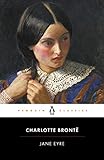
#4 — Jane Eyre by Charlotte Brontë
Jane Eyre and Elizabeth Bennet are the two great heroines of nineteenth-century English fiction, and their similarities are as instructive as their differences. Both are women of intelligence and principle operating inside systems built to exclude them. Both refuse the accommodations those systems offer. Where Elizabeth navigates with wit, Jane navigates with will — and Brontë’s Gothic setting gives that will darker material to work against. The antagonistic romance with Rochester is slower and stranger than Elizabeth and Darcy’s, but it shares the same quality of two people who recognize something real in each other before they are willing to admit it.
#5 — North and South by Elizabeth Gaskell
Margaret Hale moves from the gentle south of England to the industrial north, and her collision with mill owner John Thornton — proud, capable, contemptuous of her genteel assumptions — is the most direct Victorian echo of Elizabeth and Darcy’s dynamic. Gaskell gives the antagonism a political dimension that Austen doesn’t: the clash between agricultural south and industrial north, between inherited position and new money, between Margaret’s inherited liberalism and the hard economics Thornton operates inside. The romance is slower than Austen’s but the social observation is richer. Essential reading for anyone who has exhausted Austen.
#6 — The Tenant of Wildfell Hall by Anne Brontë
A mysterious woman arrives at a crumbling manor with a young son and refuses to explain herself. Helen Graham is one of the most radical figures in Victorian fiction — her exit from a failed marriage is something no respectable woman was supposed to do, and Brontë makes the novel a sustained argument for why it was the only sane choice. The social stakes are higher than in Austen — the consequences of marrying the wrong man are depicted without euphemism — and the romance that develops around Helen is harder-won. Anne Brontë is routinely underrated relative to her sisters, and this novel is the evidence.
Modern Novels With Austen’s Spirit
#7 — Normal People by Sally Rooney
Connell and Marianne grow up in the same small Irish town, move through the same university, and orbit each other for years without managing to be in the right place at the same time. Rooney’s prose is stripped where Austen’s is ornate, but the underlying engine is similar: two people who understand each other better than anyone else does, whose class difference creates a friction neither knows how to resolve, and whose inability to say the direct thing drives the plot. Rooney’s Ireland has its own marriage market — its own systems for sorting people by background and aspiration — and she is as precise about their operation as Austen was about Regency England’s.
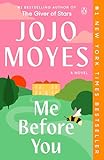
#8 — Me Before You by Jojo Moyes
Louisa Clark takes a job caring for Will Traynor, a former high-achieving city man now quadriplegic after an accident, and her cheerful refusal to be managed by him slowly dismantles his certainty about what his life is worth. The dynamic — woman of limited means and expansive personality, man of means and narrowed worldview — echoes Austen’s pairings in structure, and the class observation is sharp throughout. Moyes does not resolve things the way Austen would, and the novel is more emotionally wrenching for it. A better novel than its commercial reputation suggests.
#9 — A Gentleman in Moscow by Amor Towles
Count Alexander Rostov is sentenced by the Bolsheviks to permanent house arrest in Moscow’s Metropol Hotel in 1922, forbidden from leaving on pain of death. He proceeds to live fully anyway, conducting a life of intellectual richness, friendship, and eventually love within those four walls. Towles writes with Austen’s formal elegance and her comic sensibility — the novel is wry, warm, and deeply interested in what manners reveal about character. It is not a romance in Austen’s mode, but it shares her conviction that how one conducts oneself in constrained circumstances is the truest test of who one is.
Literary Romance With Something to Say
#10 — Atonement by Ian McEwan
Cecilia Tallis and Robbie Turner conduct a courtship that is derailed by a catastrophic misreading — not their own, but her younger sister Briony’s. McEwan’s novel is in deliberate conversation with the English literary tradition Austen represents: Briony is a thirteen-year-old who has consumed enough romantic fiction to believe she understands what she is seeing between Cecilia and Robbie, and is entirely wrong. The first section of Atonement is a precise, ironic dissection of a class-stratified English house party, and the tragedy that follows is inseparable from that social world. A novel about reading fiction and misreading life.
#11 — Longbourn by Jo Baker
Jo Baker’s novel retells Pride and Prejudice from below stairs — from the perspective of Sarah, a housemaid at Longbourn, for whom the Bennet daughters’ romantic dramas are a distant concern set against the brutal labor of keeping a Regency household running. Baker is not hostile to Austen; she is interested in the world Austen’s novel elides. The mud on the roads that no one in the original discusses — someone has to clean the clothes caked with it. A corrective and a complement, useful for readers who love the original and want to understand its silences.
How to Choose Your Next Read
If you want more Jane Austen: Emma first, then Persuasion.
If you want the closest Victorian equivalent: North and South by Elizabeth Gaskell.
If you want a darker take on the same world: The Tenant of Wildfell Hall or Jane Eyre.
If you want a modern novel with Austen’s social precision: Normal People by Sally Rooney.
If you want Austen’s elegance without the romance: A Gentleman in Moscow.
If you want the story Austen didn’t tell: Longbourn.
Pride and Prejudice vs Jane Eyre
For a direct comparison of Austen and Brontë’s two landmark novels — romantic philosophy, heroines, and which to read first — see our Pride and Prejudice vs Jane Eyre guide.
For the Best Fiction Books
For the definitive guide to fiction — the greatest novels across literary fiction, classics, and contemporary writing — see our Best Fiction Books of All Time list.
Affiliate disclosure: Links to Amazon on this page are affiliate links. We earn a small commission at no extra cost to you. This does not influence our editorial recommendations.
Frequently Asked Questions
What is the best reading order for Jane Austen's novels?
Most readers start with Pride and Prejudice because it is the most immediately engaging and introduces Austen's style at its most electric. From there, Emma rewards readers who are already comfortable with Austen's irony and want a more demanding heroine. Persuasion works best later — it is quieter and more melancholy, and its emotional weight lands harder once you have read the earlier novels. Sense and Sensibility is an excellent second read. Northanger Abbey can go anywhere since it functions partly as a parody of Gothic fiction. Mansfield Park is the most divisive and is usually best saved for committed fans.
Is Pride and Prejudice still relevant today?
Yes — more than the question implies. The novel's central subject is how women navigate systems designed to limit them, using intelligence, humor, and selective defiance as their tools. That dynamic has not disappeared. What has changed is that Elizabeth Bennet's choices feel genuinely radical now in a way that contemporary readers sometimes underestimate: she refuses two advantageous proposals, calls out a powerful man to his face, and wins on her own terms. The marriage-market satire is also still sharp — the pressures are different in form but not in kind.
Which modern novels best capture Austen's wit?
The modern novels that come closest to Austen's particular combination of wit, social observation, and romantic tension are Sally Rooney's Normal People for the precision and the unsaid, and Amor Towles's A Gentleman in Moscow for the elegance and the comedy of manners. For something more directly in Austen's genre, Curtis Sittenfeld's Eligible — a Pride and Prejudice retelling set in contemporary Cincinnati — captures the wit and the family dynamics with real fidelity.
What should I read immediately after Pride and Prejudice?
After Pride and Prejudice, the most natural next steps are Emma by Jane Austen (funnier and more intricate, with an unreliable perspective Austen handles decades before it became fashionable) and Persuasion (the emotional counterweight — what Austen writes when she lets regret into the room). Outside Austen, North and South by Elizabeth Gaskell is the closest Victorian equivalent: an antagonistic central relationship, sharp class commentary, and a heroine with the same quality of principled stubbornness.