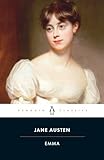
Editors Reads Verdict
Austen's masterwork of comic irony, built around a heroine she declared 'no one but myself will much like.' Emma Woodhouse's self-deception is rendered with such precision and affection that readers cannot help but love her — and recognise themselves in her mistakes.
What We Loved
- The pinnacle of Austen's free indirect discourse — we are deep inside an unreliable mind
- Mr. Knightley is Austen's most morally serious and credible romantic hero
- The Box Hill scene is one of the most uncomfortable and honest moments in English fiction
Minor Drawbacks
- Emma herself can be genuinely irritating — that is the point, but it tests patience
- Slower pace than Pride and Prejudice; rewards patient readers more than impatient ones
Key Takeaways
- → Self-knowledge is harder to achieve than knowledge of others — and far more important
- → Good intentions do not excuse harmful effects; kindness requires honest attention
- → Social class can blind even perceptive people to what is directly before them
- → Real friendship demands honesty, not flattery — Knightley's corrections are his truest gift
| Author | Jane Austen |
|---|---|
| Publisher | Penguin Classics |
| Pages | 528 |
| Published | December 23, 1815 |
| Language | English |
| Genre | Classic Fiction, Romance, Comedy of Manners |
How Emma Compares
Emma at a glance against 3 similar books readers weigh alongside it.
| Book | Author | Rating | Best for |
|---|---|---|---|
| Emma (this book) | Jane Austen | ★ 4.7 | Classic Fiction |
| Mansfield Park | Jane Austen | ★ 4.5 | Classic Fiction |
| Persuasion | Jane Austen | ★ 4.8 | Classic Fiction |
| Pride and Prejudice | Jane Austen | ★ 4.9 | Classic Fiction |
Emma Review
“I am going to take a heroine whom no one but myself will much like.” Jane Austen’s remark about Emma Woodhouse, made before the novel’s publication in 1815, is one of literature’s great authorial gambits — and one of its great miscalculations. Readers have loved Emma for two centuries, precisely because Austen renders her flaws with such exactness and such charity that recognition — painful, amused self-recognition — is unavoidable.
Emma is, by her own lights, a success: wealthy, intelligent, socially prominent in the small world of Highbury, possessed of genuine gifts of perception. By the novel’s more exacting standards she is a disaster: a chronic misreader of people, a manipulator who believes herself a benefactor, and a woman so comfortable in her own certainties that she cannot hear what the world is actually telling her.
The novel’s formal achievement lies in its sustained deployment of free indirect discourse. We see Highbury almost entirely through Emma’s eyes, which means we share her misreadings and are surprised by her surprises. The reader who submits fully to the technique will miss the irony; the reader who maintains critical distance will lose the comedy. Austen holds both possibilities in perfect tension.
The novel’s pivot comes at a picnic on Box Hill, where Emma — performing for Frank Churchill’s amusement — makes a cutting remark to Miss Bates, a poor, garrulous, entirely harmless spinster. Knightley’s quiet rebuke is immediate, and the force of it constitutes Emma’s moral education in a single page. It is one of the most efficiently devastating scenes Austen ever wrote, and it reorients everything that follows.
Mr. Knightley alone tells Emma the truth about her behaviour — against his own social interests and at personal cost — and that willingness is presented as the measure of genuine regard. Emma is ultimately a novel about what it costs to finally see clearly.
A Comedy of Misreadings
The plot of Emma is an exquisitely engineered chain of misinterpretations, almost all of them Emma’s. Convinced of her gifts as a matchmaker, she takes up the illegitimate, impressionable Harriet Smith as a project, persuades her to refuse a perfectly good farmer, and sets her sights on the clergyman Mr. Elton — only to discover, mortifyingly, that Elton has been courting Emma herself all along. She misreads the charming Frank Churchill as a potential love interest while remaining utterly blind to his secret engagement to the reserved, impoverished Jane Fairfax — whom Emma dislikes precisely because Jane’s enforced coldness reads to her as snobbery. And in the cruelest twist of her own making, when Harriet confesses love for a man “so superior,” Emma assumes she means Frank, never imagining Harriet means Mr. Knightley — the revelation that finally jolts Emma into recognizing her own heart. Austen builds the whole novel as a puzzle the attentive reader can solve while the brilliant heroine cannot.
The Achievement of Free Indirect Discourse
What makes these misreadings more than farce is Austen’s revolutionary narrative technique. Emma is the supreme example of free indirect discourse — a method by which the third-person narration slips so seamlessly into Emma’s own thoughts and judgments that the reader inhabits her perspective without quite realizing it. We are made complicit in her errors, sharing her confident misjudgments and her surprises, which is why first-time readers are so often as fooled as Emma is. The technique demands a double awareness: surrender to Emma’s view and you miss the irony; hold yourself coolly apart and you lose the comedy and warmth. Austen sustains both at once, and in doing so she effectively invents a mode of psychological intimacy that the modern novel would spend the next two centuries developing. It is the most technically dazzling thing she ever did.
Box Hill and the Cost of Cruelty
The novel’s moral hinge is the disastrous picnic at Box Hill, where Emma, showing off for Frank Churchill, makes a witty but cutting remark at the expense of Miss Bates — a poor, kindly, endlessly talkative spinster who depends on the goodwill of her neighbors. The cruelty is small, almost reflexive, and that is exactly why it stings. Mr. Knightley’s private rebuke afterward — “It was badly done, indeed” — lands with shattering force, reminding Emma (and the reader) that her privilege gives her power over those beneath her, and that wit deployed without kindness is a form of violence. It is one of the most quietly devastating scenes in English fiction, and it accomplishes Emma’s moral education in a single, unforgettable exchange. Everything after it bends toward genuine self-knowledge.
Knightley and the Truth-Teller’s Love
If Emma is the comedy’s flawed center, Mr. Knightley is its moral one. Sixteen years her senior and a steady presence throughout her life, he is the only person who consistently tells Emma the truth about herself — not to wound but because he respects her enough to expect better. Austen makes his honesty, not flattery or gallantry, the true mark of love, and the slow recognition that Emma’s lifelong sparring partner is in fact the man she loves is among the most satisfying turns in the romance tradition. Their union is a meeting of equals built on candor, and it embodies the novel’s deepest argument: that real regard requires honest attention, and that being seen clearly by someone who loves you anyway is the rarest of gifts.
The Verdict
Emma is Jane Austen’s most technically accomplished novel and, for many readers, her richest — a comedy of manners that doubles as a profound study of self-deception and self-knowledge. It asks more patience than Pride and Prejudice: its pace is slower, its heroine genuinely exasperating by design, its pleasures cumulative rather than immediate. But no novel rewards rereading more completely, because once you know Emma’s blind spots, you can watch Austen lay every clue in plain sight. It is a masterpiece about the hardest thing any of us attempts — to finally, honestly, see ourselves — rendered with comic precision and boundless charity.
Our rating: 4.7/5 — Austen’s most technically dazzling novel: a comedy of misreadings and a profound study of self-deception, anchored by an exasperating, unforgettable heroine and the truest of her heroes.
Reading Guides
Frequently Asked Questions
What is "Emma" about?
Emma Woodhouse is handsome, clever, and rich — and catastrophically wrong about almost everyone's romantic situation. Austen's most technically accomplished novel features an unreliable protagonist and one of literature's great comic ironies.
What are the key takeaways from "Emma"?
Self-knowledge is harder to achieve than knowledge of others — and far more important Good intentions do not excuse harmful effects; kindness requires honest attention Social class can blind even perceptive people to what is directly before them Real friendship demands honesty, not flattery — Knightley's corrections are his truest gift
Is "Emma" worth reading?
Austen's masterwork of comic irony, built around a heroine she declared 'no one but myself will much like.' Emma Woodhouse's self-deception is rendered with such precision and affection that readers cannot help but love her — and recognise themselves in her mistakes.
Ready to Read Emma?
Check the current price on Amazon.
Check Price on Amazon (paid link)Prices and availability are subject to change. See Amazon for current price.
Review last updated: