Ali Hazelwood Books in Order: Complete Reading Guide
Every Ali Hazelwood novel in publication order — from The Love Hypothesis to Bride — with reading recommendations, series connections, and what to expect from each book.
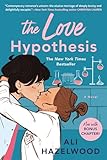
Ali Hazelwood published her debut novel in September 2021 and immediately reshaped what mainstream romance readers expected from the genre. The STEM romance — not a new concept, but previously a niche — became a commercial category partly because of how decisively The Love Hypothesis landed. Since then, she has published four more novels, each using a variation on the same formula with enough variation to keep it from feeling stale.
All her novels are standalones. No reading order is required. This guide works through her books in publication order, with notes on what makes each one distinctive.
1. The Love Hypothesis (September 2021)
Setting: Biology PhD programme, unnamed American research university
The novel that started everything. Olive Smith, a third-year PhD student, needs her friend to believe she has moved on from a mutual ex. She turns to the nearest available man and kisses him. The nearest available man is Adam Carlsen — notoriously gruff, famous in their field, and the last person any graduate student would choose.
The fake-dating arrangement that follows is familiar genre architecture, but Hazelwood builds on it with genuine detail: research grant politics, publication pressures, conference culture, the specific anxieties of pre-dissertation life. Her background as a neuroscientist shows in ways that give the romance real texture.
Olive’s social reasoning — explicit, analytical, frequently confused by unspoken rules — resonates strongly with readers who recognise a neurodivergent presentation, though the novel doesn’t use clinical language. Adam’s gruff-to-tender arc is executed with warmth.
The weakness: The central third-act conflict hinges on a misunderstanding a single honest conversation would dissolve. The genre required it; the novel manages it without completely overcoming it.
Start here if you’re new to Hazelwood. This is the novel at its most refined.
2. Love on the Brain (August 2022)
Setting: NASA, joint research project
Bee Königswasser, a neuroengineer, is co-assigned to a NASA brain-helmet project with Levi Ward — the man she has believed, since an academic conference three years ago, actively undermined her career. The novel runs on Bee’s unreliable reading of Levi, who she is convinced dislikes her and who has, in fact, been quietly devoted to her since they first met.
The NASA setting is Hazelwood’s most genuinely fresh choice: the institutional politics of a multi-stakeholder research project, the specific exhaustion of being a woman whose competence is perpetually questioned, the anxiety of presenting to a funding committee. Bee’s narration is funnier than Olive’s — she catastrophises in the moment and is then surprised when reality turns out better — and the obliviousness is deployed with good comic timing.
The weakness: The formula is near-identical to The Love Hypothesis. Readers who found the first book too predictable will find the same structure here.
Read this second — same formula, new coat of paint, with the NASA setting making it feel earned rather than recycled.
3. Love, Theoretically (June 2023)
Setting: Physics department, fake-dating-for-hire
Elsie Hannaway works as a professional fake girlfriend — hired by men who need a date for events but don’t want the complications of actual relationships. When she is hired by the brother of Jack Smith, the physicist who has been blocking her tenure-track application, the conflict of interest is obvious to everyone except Elsie, who has spent so long mirroring what other people want that she has lost track of what she actually is.
Love, Theoretically is Hazelwood’s most thematically sophisticated adult novel. The fake-dating premise is given a literalisation — Elsie is a professional at performing versions of herself for others — that gives the romance genuine psychological weight. The question of who Elsie is, underneath the performance, is the novel’s real subject.
The weakness: Jack Smith is the most underwritten of Hazelwood’s heroes; the focus on Elsie’s interiority crowds him out.
Good choice if you’ve read the first two and want the formula to do something slightly different.
4. Check & Mate (November 2023)
Setting: Competitive chess world, YA
Hazelwood’s first novel for a YA audience. Mallory Greenleaf quit competitive chess at seventeen after casually beating the world’s top-ranked player, Nolan Sawyer. Two years later, financial pressure forces her back into competition — and back into Nolan’s orbit.
The shift from adult to YA is instructive. Mallory’s anxiety is more immediate than Hazelwood’s PhD protagonists: her father disappeared, her mother has health problems, her siblings need things that require money she doesn’t have. The chess backdrop is well-chosen — competitive chess is one of the few domains where a young woman can genuinely threaten the world’s best players on pure merit, and Hazelwood clearly did her research on the psychology of high-level tournament play.
The romance follows a slightly different pattern than the adult novels: Nolan’s interest is more openly signalled earlier, which reduces the obliviousness that can exhaust readers of the adult fiction. The emotional development is slower and more deliberate, and benefits from it.
Worth reading even if you don’t typically read YA. It’s her most emotionally grounded novel to date.
5. Bride (February 2024)
Setting: Paranormal romance, vampire arranged marriage
Misery Lark — a vampire, the daughter of the most powerful vampire leader in North America — is married off to Lowe Moreland, the Werewolf Alpha, as part of a political alliance. Neither of them chose this. Neither of them is happy about it.
Bride is Hazelwood’s departure novel: no STEM setting, no oblivious academic heroine, no research workplace. The formula’s bones remain — slow burn, emotionally reserved hero who is secretly devoted, heroine who underestimates how much the people around her care about her — but the paranormal frame gives her more to play with structurally. Lowe is the most inscrutable of her heroes; the reader shares Misery’s uncertainty about what he actually thinks, which makes the eventual revelation hit harder than in the earlier novels.
The world-building is light, which will frustrate readers who want dense paranormal mythology but suits the romance-forward execution.
Good entry point for readers who want Hazelwood’s style but are tired of the academic setting.
Reading Order Summary
| # | Title | Year | Setting | Audience |
|---|---|---|---|---|
| 1 | The Love Hypothesis | 2021 | Biology PhD | Adult |
| 2 | Love on the Brain | 2022 | NASA | Adult |
| 3 | Love, Theoretically | 2023 | Physics dept | Adult |
| 4 | Check & Mate | 2023 | Chess | YA |
| 5 | Bride | 2024 | Paranormal | Adult |
The Hazelwood Formula
Across all five novels, certain elements recur:
- Heroine with a professional identity that matters to her as much as the romance does
- Hero who has been in love with her for longer than she realises, expressed through actions rather than words
- Heroine’s fundamental misreading of the hero’s feelings, usually maintained through most of the novel
- STEM or specialist knowledge rendered with genuine accuracy
- Slow burn with physical chemistry that’s present early but consummated late
- Third-act conflict driven by miscommunication rather than external obstacles
If any of these elements stop working for you, they stop working across the whole catalogue — they’re load-bearing, not incidental. If they work, each novel is a reliably satisfying variation on the theme.
Also on Editors Reads: Romance → · Enemies-to-Lovers → · STEM Romance →
Frequently Asked Questions
What order should I read Ali Hazelwood books?
Start with The Love Hypothesis (2021) — it's her debut and bestseller, and the one that defines her STEM romance style. Love on the Brain (2022) and Love, Theoretically (2023) follow the same formula in new settings. Check & Mate (2023) is her YA novel and works as a standalone. Bride (2024) is a paranormal romance that departs from the academic setting. All are standalones — any order works, but publication order gives you the clearest sense of how her writing develops.
Are Ali Hazelwood books a series?
No. Her adult romance novels — The Love Hypothesis, Love on the Brain, Love, Theoretically, and Bride — are all standalone novels set in different locations with different characters. They share an author style (STEM protagonists, enemies-to-lovers, slow burn) but no shared plot or world. Check & Mate is her YA novel and is also a standalone.
Do Ali Hazelwood books need to be read in order?
No — each novel is completely self-contained. You can start anywhere. That said, The Love Hypothesis is the novel that established the formula, and reading it first helps you understand what Hazelwood is doing (and playing with) in subsequent books.
Is Bride connected to Ali Hazelwood's other books?
Bride (2024) is a standalone paranormal romance — a vampire arranged-marriage story that departs from the academic STEM setting of her earlier novels. It shares her signature slow burn and emotionally restrained hero, but the world and characters are entirely new.
What is Ali Hazelwood's best book?
The Love Hypothesis remains her most widely read and highest-rated novel — it broke the STEM romance subgenre into the mainstream and still delivers the most complete version of her formula. Love on the Brain is the best choice if you want more of the same with a fresher setting. Check & Mate is her most emotionally grounded work.
Does Ali Hazelwood have any new books coming?
Hazelwood continues to publish regularly. Check her website or Amazon author page for the most current release information, as new titles are announced periodically.