Best Victorian Novels: Essential 19th-Century British Fiction
The best Victorian novels — from Middlemarch and Jane Eyre to Great Expectations and Wuthering Heights. Essential 19th-century British fiction for modern readers.

The Victorian novel — produced between roughly 1830 and 1900 — is the form at its most ambitious. Victorian novelists were not constrained by the expectation of brevity; they had space to develop large casts of characters, to investigate social institutions in detail, and to follow the consequences of individual choices across years and decades. The best Victorian novels are among the most comprehensive works of fiction ever written — portraits of an entire society at a particular moment of historical change.
They are also, despite the prejudice against them, immediate and emotionally direct: the great Victorians — Dickens, Eliot, the Brontës, Hardy, Gaskell — are not difficult writers. They are readable, humane, and deeply concerned with the relationship between individual lives and social forces.
The Essential List
Middlemarch — George Eliot (1871-72)
The greatest English novel. Eliot’s portrait of Dorothea Brooke — a young woman of remarkable intelligence and idealism, whose first marriage to the dried-up scholar Casaubon is a catastrophe she cannot escape — is embedded in a comprehensive portrait of a provincial Midlands town during the Reform Bill debates of the 1830s. The novel’s moral vision (its insistence on the importance of the ‘unhistoric acts’ of ordinary goodness) and its formal achievement (sustaining multiple plot lines without losing any of them) have never been surpassed. Virginia Woolf was right: it is ‘one of the few English novels written for grown-up people.‘
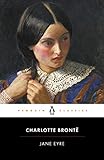
Jane Eyre — Charlotte Brontë (1847)
The definitive Victorian romance. Jane Eyre’s first-person narration — passionate, self-aware, and never self-pitying — was revolutionary in 1847 and remains remarkable today. The Gothic elements (Bertha Mason in the attic, the fire at Thornfield, the strange laughter in the night) give the love story between Jane and Rochester its atmosphere; but the novel’s real force is in Jane’s assertion of her own moral worth against every pressure to deny it. The original template for the heroine who refuses to be defined by the men around her.
Great Expectations — Charles Dickens (1861)
The most autobiographical of Dickens’s major novels and the most tightly constructed. Pip’s story — his childhood in the Kentish marshes, his encounter with the convict Magwitch, his ‘great expectations’ of becoming a gentleman, and his eventual discovery of their source — is Dickens’s most complete account of the relationship between money, class, and moral worth. Miss Havisham and Estella are among the most memorable characters in English fiction. The most accessible of Dickens’s long novels.
Wuthering Heights — Emily Brontë (1847)
The most formally audacious of the Victorian novels. Emily Brontë’s nested narrative structure (Nelly Dean telling the story to Lockwood; Nelly’s own retrospective account; documents and letters embedded in the narrative) creates a portrait of Heathcliff and Catherine’s obsessive love that is deliberately resistant to the reader’s identification or sympathy. The novel is not a romance but a Gothic revenge narrative spanning two generations; Heathcliff’s destruction of everyone around him is simultaneously pitiless and comprehensible. Published the same year as Jane Eyre; the two novels could not be more different.
North and South — Elizabeth Gaskell (1855)
The best of the ‘industrial novels’ — Gaskell’s account of Margaret Hale, who moves from a rural Hampshire vicarage to the industrial northern town of Milton (modelled on Manchester), and her relationship with the mill-owner John Thornton. The novel is Gaskell’s engagement with the ‘condition of England’ question — the relations between capital and labour, employer and employee — and is more politically engaged than anything by the Brontës. The love story is also among the most satisfying in Victorian fiction.
Tess of the D’Urbervilles — Thomas Hardy (1891)
Hardy’s most devastating novel. Tess Durbeyfield’s seduction by Alec d’Urberville, her marriage to Angel Clare (who abandons her when he learns her history), and her eventual murder of d’Urberville and execution constitute one of the most powerfully structured tragedies in English fiction. The novel’s subtitle — ‘A Pure Woman’ — is Hardy’s argument: that Tess’s moral worth is unaffected by what has been done to her, and that the society that destroys her is the corrupt party, not she. Published to considerable controversy; still one of the most emotionally powerful Victorian novels.
Far from the Madding Crowd — Thomas Hardy (1874)
Hardy’s most immediately pleasurable novel — the story of Bathsheba Everdene, a fiercely independent young woman who inherits a farm and must navigate the competing claims of three very different men. The Dorset landscape — the heath, the sheep fairs, the seasonal rhythms of agricultural life — is as fully realised as any character. Hardy’s first successful novel and the most accessible entry to his fiction.
The Mill on the Floss — George Eliot (1860)
Eliot’s most autobiographical novel — the story of Maggie Tulliver, an unusually intelligent girl in a family and community that cannot accommodate her intelligence, and her relationship with her brother Tom. The novel is about the costs of being born female and gifted in a world that cannot recognise female gifts; its ending is one of the most discussed in Victorian fiction. The best starting point for Middlemarch as a companion volume.
Why These Books
The best Victorian novels are not historical curiosities but diagnoses of problems — class, gender, marriage, work, ambition, and the relationship between individual aspiration and social constraint — that have not been resolved. Middlemarch is still being read because its account of the waste of women’s potential is not historical; Jane Eyre is still being read because its assertion of moral self-worth is not historical; Tess is still being read because the injustice it describes is not historical. The Victorian novel’s great subject is the gap between what human beings are capable of and what society permits them to be — and that subject remains, unhappily, contemporary.
Frequently Asked Questions
What is the best Victorian novel to start with?
Middlemarch (1871-72) by George Eliot is the greatest Victorian novel and the best starting point for serious readers — the story of Dorothea Brooke's marriage to the dried-up scholar Casaubon and her later love for Will Ladislaw, set against the social and political landscape of a provincial English town. Virginia Woolf called it 'one of the few English novels written for grown-up people.' Jane Eyre (1847) by Charlotte Brontë is the more immediately engaging starting point — the first-person account of a plain, passionate governess's love for the brooding Mr. Rochester, written with an intensity that makes it feel modern.
What is Middlemarch about?
Middlemarch (1871-72) by George Eliot follows several intersecting characters in the fictional Midlands town of Middlemarch in the 1830s, but its central figures are Dorothea Brooke — a brilliant, idealistic young woman who marries the elderly scholar Edward Casaubon, believing she can help him complete his great work, and discovers the marriage is a catastrophe — and Tertius Lydgate, an ambitious young doctor whose marriage to Rosamond Vincy destroys his professional prospects. The novel is about the relationship between personal aspiration and social constraint, about the 'unhistoric acts' of ordinary goodness, and about the costs of idealism meeting reality. The greatest English novel.
What is Jane Eyre about?
Jane Eyre (1847) by Charlotte Brontë follows the orphaned Jane from her miserable childhood with her aunt's family, through her years at Lowood School, to her employment as governess at Thornfield Hall, where she falls in love with her employer, the brooding Edward Rochester. The novel's Gothic elements — the mystery of the attic, the strange laughter in the night, the fire — combine with Jane's fierce first-person narration (passionate, self-aware, and never self-pitying) to create the defining Victorian romance. The original template for the Gothic romance novel.
Which is better: Jane Eyre or Wuthering Heights?
The question is unanswerable because they are entirely different novels. Jane Eyre is a romantic Bildungsroman in the first person, structured around Jane's survival and self-determination; its love story, though intense, ultimately delivers its heroine to happiness. Wuthering Heights is a Gothic revenge narrative structured around obsession and its consequences across two generations; its love story is explicitly destructive. Jane Eyre is more immediately engaging and more consoling; Wuthering Heights is more formally audacious and more disturbing. Most readers respond more strongly to one than the other.