Best Classic Novels About Women: The Essential Reading List
The best classic novels about women — from Middlemarch to Anna Karenina, Jane Eyre, Madame Bovary, and The House of Mirth. Novels that defined female experience in literature.

The nineteenth-century novel gave us our first sustained gallery of female characters whose inner lives were taken as seriously as their social situations — whose thoughts, desires, and moral vision were the primary subject of the author’s attention. These are the novels that defined what it meant to be a woman caught between an inner world of aspiration and intelligence and an outer world of social constraint, economic dependence, and narrowly prescribed possibility. They remain the essential texts for understanding how the novel engaged with female experience — and how little and how much has changed.
Middlemarch — George Eliot (1871)
The greatest novel in the English language — and the most profound study of a woman’s intelligence and aspiration encountering a world that has no adequate place for them. Dorothea Brooke is beautiful, idealistic, and possessed of a nature ‘too wide for feminine proprieties’; she marries the elderly scholar Casaubon, believing she will find intellectual fulfilment in assisting his great work, and discovers instead a marriage that is a prison, a husband who cannot share himself, and a world that repeatedly frustrates her need for meaningful action. Virginia Woolf called Middlemarch ‘one of the few English novels written for grown-up people.’ The essential starting point.
Anna Karenina — Leo Tolstoy (1878)
Tolstoy’s masterpiece — and one of the two or three greatest novels ever written. Anna Karenina, trapped in a loveless marriage to a senior St Petersburg official, falls in love with the cavalry officer Vronsky and leaves her husband and son to be with him. The novel traces the consequences with extraordinary precision: the social ostracism, the damage to her relationship with her son, Vronsky’s gradual diminishment in her eyes, and Anna’s psychological unravelling. Tolstoy both condemns Anna’s choice (the novel was written from a profoundly moralistic position) and renders her inner life with such sympathy that the condemnation feels inadequate to the woman it is applied to.
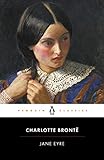
Jane Eyre — Charlotte Brontë (1847)
The most immediately modern of the nineteenth-century novels of female experience — narrated by Jane herself in a voice that is direct, passionate, and morally exact. Jane is an orphan, a governess, a woman of no social standing who insists on the equality of her own soul with that of any aristocrat. Her relationship with Rochester — the brooding master of Thornfield Hall — is the great love story of Victorian fiction; the revelation of his secret is the great plot twist; and Jane’s response to it is the fullest demonstration of her moral character.
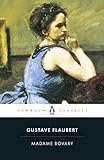
Madame Bovary — Gustave Flaubert (1857)
Flaubert’s masterpiece — the story of Emma Bovary, the daughter of a Norman farmer who marries a country doctor and finds herself trapped in a life of provincial tedium that nothing she has read or dreamed has prepared her for. Her love affairs are attempts to escape into the romantic life she has imagined; her debts are attempts to furnish her imagination with the objects it requires; and her destruction is inevitable from the first sentence. The novel is a devastating critique of the gap between romantic fantasy and reality, and of a society that cultivates these fantasies in women and then offers them nothing.
The House of Mirth — Edith Wharton (1905)
Wharton’s most devastating novel — and the fullest American treatment of the trap that social expectation sets for women. Lily Bart is beautiful, intelligent, educated, and without independent income; she must marry wealth or perish, and the novel traces her slow failure to accomplish the first and her accelerating progress toward the second. Wharton understood from the inside the world she was describing, and her analysis of its cruelties is precise: Lily’s problem is not simply poverty but the way the social world ensures that women who step out of line cannot step back in.
Tess of the d’Urbervilles — Thomas Hardy (1891)
Hardy’s most passionate novel — subtitled ‘A Pure Woman Faithfully Presented,’ a provocation directed at the Victorian moral system that the novel systematically dismantles. Tess Durbeyfield is seduced or raped (Hardy leaves the question deliberately ambiguous) by the wealthy Alec d’Urberville, bears a child who dies, and tries to start again — to build a life with Angel Clare, a man she loves and who professes to love her. Her revelation of her history destroys the relationship and begins her long descent. The novel is Hardy’s argument that the moral judgements applied to women in his era are unjust, self-serving, and cruel.
The Portrait of a Lady — Henry James (1881)
James’s most celebrated novel — the study of Isabel Archer, an American woman who comes to Europe full of idealism and romantic self-confidence, insisting on her freedom to determine her own life. She has this freedom — she inherits a fortune — and uses it to make the worst possible choice: marriage to Gilbert Osmond, a cold aesthete who wants her money and her independent spirit, in that order. The novel is James’s most searching account of the relationship between freedom, self-deception, and the damage that people do to each other in the name of love and culture.
The Awakening — Kate Chopin (1899)
The most startlingly modern of the nineteenth-century novels on this list — so modern that it destroyed Chopin’s reputation when it was published and was rediscovered only in the 1960s as a feminist text. Edna Pontellier, the wife of a New Orleans Creole businessman, spends a summer by the sea and gradually becomes aware of herself as a person whose desires have no adequate expression in the life available to her. The novel is about female sexuality and selfhood in terms that would not be expressed again so directly until the twentieth century; it ends without resolution, because resolution is not available to women in Edna’s world.
Effi Briest — Theodor Fontane (1894)
The great German novel of female constraint — often called the German equivalent of Madame Bovary or Anna Karenina, and comparable to both. Effi Briest is seventeen when she marries Baron Innstetten, a man twice her age who is correct, cold, and ambitious. Their marriage is loveless; Effi takes a lover; years later, after the affair has ended, her husband discovers the letters and challenges the lover to a duel. The novel traces Effi’s ostracism and decline with a precision and a tenderness that make it one of the great indictments of nineteenth-century social morality.
The Scarlet Letter — Nathaniel Hawthorne (1850)
The foundational American novel of female transgression and its consequences — set in seventeenth-century Puritan Boston, where Hester Prynne has borne a child outside marriage and is compelled to wear a scarlet ‘A’ as permanent public marking of her sin. The novel traces her life over the following years: her relationship with her daughter Pearl, her growing independence and strength, and the secret that connects her to the community that has condemned her. Hawthorne’s Hester is among the most complex heroines in American fiction: both condemned by her society and, in the end, more fully alive than those who condemned her.
Reading Classic Novels About Women
These novels are unified by a single recognition: that the gap between a woman’s inner life and what her society permits her to do with it is not a personal failure but a social fact, and that rendering this gap with honesty and precision is one of the highest tasks available to fiction. They differ in the degree of hope they extend: Jane Eyre’s independence is won; Dorothea’s aspirations find only partial expression; Anna Karenina’s end is devastating; Hester Prynne endures. Begin with Middlemarch for the greatest; with Jane Eyre for the most immediately engaging; with The Awakening for the most startlingly modern.
Frequently Asked Questions
What is the greatest classic novel about a woman?
Middlemarch (1871) by George Eliot is widely regarded as the greatest novel in English and arguably the greatest novel about a woman — Dorothea Brooke, a young woman of idealism and intelligence who finds the world offers her no adequate outlet for her gifts. Virginia Woolf called it 'one of the few English novels written for grown-up people.' Anna Karenina (1878) by Tolstoy and Madame Bovary (1857) by Flaubert are equally celebrated and often paired with Middlemarch as the great nineteenth-century novels of female aspiration and its consequences.
Why did classic novels focus on women protagonists so often?
The novel emerged as a form closely associated with domestic and private life — the sphere assigned to women in the eighteenth and nineteenth centuries — and with the depiction of inner psychological experience. Female protagonists gave novelists access to characters whose lives were defined by social constraint, by the marriage plot, by the gap between their inner experience and their social role. The resulting tension — between what a woman is and what society permits her to be — is one of the great generative conflicts of the novel form. Novelists from Jane Austen to Henry James to Edith Wharton used this tension to examine social structures that affected everyone but manifested most visibly in women's lives.
What do Anna Karenina and Madame Bovary have in common?
Both Anna Karenina (1878) and Madame Bovary (1857) follow married women who take lovers and are destroyed by the social consequences. Both end with the protagonist's death — suicide in Anna's case, poisoning in Emma Bovary's — and both are written by male novelists who are simultaneously critical of and fascinated by their heroines. They are often read as critiques of the constraints placed on women by nineteenth-century society, though Tolstoy's relationship to Anna is more ambivalent and more moralistic than Flaubert's to Emma. Both novels have generated centuries of debate about whether the authors condemn or sympathize with their protagonists.
Which of these novels is most accessible for modern readers?
Jane Eyre (1847) is the most immediately accessible for modern readers — it reads as a first-person narrative with a compelling voice, a Gothic atmosphere, and a protagonist whose intelligence and moral independence feel contemporary. The Awakening (1899) by Kate Chopin is short, clearly written, and deals with female desire and autonomy in terms that feel directly relevant to contemporary concerns. Middlemarch is the most rewarding but requires more patience; Madame Bovary, in a good translation, is more accessible than it is often made to sound. Tess of the d'Urbervilles is emotionally powerful but can feel dated in its narrative voice.