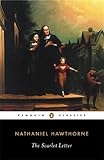
Editors Reads Verdict
Hawthorne's novel is about sin, shame, and the hypocrisy of communities that enforce moral codes they privately violate — a psychologically dense masterwork that feels as urgent today as it did in 1850.
What We Loved
- The symbolic architecture is extraordinarily dense and rewards multiple readings
- Hester Prynne is one of American literature's great proto-feminist heroines
- Chillingworth as slow-burning villain is psychologically precise and genuinely chilling
Minor Drawbacks
- Hawthorne's prose style is deliberately archaic and can feel laboured to modern readers
- The Custom-House introduction, while historically interesting, disrupts narrative entry
Key Takeaways
- → Public shame and private guilt are psychologically distinct — private guilt is far more destructive
- → Society's marks of dishonour can be reappropriated by those who bear them
- → Repressed guilt, unlike acknowledged sin, corrupts the self from within
- → Puritanical morality is less interested in redemption than in perpetual punishment
| Author | Nathaniel Hawthorne |
|---|---|
| Publisher | Penguin Classics |
| Pages | 272 |
| Published | March 16, 1850 |
| Language | English |
| Genre | Classic Fiction, Historical Fiction, American Literature |
How The Scarlet Letter Compares
The Scarlet Letter at a glance against 3 similar books readers weigh alongside it.
| Book | Author | Rating | Best for |
|---|---|---|---|
| The Scarlet Letter (this book) | Nathaniel Hawthorne | ★ 4.4 | Classic Fiction |
| Adventures of Huckleberry Finn | Mark Twain | ★ 4.7 | Classic Fiction |
| Little Women | Louisa May Alcott | ★ 4.8 | Classic Fiction |
| Moby-Dick | Herman Melville | ★ 4.6 | Classic Fiction |
The Scarlet Letter Review
Published in 1850, The Scarlet Letter is often cited as the first great American novel — a work that engages directly with the Puritan foundations of American identity and finds in them sources of both moral seriousness and psychological violence. Hawthorne, who descended from Puritan judges at the Salem witch trials, wrote about the seventeenth century to examine the nineteenth, and the questions he posed have not lost their edge.
Hester Prynne has committed adultery in the Massachusetts Bay Colony and has been publicly condemned to wear the letter A on her breast. She refuses to name her partner. That partner is the Reverend Arthur Dimmesdale, beloved by his congregation, whose public sanctity conceals a private guilt that will consume him over the seven years the novel spans. Meanwhile, Hester’s long-absent husband — arriving to find his wife publicly disgraced — conceals his identity, positions himself as Dimmesdale’s physician, and conducts a slow forensic destruction of the minister’s soul.
Hawthorne’s central symbolic conceit is one of literature’s most productive images. The scarlet A begins as punishment: a public marker of transgression. But Hester, who cannot escape it, transforms it — she embroiders it elaborately, makes it beautiful, makes it hers. By the novel’s end, the townspeople have reinterpreted it to mean “Able.” Signs imposed by power are not fixed; those who bear them can remake what was meant to diminish into something that expresses the self.
Hester survives because she accepts the visible A and releases the inner shame. Dimmesdale dies because he can do neither. The novel’s argument about hypocrisy — that communities enforce moral codes they privately violate, and that hidden guilt destroys far more thoroughly than public confession — reads as freshly in 2026 as it did in Hawthorne’s day.
What Distinguishes This Book
Among the qualities that set The Scarlet Letter apart: The symbolic architecture is extraordinarily dense and rewards multiple readings; Hester Prynne is one of American literature’s great proto-feminist heroines; and Chillingworth as slow-burning villain is psychologically precise and genuinely chilling. These strengths are evident from the first pages and sustain across the whole work.
Themes
The thematic concerns of The Scarlet Letter give it weight beyond its surface narrative. Public shame and private guilt are psychologically distinct — private guilt is far more destructive. Society’s marks of dishonour can be reappropriated by those who bear them. Repressed guilt, unlike acknowledged sin, corrupts the self from within. Puritanical morality is less interested in redemption than in perpetual punishment. These ideas emerge from the texture of the work rather than explicit statement, which is the mark of ambitious fiction done well.
Why It Endures
The Scarlet Letter belongs to the literary canon for reasons that become clear on reading. Nathaniel Hawthorne’s command of the form was exceptional for their era and remains impressive today. The social observation is precise, the characterisation is economical, and the underlying moral intelligence is never heavy-handed. These are the properties that separate enduring literature from period curiosity.
Limitations
Hawthorne’s prose style is deliberately archaic and can feel laboured to modern readers. The Custom-House introduction, while historically interesting, disrupts narrative entry. These are worth knowing before starting, though they are unlikely to diminish the experience for the readers the book is written for.
Publication, Critical Reception, and the Custom-House Controversy
The Scarlet Letter was published on 16 March 1850 by Ticknor, Reed and Fields in Boston. The first printing of 2,500 copies sold out in ten days — an extraordinary pace for a serious literary novel. Hawthorne wrote it in a period of intense productivity following the sudden death of his mother in 1849, a grief he later said he processed through Hester Prynne’s isolation and endurance.
The “Custom-House” introduction — a semi-autobiographical account of Hawthorne’s work as a surveyor at the Salem Custom House before the Taylor administration removed him from the post — was controversial on publication. Hawthorne named living Salem citizens in the introduction in ways that wounded them; the resulting local hostility contributed to his desire to leave Salem. The introduction’s relationship to the novel proper (a fictional manuscript Hawthorne claims to have found in the Custom-House attic) establishes a frame that implicates the narrator’s own compromised position in the story of moral complexity that follows.
Henry James, in his 1879 study of Hawthorne for the English Men of Letters series, called The Scarlet Letter “the finest piece of imaginative writing yet put forth in the country” — a judgment that established Hawthorne’s canonical position. D.H. Lawrence’s Studies in Classic American Literature (1923) offered a more ambivalent reading, arguing that Hawthorne was simultaneously horrified by and attracted to Hester’s moral freedom, producing a novel whose surface morality conceals a deeper sympathy with transgression. The 1995 film adaptation starring Demi Moore substantially altered the story and was widely rejected by critics.
Hawthorne’s Literary Legacy
The novel’s influence on American literature extends from Henry James, who called it the founding achievement of American fiction, through Toni Morrison’s A Mercy (2008), which revisits colonial New England’s moral landscape, to Margaret Atwood’s The Handmaid’s Tale (1985), which adapted the letter-wearing punishment into its most famous image. D.H. Lawrence’s reading in Studies in Classic American Literature (1923) — that Hawthorne was simultaneously repelled by and attracted to Hester’s moral freedom — remains the sharpest secondary account of the novel’s psychological complexity.
Final Verdict
Our rating: 4.4/5 — Hawthorne’s novel is about sin, shame, and the hypocrisy of communities that enforce moral codes they privately violate — a psychologically dense masterwork that feels as urgent today as it did in 1850.
Frequently Asked Questions
What is "The Scarlet Letter" about?
Hester Prynne, condemned to wear the scarlet letter A for adultery in Puritan New England, lives with her illegitimate daughter Pearl while the father of her child — the revered minister Dimmesdale — declines into secret guilt.
What are the key takeaways from "The Scarlet Letter"?
Public shame and private guilt are psychologically distinct — private guilt is far more destructive Society's marks of dishonour can be reappropriated by those who bear them Repressed guilt, unlike acknowledged sin, corrupts the self from within Puritanical morality is less interested in redemption than in perpetual punishment
Is "The Scarlet Letter" worth reading?
Hawthorne's novel is about sin, shame, and the hypocrisy of communities that enforce moral codes they privately violate — a psychologically dense masterwork that feels as urgent today as it did in 1850.
Ready to Read The Scarlet Letter?
Check the current price on Amazon.
Check Price on Amazon (paid link)Prices and availability are subject to change. See Amazon for current price.
Review last updated: