History is not just the past — it is the explanation for the present. The best history books make this explicit: they show how the forces that shaped previous centuries are still operating, still shaping the world you live in.
Art Spiegelman's Pulitzer Prize–winning graphic memoir tells the story of his father Vladek's survival of Auschwitz, drawn with Jews as mice and Nazis as cats — a harrowing Holocaust narrative braided with the fraught present-day relationship between an aging survivor and his son.
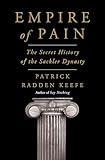
The definitive account of the Sackler family, the pharmaceutical dynasty behind OxyContin, and their role in creating and perpetuating the opioid crisis.
The diary kept by a Jewish teenager hiding in a secret annex in Amsterdam during the Nazi occupation of the Netherlands — the most widely read personal account of the Holocaust.
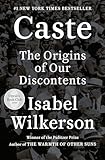
A searing analysis of America's unspoken caste system, comparing it to India's caste system and Nazi Germany's racial hierarchy to illuminate the structural foundations of inequality.
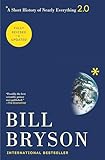
Bill Bryson's quest to understand everything that has ever happened, from the Big Bang to the rise of civilisation — written with his characteristic wit and warmth.
Alfred Lansing's classic account of Ernest Shackleton's doomed 1914 Antarctic expedition. When his ship Endurance was crushed by pack ice, Shackleton led his twenty-eight men through nearly two years of almost unimaginable hardship — and brought every one of them home alive.
Using data from archaeology, history, psychology, and criminology, Steven Pinker argues that violence in virtually every form — war, murder, torture, child abuse, animal cruelty — has declined dramatically over human history, and identifies the institutional, cognitive, and cultural forces responsible.
William Dodd, the first US Ambassador to Hitler's Germany, arrives in Berlin in 1933 with his family. Through his diary and his daughter Martha's letters and memoirs, Larson reconstructs what it was like to watch the Nazi regime consolidate power from inside the American Embassy.
The minute-by-minute account of the 2008 financial crisis — from the collapse of Bear Stearns through the Lehman Brothers bankruptcy, the AIG bailout, and TARP. Sorkin had access to every major participant and reconstructed the crisis in novelistic detail.
Richard Preston's harrowing true account follows the 1989 appearance of a lethal strain of the Ebola virus in a primate research facility in Reston, Virginia—just outside Washington, D.C.—and traces the virus's earlier outbreaks in Central Africa, where it killed with near-total lethality. It is one of the most terrifying science books ever written.
A double narrative: the murder of a Mormon woman and her infant daughter by fundamentalist brothers who believed they were acting on divine revelation, intertwined with the full history of the Latter-day Saint movement from Joseph Smith to the present day. A rigorous examination of religious fundamentalism and faith.
The definitive life of J. Robert Oppenheimer — the theoretical physicist who directed the Manhattan Project, witnessed the first atomic detonation at Trinity, and was subsequently destroyed by the McCarthyite security apparatus he had helped to empower. Twenty-five years in the making, it won the 2006 Pulitzer Prize for Biography.
The story of the Troubles in Northern Ireland, told through the abduction and murder of Jean McConville and the lives of IRA members Dolours Price and Gerry Adams.
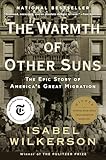
The epic story of the Great Migration — the decades-long exodus of six million Black Americans from the Jim Crow South to the cities of the North and West.
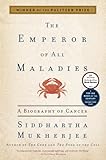
A Pulitzer Prize-winning history of cancer — its origins, treatments, and future — told through the stories of patients, scientists, and physicians across centuries.
James Gleick chronicles the birth of chaos theory and the scientists who discovered that randomness and disorder follow surprising mathematical patterns.
A rich biography of history's greatest creative genius, based on Leonardo's notebooks and the latest scholarship, exploring the intersection of art and science that defined his work.
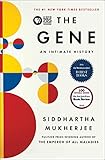
A comprehensive history of the gene from Mendel's peas to CRISPR — and a searching investigation of what our growing power over the genome means for humanity.
Walter Isaacson's comprehensive biography traces Benjamin Franklin's extraordinary life from his Boston childhood through his years as a printer, scientist, diplomat, and Founding Father, revealing the man behind the legend as a pragmatic idealist who helped forge American identity. It is a portrait of perhaps the most versatile genius the colonies produced.
Why did Europeans conquer the Americas, Africa, and Australia rather than the other way around? Jared Diamond's Pulitzer Prize-winning answer overturns centuries of racial and cultural explanations: the answer lies in geography, agriculture, and the uneven distribution of domesticable plants and animals.
George Orwell's first-person account of fighting for the POUM militia in the Spanish Civil War — the trenches outside Huesca, the revolutionary Barcelona of 1936, the May Days street fighting, the Stalinist suppression of the independent left, and his narrow escape from arrest and execution.
James Gleick traces the history of information from African talking drums through Claude Shannon's information theory to the digital deluge of the modern age.
Sapiens by Yuval Noah Harari, Guns, Germs, and Steel by Jared Diamond, and The Silk Roads by Peter Frankopan are the most widely read modern history books for general audiences. Each offers a sweeping reinterpretation of human development.
Sapiens by Yuval Noah Harari is the most widely recommended starting point — it covers the full sweep of human history from early Homo sapiens to the present day, combining narrative drive with genuinely surprising interpretive arguments.
The Face of Battle by John Keegan, Band of Brothers by Stephen Ambrose, and Antony Beevor's Stalingrad are among the most acclaimed. For the Pacific war, The Pacific by Hugh Ambrose and Flags of Our Fathers by James Bradley are outstanding accounts.
Disclosure: Amazon links on this page are affiliate links. If you purchase through them we earn a small commission at no extra cost to you.
We use cookies to understand how visitors use our site (Google Analytics). No data is collected until you accept.
Privacy Policy