A sweeping history of the digital revolution — from Ada Lovelace and Charles Babbage through Alan Turing, Claude Shannon, William Shockley, and the personal computer pioneers — arguing that the most important innovations were always the product of collaboration, not lone genius.
Philip Caputo's classic Vietnam memoir. As one of the first U.S. Marines sent to Vietnam in 1965, Caputo arrived full of idealism and left transformed by combat, moral injury, and the murder charges he faced. A searing, honest account of how war corrupts the men who fight it.
Steven Pinker's comprehensive argument that the Enlightenment values of reason, science, humanism, and progress have dramatically improved the human condition — and why we should defend them.
Long-Term Capital Management was a hedge fund run by Nobel laureates and bond-trading legends that nearly collapsed the global financial system in 1998. Lowenstein reconstructs the fund's rise — based on sophisticated arbitrage models — and its catastrophic fall when Russia defaulted and the models stopped working.
The history of probability and risk management — from Pascal and Fermat's correspondence on gambling through the development of modern portfolio theory, the Black-Scholes formula, and derivatives. Bernstein argues that the mastery of risk is the defining achievement of the modern world.
In 1952, twenty-three-year-old medical student Ernesto Guevara and his friend Alberto Granado set off on a motorcycle to travel the length of South America — a nine-month, 8,000-mile journey that transformed the future revolutionary's understanding of his continent.
Thucydides's account of the war between Athens and Sparta (431-404 BCE) that ended Athenian power. The first work of rigorous political and military history — including Pericles's Funeral Oration, the Melian Dialogue, and the catastrophic Sicilian Expedition.
A desk-bound travel editor retraces Hiram Bingham's 1911 journey to Machu Picchu through the Peruvian Andes, interweaving his own misadventures with the controversial history of the 'discovery' that wasn't.
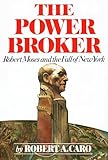
Robert Caro's Pulitzer Prize-winning biography of Robert Moses, the unelected master planner who shaped New York City for four decades and accumulated more power than any other American in the 20th century.
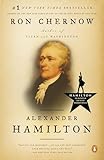
The definitive biography of Alexander Hamilton — orphan immigrant, Revolutionary War hero, first Secretary of the Treasury, and the Founding Father who built the American financial system.
Stephen Ambrose follows Easy Company of the 101st Airborne Division from training through D-Day, the Battle of the Bulge, and the fall of Hitler's Eagle's Nest.
Nelson Mandela's autobiography traces his journey from a Transkei village through law, activism, 27 years of imprisonment, and his emergence to lead South Africa's democratic transition.
Doris Kearns Goodwin examines Lincoln's political genius through the lens of the three rivals he defeated for the 1860 Republican nomination — whom he then appointed to his cabinet.
One of the most important American autobiographies ever written, chronicling Malcolm X's transformation from street criminal to international civil rights icon.
William Shirer's definitive account of Nazi Germany — from Hitler's birth to the Reich's collapse — written by a journalist who witnessed much of it firsthand.
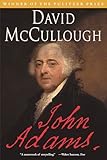
David McCullough's Pulitzer Prize-winning biography of John Adams, the principled, irascible, and frequently underestimated second president of the United States.
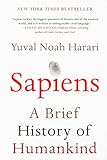
From the emergence of Homo sapiens in Africa to the 21st century, Harari traces the full sweep of human history, asking why our species conquered Earth while others failed.
A narrative history of the first month of World War I — August 1914 — tracing how Europe's powers stumbled into catastrophe through a combination of rigid military planning, diplomatic failure, and the momentum of mobilization.
The story of Henrietta Lacks, the Black woman whose cancer cells were taken without her consent in 1951 and became the most important biological materials in modern medical history — all while her family lived in poverty and ignorance of what had been done.
Michelle Alexander's landmark argument that mass incarceration is the newest system of racial caste control in America — the functional successor to Jim Crow laws and before them, slavery.
Erik Larson's account of Winston Churchill's first year as Prime Minister — May 1940 to May 1941 — when Britain stood alone against Nazi Germany and Churchill forged a nation's will to endure.
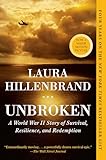
The true story of Louis Zamperini — Olympic runner turned World War II bombardier who survived 47 days adrift in the Pacific and then two years in Japanese POW camps — and his eventual path to redemption through faith.
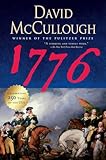
David McCullough narrates the military history of 1776 — the year of American independence — through the campaigns, retreats, and nearly disastrous reverses that shaped the Revolutionary War's decisive year.
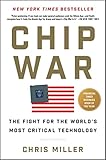
Economic historian Chris Miller traces the history of the semiconductor industry from the invention of the transistor to the US-China technology war, showing how computer chips became the defining resource of the twenty-first century.