
Atomic Habits
by James Clear
4.8
The #1 New York Times bestseller. Over 8 million copies sold. Tiny Changes, Remarkable Results. No matter your goals, Atomic Habits offers a proven framework for improving every day.
Understanding psychology is understanding human behaviour — your own and everyone else's. These books range from Nobel Prize-winning research on cognitive bias to Viktor Frankl's philosophy forged in a concentration camp. All of them change how you see the world.
See our full guide to the best psychology books →
126 expert-reviewed books — page 1 of 6
by James Clear
The #1 New York Times bestseller. Over 8 million copies sold. Tiny Changes, Remarkable Results. No matter your goals, Atomic Habits offers a proven framework for improving every day.
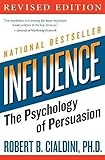
by Robert Cialdini
The definitive book on the psychology of persuasion. Cialdini identifies six universal principles — reciprocity, commitment, social proof, authority, liking, and scarcity — that drive human compliance, and shows how they are exploited in sales, marketing, and everyday life.
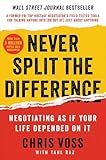
by Chris Voss
Former FBI lead hostage negotiator Chris Voss reveals the counter-intuitive techniques he developed for life-or-death negotiations — and shows how they apply to salary talks, business deals, and everyday persuasion. The key insight: humans are not rational actors, and the best negotiators use emotional intelligence, not logic.
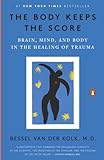
by Bessel van der Kolk
A landmark work in trauma psychology by one of the world's foremost authorities on PTSD. Van der Kolk reveals how trauma reshapes both body and brain, undermining survivors' capacity for pleasure, engagement, self-control, and trust.
Check Price on Amazon (paid link)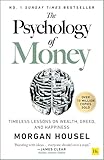
by Morgan Housel
Doing well with money isn't necessarily about what you know. It's about how you behave. And behaviour is hard to teach, even to really smart people.
Check Price on Amazon (paid link)
by Hans Rosling
Epidemiologist and data storyteller Hans Rosling identifies ten deep-rooted instincts — from the Gap Instinct to the Fear Instinct — that systematically distort our understanding of the world, and offers a fact-based framework for seeing global progress clearly. Drawing on decades of public health data, Rosling shows that the world is, on almost every measurable dimension, far better than most people believe.
Check Price on Amazon (paid link)
by Angela Duckworth
A pioneering psychologist reveals the secret to outstanding achievement: not talent, but a special blend of passion and long-term perseverance.
Check Price on Amazon (paid link)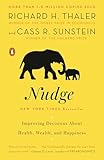
by Richard Thaler & Cass Sunstein
Richard Thaler and Cass Sunstein show how small changes to the way choices are presented can steer people toward better decisions without restricting freedom.
Check Price on Amazon (paid link)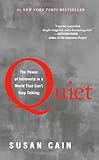
by Susan Cain
A compelling argument that our society dramatically undervalues introverts and the tremendous power of their deep thinking, focus, and quiet contributions.
Check Price on Amazon (paid link)
by Steven Pinker
Using data from archaeology, history, psychology, and criminology, Steven Pinker argues that violence in virtually every form — war, murder, torture, child abuse, animal cruelty — has declined dramatically over human history, and identifies the institutional, cognitive, and cultural forces responsible.
Check Price on Amazon (paid link)
by Oliver Sacks
Twenty-four case histories from Sacks's neurological practice — patients who have lost the ability to recognise faces, who have Tourette's, who have lost all sense of their own body, who see the world as if it were a painting. Each case is also a meditation on what it means to be a self.
Check Price on Amazon (paid link)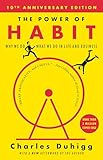
by Charles Duhigg
An examination of the science of habit formation and how habits operate in individuals, organisations, and societies — and how to change them.
Check Price on Amazon (paid link)
by Matthew Walker
A neuroscientist reveals the life-transforming power of sleep. Walker shows why sleep is the single most effective thing you can do to reset your brain and body — and the catastrophic consequences of neglecting it.
Check Price on Amazon (paid link)
by Anna Lembke
A Stanford psychiatrist explains how the flood of dopamine-triggering pleasures in modern society creates compulsive behaviour — and how to reset the pleasure-pain balance.
Check Price on Amazon (paid link)
by Daniel Goleman
The groundbreaking book that introduced the concept of emotional intelligence to mainstream audiences and argued that EQ matters more than IQ for life success.
Check Price on Amazon (paid link)
by Michael Pollan
An exploration of the new science of psychedelics — LSD, psilocybin, DMT, 5-MeO-DMT — and their potential to treat depression, addiction, and end-of-life anxiety. Part science reporting, part cultural history, part personal memoir of Pollan's own experiences with plant medicines.
Check Price on Amazon (paid link)
by Hermann Hesse
Emil Sinclair grows up in two worlds: the 'bright' world of his bourgeois family and the 'dark' world he senses underneath. Max Demian—strange, self-possessed, seemingly ageless—appears as his guide, leading him through Jungian psychology, Gnostic Christianity, and Nietzsche toward his own self-realization. Written in 1917, published in 1919.
Check Price on Amazon (paid link)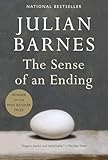
by Julian Barnes
Tony Webster, a comfortably divorced man in late middle age, receives a small bequest from the mother of his first serious girlfriend that forces him to re-examine the version of his youth he has been living with for forty years — and to confront the gap between what he remembers and what he actually did.
Check Price on Amazon (paid link)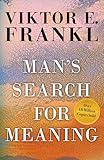
by Viktor E. Frankl
Psychiatrist Viktor Frankl's harrowing account of surviving Auschwitz forms the foundation of logotherapy — the idea that the primary human drive is not pleasure but the pursuit of meaning. One of the most important psychological texts of the 20th century.
Check Price on Amazon (paid link)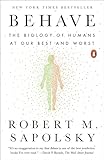
by Robert M. Sapolsky
A comprehensive exploration of the biological underpinnings of human behaviour — from the neural firing a second before an act to the evolutionary pressures that shaped our species over millions of years.
Check Price on Amazon (paid link)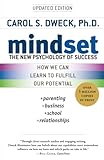
by Carol S. Dweck
Stanford psychologist Carol Dweck's research on achievement and success reveals that one simple belief about your own intelligence and abilities has a profound effect on outcomes. People with a growth mindset — who believe abilities can be developed — consistently outperform those with a fixed mindset, regardless of starting talent.
Check Price on Amazon (paid link)
by Anders Ericsson
Psychologist Anders Ericsson, the father of deliberate practice, reveals the science behind how world-class expertise is actually achieved.
Check Price on Amazon (paid link)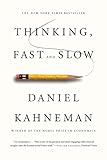
by Daniel Kahneman
Nobel laureate Daniel Kahneman explains the two systems that drive the way we think — and reveals how our intuitive System 1 thinking leads us astray in predictable, correctable ways.
Check Price on Amazon (paid link)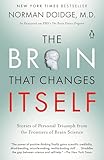
by Norman Doidge
Stories of personal triumph from the frontiers of brain science, revealing how the brain's lifelong capacity to change its own structure — neuroplasticity — offers hope for previously untreatable conditions.
Check Price on Amazon (paid link)Disclosure: Amazon links on this page are affiliate links. If you purchase through them we earn a small commission at no extra cost to you.