Editor's Pick
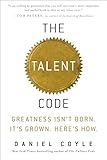
The Talent Code
by Daniel Coyle
4.5
Daniel Coyle reveals how deep practice, ignition, and master coaching combine to unlock exceptional skill in any field.
Check Price on Amazon (paid link)126 expert-reviewed books — page 2 of 6
by Daniel Coyle
Daniel Coyle reveals how deep practice, ignition, and master coaching combine to unlock exceptional skill in any field.
Check Price on Amazon (paid link)
by Brian Christian and Tom Griffiths
Computer science algorithms offer surprisingly practical guidance for everyday human decisions — from optimal stopping to the explore-exploit tradeoff to how to sort your email.
Check Price on Amazon (paid link)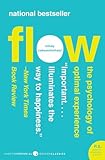
by Mihaly Csikszentmihalyi
The landmark study of the state of optimal experience — deep concentration and complete involvement that makes an activity intrinsically rewarding.
Check Price on Amazon (paid link)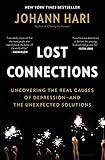
by Johann Hari
A journalist investigates the real causes of depression and anxiety — and finds they have far more to do with how we live than with brain chemistry.
Check Price on Amazon (paid link)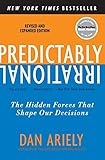
by Dan Ariely
A behavioural economist reveals the hidden forces that shape our decisions — and why we repeatedly make the same irrational choices despite knowing better.
Check Price on Amazon (paid link)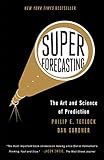
by Philip E. Tetlock & Dan Gardner
Philip Tetlock's twenty-year research programme found that a small group of ordinary people — 'superforecasters' — consistently outperform intelligence analysts with access to classified information. This book explains what they do differently.
Check Price on Amazon (paid link)
by Don Norman
The definitive guide to human-centered design — why everyday things frustrate us and how good design should be intuitive without instruction.
Check Price on Amazon (paid link)
by Annie Duke
Former World Series of Poker champion Annie Duke argues that all decisions are bets — commitments made under uncertainty — and that the key skill in life and business is separating the quality of a decision from the quality of its outcome.
Check Price on Amazon (paid link)
by Iain Banks
Frank Cauldhame, 16, lives on a small Scottish island with his father. He has killed three children in the past — all family members — and maintains the island through an elaborate system of rituals centred on the Wasp Factory, a contraption of fate. His brother Eric has escaped from a psychiatric hospital and is coming home.
Check Price on Amazon (paid link)
by Sebastian Junger
Why do soldiers miss war? Why do PTSD rates in modern armies exceed those of many historical conflicts? Junger argues that humans evolved to live in small, interdependent tribes with shared purpose and genuine mutual dependence — and that wealthy modern societies cannot provide this, producing alienation, depression, and the specific tragedy of veterans who find civilian life unbearable after combat.
Check Price on Amazon (paid link)
by Joseph Heller
Bob Slocum, a mid-level corporate executive in 1970s New York, delivers a relentless, obsessive interior monologue about his fears, his desires, his colleagues, his marriage, and his children — and the slow, suffocating realisation that nothing in his life means what he hoped it would.
Check Price on Amazon (paid link)
by Doris Lessing
Mary Turner, the wife of a failed white Rhodesian farmer, is found murdered by her Black houseboy Moses. The novel opens with this fact and moves backward, tracing how a woman who was bright and independent in the city became isolated, desperate, and dependent on a Black servant in ways neither colonial society nor she herself could acknowledge.
Check Price on Amazon (paid link)
by Kazuo Ishiguro
Etsuko, a Japanese woman now living in England, reflects on a summer in postwar Nagasaki when she befriended a strange woman named Sachiko and her troubled daughter Mariko. As Etsuko remembers, the reader begins to suspect that Sachiko may be a projection of Etsuko herself—and that the memory is protecting its keeper from something unbearable.
Check Price on Amazon (paid link)
by Herta Müller
A young Romanian woman rides a tram to her regular interrogation by the Securitate—where she is accused of sewing notes into men's suits asking foreign buyers to marry her and take her out of Romania. The entire novel takes place during a single tram ride, the narrator's mind moving between memory, fear, and the peculiar clarity of someone accustomed to terror.
Check Price on Amazon (paid link)
by Doris Lessing
Harriet and David Lovatt build a perfect large family in the 1960s English countryside, filling their house with children and relatives. Then their fifth child, Ben, is born: strange, immensely strong, and not quite human. The novel tracks what happens to a family—and a marriage—when one member refuses all social and emotional norms.
Check Price on Amazon (paid link)
by Kazuo Ishiguro
Ryder, a famous pianist, arrives in a Central European city for a concert. But the city's problems keep expanding to include him, his errands take impossible amounts of time, the streets rearrange themselves, and the people he meets keep revealing connections to his own forgotten past. Ishiguro's most formally radical novel, operating entirely in dream logic.
Check Price on Amazon (paid link)
by Jonathan Haidt
Social psychologist Jonathan Haidt explains why people disagree so fiercely about politics and religion — not because some are moral and others aren't, but because human moral psychology contains multiple foundations that different people and cultures weight differently.
Check Price on Amazon (paid link)
by Lindsay C. Gibson
Clinical psychologist Lindsay Gibson explains how emotionally immature parents create lasting effects in their adult children and provides tools for healing and establishing healthy boundaries.
Check Price on Amazon (paid link)
by Lori Gottlieb
Therapist Lori Gottlieb writes about going to therapy herself after a painful breakup, interweaving her own journey as a patient with the stories of four clients she is treating simultaneously.
Check Price on Amazon (paid link)
by Jordan B. Peterson
A clinical psychologist draws on mythology, religion, literature, and neuroscience to offer twelve principles for a meaningful and disciplined life.
Check Price on Amazon (paid link)
by Becky Kennedy
Dr. Becky Kennedy — clinical psychologist and creator of the 'Good Inside' parenting framework — argues that children's difficult behaviours reflect unmet needs and dysregulation rather than badness, and that parents can shift from reactive discipline to connection-based parenting with lasting effects.
Check Price on Amazon (paid link)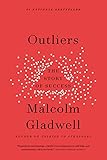
by Malcolm Gladwell
Malcolm Gladwell challenges the myth of the self-made success story, arguing that high achievers are the product of hidden advantages, extraordinary opportunities, and cultural legacies — not just individual talent and hard work.
Check Price on Amazon (paid link)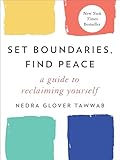
by Nedra Glover Tawwab
Licensed therapist Nedra Glover Tawwab provides a comprehensive, practical guide to identifying, setting, and maintaining healthy boundaries in every area of life.
Check Price on Amazon (paid link)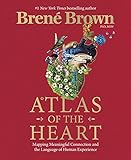
by Brené Brown
Brené Brown maps 87 human emotions and experiences, providing a language for the full complexity of what we feel and why naming emotions accurately changes our lives.
Check Price on Amazon (paid link)Disclosure: Amazon links on this page are affiliate links. If you purchase through them we earn a small commission at no extra cost to you.