Cialdini and co-authors Noah Goldstein and Steve Martin present fifty research-backed techniques for ethical persuasion, drawn from behavioral science and organized for immediate practical application.
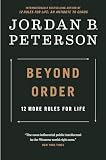
The follow-up to 12 Rules for Life, offering twelve new principles focused on navigating the dangers of too much order — rigid thinking, bureaucratic tyranny, and the stagnation of the over-controlled life.
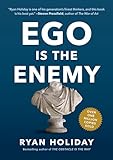
Ryan Holiday examines how ego — the sense of entitlement and inflated self-image — undermines people at every stage of life, from aspiration through success to failure.
Nobel laureate Richard Thaler's history of behavioral economics, told as memoir. Tracing his decades-long campaign to convince economists that real humans are not the rational 'Econs' of theory, he combines the science of irrational decision-making with the story of an intellectual revolution.
Steven Pinker's ambitious case against the 'blank slate' view of the mind. Marshalling evidence from genetics, neuroscience, and evolutionary psychology, Pinker argues that human nature is real and shaped by evolution — and confronts the moral and political fears that idea provokes.
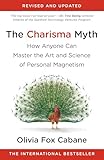
Olivia Fox Cabane dismantles the myth that charisma is an innate quality and provides a science-based framework for developing presence, power, and warmth.
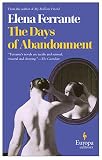
Olga's husband of fifteen years announces he is leaving her for a younger woman. The novel follows the weeks that follow — the rage, the dissolution, the terrifying loss of self that abandonment can produce in someone whose identity was built around a partnership. Ferrante's most concentrated and most visceral novel.
Science journalist Annie Murphy Paul synthesizes research showing that human cognition extends beyond the brain into body, space, and relationships — with practical implications for how we learn and think.
NPR foreign correspondent Eric Weiner travels to ten countries ranked at the extremes of happiness surveys — Netherlands, Bhutan, Qatar, Iceland, Switzerland, Thailand, India, Moldova, Britain, and the USA — to investigate what makes some places measurably happier than others.
A psychologist argues that the explosion of choice in modern life, while seemingly liberating, actually produces anxiety, paralysis, and dissatisfaction.
Science journalist Catherine Price argues that what most people call 'fun' — passive screen consumption, scrolling, numbing out — is not actually fun in the meaningful sense, and that true Fun requires the combination of three elements: playfulness, connection, and flow.
Journalist Jon Ronson tumbles down a rabbit hole into the world of psychopaths — meeting diagnosed psychopaths, the psychiatrists who identify them, the CEOs who may be among their number, and the critics who question whether the entire diagnostic enterprise makes sense. The result is a darkly funny, genuinely unsettling investigation into madness, power, and the humans who get to decide who is sane.
Nicholas Carr's Pulitzer Prize finalist argues that the internet is reshaping human cognition — training brains for distraction, skimming, and rapid switching at the expense of deep reading and sustained thought.
Neuroscientist V. S. Ramachandran's wide-ranging investigation of what makes us human. Through strange and revealing cases — phantom limbs, synesthesia, body-identity disorders — Ramachandran explores language, art, self-awareness, and consciousness, offering bold theories about the uniquely human brain.
In an overcrowded future Earth, colonists escape their misery through illegal hallucinations mediated by a corporate drug called Can-D. When the magnate Palmer Eldritch returns from Proxima Centauri with a new drug called Chew-Z, reality itself becomes uncertain — because Chew-Z hallucinations may not be hallucinations at all. Dick's most theologically disturbing novel.
A plain, good-natured heiress in 1840s New York is courted by a charming fortune hunter — with her sardonic, brilliant father watching and diagnosing everything.
US Marshal Teddy Daniels arrives at Ashecliffe Hospital for the criminally insane on Shutter Island to investigate the disappearance of a patient — and finds himself questioning his own grip on reality as the investigation deepens and the island refuses to give up its secrets.
A catalogue of 99 cognitive errors, logical fallacies, and psychological biases — from confirmation bias and survivorship bias to the sunk cost fallacy — presented as short, standalone chapters with vivid examples.
Leda, a middle-aged professor, takes a solo holiday on the Ionian coast and becomes obsessed with a young mother and her daughter on the beach — an obsession that forces her to confront the choices she made as a young mother herself. A novella about maternal ambivalence, guilt, and the parts of ourselves we cannot reconcile.
A novelist travels to Kyoto to hear the New Year's bell and reconnect with his former lover, now a celebrated painter. But she has sent her young student in her place—and the student has her own agenda. The novel becomes a story of obsession, revenge, and the destruction that art can carry. Kawabata's darkest novel.
Edith Howland keeps a diary. In it, her son Cliffie is successful, married, fulfilling his potential. In reality, Cliffie is a parasitic failure who has moved back into her house and contributes nothing. Her husband has left her. Her diary diverges from reality and then departs from it altogether — becoming not delusion but an act of private creation, a novel within the novel. Highsmith's most feminist work and one of her most devastating.
Steven Pinker's ambitious synthesis of cognitive science and evolutionary psychology. Drawing on both fields, he attempts to reverse-engineer the human mind — explaining vision, reasoning, emotion, relationships, and the arts as adaptations shaped by natural selection.
Neuroscientist David Eagleman's accessible tour of the unconscious brain. Drawing on cutting-edge research, he argues that the conscious mind is a small, often misled passenger in a brain that does most of its work below awareness — with provocative implications for selfhood, free will, and the law.
Peterson's foundational academic work, exploring how myths, religious narratives, and ideological systems function as maps of meaning that orient human beings toward action in a world of complexity and danger.