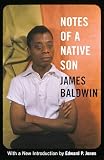
Editors Reads Verdict
Notes of a Native Son remains the essential introduction to Baldwin as an essayist — ten pieces of moral and rhetorical precision that establish the terms of his lifelong argument with America, and that demonstrate why he became the conscience his country could not ignore.
What We Loved
- Baldwin's prose in the essays is among the most powerful in the American tradition — precise, rhythmic, unyielding
- The title essay is a masterpiece of the personal essay form, holding autobiography and social analysis in exact balance
- The range is extraordinary: film criticism, social analysis, autobiography, literary criticism — all at the highest level
Minor Drawbacks
- Some of the cultural essays ('Carmen Jones,' 'Everybody's Protest Novel') are occasional pieces that show their age more than the major essays do
- Readers unfamiliar with the cultural context of the early 1950s may miss some of the specific targets Baldwin is engaging
Key Takeaways
- → Hatred — including self-hatred — destroys the one who harbors it more reliably than the one it is directed at
- → The protest novel, however well-intentioned, falsifies Black experience by reducing it to the problem of race
- → American innocence — the refusal to know the cost at which American prosperity has been purchased — is not naivety but willed ignorance
- → Black Americans are not Americans in spite of their Blackness but through it — their experience is not marginal to American history but central to it
| Author | James Baldwin |
|---|---|
| Publisher | Beacon Press |
| Pages | 175 |
| Published | November 1, 1955 |
| Language | English |
| Genre | Essays, African American Literature, Civil Rights, Nonfiction |
How Notes of a Native Son Compares
Notes of a Native Son at a glance against 3 similar books readers weigh alongside it.
| Book | Author | Rating | Best for |
|---|---|---|---|
| Notes of a Native Son (this book) | James Baldwin | ★ 4.7 | Essays |
| Beloved | Toni Morrison | ★ 4.5 | Serious readers of literary fiction with the patience for challenging, |
| The Great Gatsby | F. Scott Fitzgerald | ★ 4.7 | Classic Fiction |
| Things Fall Apart | Chinua Achebe | ★ 4.5 | All readers of literary fiction |
Notes of a Native Son Review
James Baldwin was thirty-one years old when Notes of a Native Son was published in 1955. He had been living in Paris for seven years — long enough to see America clearly by seeing it from outside. The ten essays collected here were written between 1948 and 1955, and they are the work of a writer who arrived already in full possession of his powers: the intellectual rigor, the rhetorical mastery, the refusal to simplify that would characterize everything he wrote afterward.
The title essay, placed at the center of the collection, is the key to all of it. Baldwin’s father — his stepfather, the storefront preacher whose shadow falls across Go Tell It on the Mountain — died in a mental institution in 1943, on the same day that James Baldwin turned nineteen. That same night, Harlem erupted in the riot that followed the shooting of a Black soldier by a white policeman. Baldwin went to the funeral carrying both a private grief and a public one, and the essay he wrote from this experience is perhaps the most perfectly balanced piece of personal and political writing in the American canon. He does not let himself off; he does not let America off; he does not let his father off. The famous conclusion — “It began to seem that one would have to hold in the mind forever two ideas which seemed to be in opposition. The first idea was acceptance, the acceptance, totally without rancor, of life as it is, and men as they are: in the light of this idea, it goes without saying that injustice is a commonplace. But this did not mean that one could be complacent, for the second idea was of equal power: that one must never, in one’s own life, accept these injustices as commonplace but must fight them with all one’s strength” — is not a resolution but a holding of tension, which is what genuine moral seriousness requires.
The other essays demonstrate Baldwin’s range without diluting his focus. “Everybody’s Protest Novel” — a critique of Uncle Tom’s Cabin and, more controversially, Richard Wright’s Native Son — argues that the protest novel falsifies Black experience by reducing it to the problem of race, which requires Black characters to be symbols rather than people, and which inadvertently accepts the racist premise that Blackness is, in itself, the essential fact about a human being. The essay caused a rupture with Wright that never fully healed, but its argument has held up. The pieces on Black American life in Paris and Switzerland, and on the psychological experience of being among the first Black people some Europeans had ever seen, are funny and precise and illuminating.
Notes of a Native Son is the place to begin with Baldwin if you have not read him before. It establishes the terms of his argument with America — the argument that America cannot be what it claims to be while doing what it does — with a clarity and force that the fifty years since have not diminished.
”Everybody’s Protest Novel” and the Argument with Wright
The essay “Everybody’s Protest Novel” — first published in Partisan Review in 1949 — is a defining moment in the history of American literary criticism and of Baldwin’s own intellectual life. The essay argues that the protest novel, exemplified by Harriet Beecher Stowe’s Uncle Tom’s Cabin and Richard Wright’s Native Son, inadvertently accepts the racist premise it means to contest: by reducing Black characters to embodiments of a racial problem, the protest novel denies them the individual humanity that full literary treatment requires. Bigger Thomas, Wright’s protagonist, is presented as the product of conditions so determining that he can barely be said to be a person in the sense the novel claims to vindicate.
The essay caused a permanent rupture in Baldwin’s friendship with Wright, who took it as a personal attack — which, though Baldwin denied this, it partly was. More significantly, it announced the terms of Baldwin’s own literary practice: fiction that is not about race as a problem but about human beings in whose lives race is a constant and devastating condition. The distinction is fine but essential, and the essays that follow in Notes of a Native Son are all shaped by it.
”Notes of a Native Son”: The Personal and the Political
The title essay — the collection’s centerpiece — was written in the wake of Baldwin’s father’s death in 1943 and the Harlem riot that began the same night. The essay performs what it describes: the holding together of personal grief and public catastrophe without letting either dissolve into the other. Baldwin does not use his father’s death to symbolize racism, nor does he use the riot to universalize his grief. He maintains the specificity of both — his father’s particular cruelties, the particular way the riot broke in the heat of summer, the particular shape of his own rage — while making their connection visible. The essay is also an account of his own anger: the rage he felt as a young Black man in America, the way it expressed itself, the argument with himself about whether to give in to it or to refuse it on the grounds that anger destroys the one who harbors it without changing what it is directed at.
The European Essays
The essays on Black American life in Paris and in a Swiss village — where Baldwin found himself the first Black person many of the villagers had ever seen — are less often discussed than the major political essays, but they are essential to the collection’s argument. They show Baldwin’s use of geographical displacement as a critical instrument: by looking at America from outside, by seeing American race relations in the context of European attitudes toward Black people that are older and in some ways more naked than America’s, he can make visible what the lived American experience tends to naturalize. The Swiss village essays in particular — “A Stranger in the Village” — are among the most quietly devastating things he wrote: the experience of being an absolute novelty to a community, of having your existence be astonishing, is rendered with an irony and a precision that have not dated.
The Essays as Prophecy
Reading Notes of a Native Son in the present, what strikes most forcefully is how little the fundamental situation it describes has changed. The American innocence Baldwin indicts — the refusal to know the cost at which American prosperity has been purchased — is not a condition of the 1950s. The essay collection that seemed, to some of its first readers, like a document of a specific historical moment has turned out to be structural analysis. What Baldwin described was not a phase in American history but a recurring pattern in it, and the essays’ power derives partly from this: they are not dated because the conditions that produced them have not been resolved.
Final Verdict
Our rating: 4.7/5 — Notes of a Native Son remains the essential introduction to Baldwin as an essayist — ten pieces of moral and rhetorical precision that establish the terms of his lifelong argument with America, and that demonstrate why he became the conscience his country could not ignore.
Frequently Asked Questions
What is "Notes of a Native Son" about?
Baldwin's first essay collection, published when he was thirty-one, established him as one of the essential voices in American literature. The ten essays — including the title piece, written after his father's death during the Harlem riots — examine race in America, Black American identity in Europe, and the relationship between art and social responsibility with a clarity that has not dated.
What are the key takeaways from "Notes of a Native Son"?
Hatred — including self-hatred — destroys the one who harbors it more reliably than the one it is directed at The protest novel, however well-intentioned, falsifies Black experience by reducing it to the problem of race American innocence — the refusal to know the cost at which American prosperity has been purchased — is not naivety but willed ignorance Black Americans are not Americans in spite of their Blackness but through it — their experience is not marginal to American history but central to it
Is "Notes of a Native Son" worth reading?
Notes of a Native Son remains the essential introduction to Baldwin as an essayist — ten pieces of moral and rhetorical precision that establish the terms of his lifelong argument with America, and that demonstrate why he became the conscience his country could not ignore.
Ready to Read Notes of a Native Son?
Check the current price on Amazon.
Check Price on Amazon (paid link)Prices and availability are subject to change. See Amazon for current price.
Review last updated: