Marcus Webb focuses on non-fiction that turns research into practical insight, covering productivity, psychology, personal finance, and business strategy. As Non-Fiction Editor at Editors Reads, he evaluates books on the quality of their evidence, the clarity of their frameworks, and whether they actually change how you think and act. Marcus is drawn to writers who respect the reader's intelligence and deliver ideas that hold up long after the last page. He believes a good non-fiction book should leave you with at least one thing you didn't know how to do before you read it.
The third volume of Robert Caro's biography of Lyndon Johnson follows his Senate career from 1949 to 1958 — covering his rise to Majority Leader and the passage of the Civil Rights Act of 1957, the first since Reconstruction.
The first volume of Robert Caro's biography of Lyndon Johnson traces his origins in the Texas Hill Country through his early political career and first campaign for the Senate — a portrait of consuming ambition and political genius.
Seven Russian short stories by Chekhov, Turgenev, Tolstoy, and Gogol, with Saunders's line-by-line commentary on what each story is doing and why. Developed from his Syracuse MFA course, the book is a master class in how fiction creates meaning through moment-by-moment decisions of form.
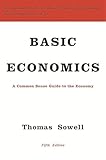
Thomas Sowell delivers a comprehensive, jargon-free introduction to economic thinking that trains readers to see beyond immediate effects to the full consequences of policies and actions.
The second volume of Robert Caro's biography of Lyndon Johnson covers the years 1941–1948, centering on Johnson's 1948 Texas Senate race and his fraudulent defeat of Coke Stevenson — one of the most thoroughly documented political thefts in American history.
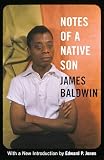
Baldwin's first essay collection, published when he was thirty-one, established him as one of the essential voices in American literature. The ten essays — including the title piece, written after his father's death during the Harlem riots — examine race in America, Black American identity in Europe, and the relationship between art and social responsibility with a clarity that has not dated.
Australia's best-selling personal finance book — a simple bucket system for managing money, paying off debt, and building wealth that has helped millions of Australians.
The BiggerPockets guide to every aspect of managing rental properties — tenant screening, leases, maintenance, evictions, and the systems that turn a rental portfolio from chaotic to profitable.
BiggerPockets' comprehensive guide to building wealth through rental properties — covering deal analysis, financing, property management, and scaling a rental portfolio.
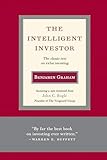
Warren Buffett calls it 'the best book about investing ever written.' First published in 1949, Graham's value investing principles have stood up to every market cycle since. The revised edition includes commentary by Jason Zweig placing Graham's timeless wisdom in modern context.
Social psychologist Jonathan Haidt explains why people disagree so fiercely about politics and religion — not because some are moral and others aren't, but because human moral psychology contains multiple foundations that different people and cultures weight differently.
Robert Caro's memoir of his career as a biographer — how he researches, how he writes, what he believes about the relationship between power and biography, and the decades he has spent trying to understand Lyndon Johnson.
Alex Hormozi breaks down how to construct irresistible business offers by maximizing value and eliminating the objections that prevent customers from saying yes.
Barbara Tuchman reconstructs the calamitous fourteenth century — the Black Death, the Hundred Years' War, peasant revolts, and the schism in the Church — through the life of a single French knight, Enguerrand de Coucy VII.
bell hooks's debut work examines the intersection of race and gender in American history, arguing that Black women have been systematically marginalized by both the civil rights movement and mainstream feminism — and that any feminism that does not center Black women's experience is incomplete.
How ordinary people built extraordinary wealth using Dave Ramsey's Baby Steps — a data-driven case for why the debt-free, invest-consistently path to millionaire status works.
Wall Street Journal reporter John Carreyrou tells the complete story of how Elizabeth Holmes and Theranos defrauded investors and endangered patients with a blood-testing technology that didn't work.
A personal finance guide written specifically for women — covering budgeting, debt, investing, and building wealth on any income with confidence and clarity.
Styron's memoir of his severe depression in 1985 — the illness he calls 'darkness visible' after a phrase in Milton — is the best literary account of clinical depression ever written: precise about its physical manifestations, honest about its irrationality, and clear-eyed about the inadequacy of the language available to describe it.
Epidemiologist and data storyteller Hans Rosling identifies ten deep-rooted instincts — from the Gap Instinct to the Fear Instinct — that systematically distort our understanding of the world, and offers a fact-based framework for seeing global progress clearly. Drawing on decades of public health data, Rosling shows that the world is, on almost every measurable dimension, far better than most people believe.
Seventeen chapters, each structured around a different near-death experience — from childhood illness to encounters with violent strangers to medical emergencies — that together form a fragmentary, non-chronological memoir of a life lived in proximity to death.
Ramit Sethi's blunt, practical, six-week programme for getting your financial life in order — automating savings, paying off debt, investing in low-cost index funds, and negotiating better deals on everything from bank fees to salary. Written for people in their 20s and 30s who find most personal finance books boring.