Where to Start with Ben Horowitz: A Reading Guide
Where to start with Ben Horowitz — how to approach The Hard Thing About Hard Things, his essential book on building and leading startups. A complete reading guide.
By Marcus Webb
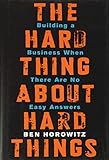
Ben Horowitz (born 1966) is the American entrepreneur, venture capitalist, and co-founder of the venture capital firm Andreessen Horowitz (a16z), one of the most influential technology investment firms in the world. Before founding a16z with Marc Andreessen, Horowitz was CEO of Opsware (formerly Loudcloud), which he founded, took public during the dot-com bust, and sold to Hewlett-Packard for $1.6 billion in 2007. His book The Hard Thing About Hard Things (2014) is widely considered the most honest and practically useful account of startup leadership ever written.
Where to Start: The Hard Thing About Hard Things (2014)
The essential Horowitz — and the startup leadership book most likely to be useful when things go wrong. The book’s premise is stated in the title: the hard things about running a company are the situations where no available choice is good, where the standard frameworks don’t apply, and where you have to make a consequential decision with incomplete information and then live with the consequences.
Horowitz structures the book around the crises he actually faced at Loudcloud and Opsware: nearly missing payroll during the dot-com bust; laying off most of the company while the stock was collapsing; having his best engineering VP quit three months before a critical product launch; facing a board that wanted to sell the company at a price he considered deeply undervalued. These accounts are specific, emotionally honest, and genuinely instructive in a way that case studies written after the fact typically are not.
The management frameworks that emerge from these experiences address the situations that most management books avoid:
- How to determine whether to fire a senior executive who is struggling (the ‘who would you hire to replace them?’ test)
- How to manage your own psychology through a company crisis
- The difference between ‘wartime CEO’ and ‘peacetime CEO’ behaviour, and when each is appropriate
- How to conduct layoffs with dignity
- How to handle the employee who was great at one stage but cannot scale to the next
The book is leavened throughout by hip-hop lyrics that Horowitz uses as section epigraphs — an idiosyncratic and genuinely effective device for grounding abstract management advice in the visceral.
Why The Hard Thing About Hard Things Is the Ideal First Book
For a reader new to Ben Horowitz, The Hard Thing About Hard Things is the ideal first book because it is his most influential work and the fullest expression of his distinctive contribution, the brutally honest account of the genuinely hard challenges of building and running a company. Drawing on his own experience as a founder and chief executive, Horowitz offers in The Hard Thing About Hard Things a candid and practical guide to the difficult realities of leadership that most business books avoid, the layoffs, the crises, the impossible decisions, the loneliness of command. As an entry point, it is ideal because it lays out his distinctive perspective directly and compellingly, offering hard-won wisdom about the genuinely difficult parts of running a company rather than the comfortable platitudes of conventional business advice. It welcomes the newcomer with its candor, its practical wisdom, and its bracing honesty, offering real guidance for the hardest challenges of leadership. It is his best-known book and the one that best represents his approach, so that the new reader encounters Horowitz’s distinctive perspective from the first. For the newcomer, then, The Hard Thing About Hard Things is the natural and ideal starting point.
What to Expect as a New Reader
As a new reader, you can expect The Hard Thing About Hard Things to be a candid, practical, and bracingly honest guide to the genuinely difficult challenges of building and running a company. You can expect candor, for Horowitz draws on his own experience as a founder and chief executive to address the hard realities of leadership that most business books avoid, the layoffs, the crises, the impossible decisions, and the loneliness of command. You can expect practical wisdom, for the book offers real, hard-won guidance for the difficult parts of running a company, grounded in genuine experience rather than abstract theory. You can expect bracing honesty, for Horowitz refuses the comfortable platitudes of conventional business advice and confronts the genuinely hard things directly. You can expect a perspective valuable to founders, executives, and anyone facing the difficult realities of leadership. Expect, in short, a candid, practical, and bracingly honest guide to the hard challenges of building and running a company, a valuable and distinctive introduction to Horowitz’s perspective.
Going Deeper After Your First Book
Once The Hard Thing About Hard Things has introduced you to Horowitz’s perspective, the reader who wishes to go deeper can explore his other work, which extends his thinking on leadership and management to further questions, particularly the crucial matter of organizational culture. His subsequent work addresses how leaders shape the culture of their organizations, exploring what culture is, why it matters, and how it is built, in the same candid and practical style. Reading this after The Hard Thing About Hard Things deepens your engagement with Horowitz’s distinctive thinking on leadership and management, extending it from the hard challenges of running a company to the shaping of organizational culture. His characteristic candor and practical wisdom run through his work, and the reader who has valued The Hard Thing About Hard Things will find the same honest guidance in his other writing. Building your reading journey through Horowitz’s work is a matter of following his thinking on leadership from the hard challenges of management to the shaping of culture. The reader who begins with The Hard Thing About Hard Things and continues through his work will find a consistently candid and valuable guide to the realities of leadership.
Reading Ben Horowitz
The Hard Thing About Hard Things is his essential book. His follow-up What You Do Is Who You Are (2019) addresses company culture through historical case studies and is a strong second read. Both are standalone.
For the full Ben Horowitz bibliography, reviews, and biography, visit the Ben Horowitz author page on Editors Reads.
Affiliate disclosure: Links to Amazon on this page are affiliate links. We earn a small commission at no extra cost to you.
Frequently Asked Questions
Where should I start with Ben Horowitz?
The Hard Thing About Hard Things (2014) is the essential starting point — Horowitz's account of founding and running Opsware through the dot-com bust and its eventual acquisition by Hewlett-Packard for $1.6 billion, combined with practical management advice for startup founders dealing with genuinely difficult situations. One of the most honest and practically useful startup books written; widely cited in Silicon Valley as the most useful book on the realities of founding a company.
What is The Hard Thing About Hard Things about?
The Hard Thing About Hard Things presents the startup experience without the survivorship bias that distorts most entrepreneurship memoirs — Horowitz writes about the times he nearly missed payroll, the layoffs he had to conduct, the key employees who quit at the worst moments, the investors who wanted to fire him, and the decisions that had no good options. Interspersed with these personal accounts are practical frameworks for the situations most startup books don't address: how to demote a loyal employee, how to manage your own psychology through a crisis, how to figure out whether to sell the company.
Is the book relevant to managers outside Silicon Valley startups?
The Hard Thing About Hard Things is primarily written for startup founders and early-stage company leaders, and its specific examples (venture capital dynamics, technology company contexts, Silicon Valley culture) are drawn from that world. The management frameworks — particularly on wartime versus peacetime CEO leadership, on hiring and firing senior executives, and on maintaining your own psychology through extreme pressure — are applicable to managers in other contexts. The book is widely read outside the startup world by managers who want honest accounts of difficult leadership situations.
What should I read after The Hard Thing About Hard Things?
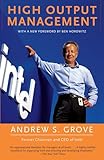
After The Hard Thing About Hard Things, Horowitz's What You Do Is Who You Are (2019) examines company culture through historical case studies. Andrew Grove's High Output Management (which Horowitz credits as foundational to his management thinking) is the essential companion text. Brad Feld's Venture Deals explains the investment dynamics Horowitz describes from the other side. Phil Knight's Shoe Dog provides another founder memoir with comparable honesty.