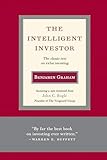
Where to Start with Benjamin Graham and David Dodd: A Reading Guide
Where to start with Benjamin Graham and David Dodd — how to approach Security Analysis, the foundational text of value investing. A complete reading guide.
By Marcus Webb

Benjamin Graham (1894–1976) was an American economist and professional investor at Columbia University, widely regarded as the father of value investing. David Dodd (1895–1988) was his Columbia colleague and co-author. Security Analysis: Principles and Technique, first published in 1934 in the aftermath of the Great Crash, is the foundational text of a tradition that produced Warren Buffett, Seth Klarman, Howard Marks, and the majority of serious equity analysts for the following century. The sixth edition, published in 2008, is the recommended contemporary entry point.
Where to Start: Security Analysis (2008, 6th edition)
The essential Graham and Dodd — and the foundational text of value investing, written in response to one of the most catastrophic financial failures in modern history. Security Analysis was first published in 1934, five years after the 1929 crash had destroyed decades of accumulated wealth and exposed the speculative frenzy that had passed for investment throughout the 1920s. Graham and Dodd’s response was methodical and precise: if speculation disguised as investment had caused this, then the first task was to define investment rigorously.
Their definition remains the most durable in financial literature: an investment operation is one which, upon thorough analysis, promises safety of principal and an adequate return. Operations not meeting these requirements are speculative. Everything that follows in the 700-page text is an elaboration of what “thorough analysis” means in practice.
The intellectual core of the framework is the distinction between intrinsic value and market price. A security has an intrinsic value — derived from the company’s assets, earnings power, dividends, and business prospects — that is real and estimable, distinct from the price at which it happens to trade on any given day. The market, as Graham later personified it, is an emotional mechanism that prices securities based on sentiment, momentum, and crowd psychology as much as underlying economics. The disciplined analyst exploits the gap between these two things.
The margin of safety is how that exploitation is operationalised. The principle is to buy securities only when market price falls substantially below a conservatively estimated intrinsic value — not slightly below, but significantly below — so that even if the analyst’s estimate of intrinsic value is materially wrong, the investment still produces an acceptable outcome. This probabilistic, error-tolerant approach to valuation is what distinguishes Graham and Dodd’s framework from both speculative buying and the more optimistic discounted cash flow models that dominate modern financial analysis.
The framework covers bonds (earnings coverage, asset coverage, contractual protections), preferred stocks, common stocks (earnings normalisation across business cycles, asset value as a floor, qualitative assessment of management through their capital allocation record), and special situations including mergers, liquidations, and reorganisations. The accounting examples throughout reference Depression-era financial statements, and modern readers will need to translate the specific line items. This is significant but not disqualifying — the analytical principles apply to twenty-first-century companies with the same force they applied to 1930s railroads.
The sixth edition’s prefatory essays from contemporary value investors — including Seth Klarman’s preface, which is the most valuable single piece of contextualising commentary available on the text — explain how modern practitioners apply Graham and Dodd’s principles in contemporary markets, where the landscape has changed but the underlying logic has not.
Security Analysis is not a book for beginners, and it rewards multiple readings over years rather than a single cover-to-cover pass. It is the book that every serious equity analyst eventually confronts.
Why Security Analysis Is the Ideal First Book
For a reader new to Benjamin Graham and David Dodd, Security Analysis is the foundational first book because it is their landmark work, the founding text of value investing, and the fullest expression of their rigorous, analytical approach to evaluating investments. Security Analysis lays out a thorough, disciplined method for analyzing stocks and bonds and determining their intrinsic value, establishing principles that have influenced generations of investors. As an entry point it is essential for the serious student, for it is the defining text of value investing, though it is detailed and demanding. It welcomes the dedicated newcomer with its rigorous method, its enduring principles, and its analytical depth, drawing the reader into the foundations of value investing. It is the founding work of the discipline, so the new reader encounters value investing at its source. For the newcomer serious about investing, then, Security Analysis is the foundational starting point, though many begin with Graham’s more accessible later work first.
What to Expect as a New Reader
As a new reader, you can expect Security Analysis to be a rigorous, analytical, and foundational work on investing. You can expect a disciplined method, for the book lays out a thorough approach to analyzing stocks and bonds. You can expect a focus on intrinsic value, for the authors emphasize determining the underlying value of a security based on careful analysis. You can expect enduring principles, including the importance of a margin of safety and the distinction between investment and speculation. You can expect analytical depth, for the book is detailed, technical, and demanding. You can expect the foundations of value investing, the discipline this book founded. You can expect a serious, scholarly work rather than a quick read. Many readers begin with Graham’s more accessible later book first. Expect, in short, a rigorous, analytical, and foundational work on investing, the source text of value investing.
Going Deeper After Your First Book
Once Security Analysis has introduced you to the foundations of value investing, the reader who wishes to go deeper, or who wants a more accessible entry, can turn to Benjamin Graham’s later and more famous book for general investors, which distills his philosophy into more readable form and is often recommended as the single best book on investing for the individual. Beyond Graham and Dodd, the reader can explore the wider tradition of value investing they founded, including the writings of their most famous disciple, Warren Buffett, and of other value investors who built on their principles. Reading more widely deepens your engagement with the value-investing approach, the focus on intrinsic value, discipline, and a margin of safety. Their foundational principles run through the whole tradition. Building your reading journey from Security Analysis is a matter of following its principles into Graham’s later book and the wider value-investing literature. The reader who begins here will have encountered the founding text of value investing.
Reading Benjamin Graham and David Dodd
Begin with Graham’s The Intelligent Investor — the accessible version of his principles for general readers. Security Analysis is the primary source for those who want the analytical framework at full depth.
For the full Benjamin Graham and David Dodd bibliography, reviews, and biography, visit the Benjamin Graham and David Dodd author page on Editors Reads.
Affiliate disclosure: Links to Amazon on this page are affiliate links. We earn a small commission at no extra cost to you.
Frequently Asked Questions
Where should I start with Benjamin Graham and David Dodd?
Security Analysis: Principles and Technique (1934, 6th edition 2008) is the essential Graham-Dodd work — the foundational text of value investing and one of the most intellectually rigorous books in financial literature. It defines investment against speculation, establishes the margin of safety principle, and builds the analytical framework that Warren Buffett and generations of value investors have used. Not suitable for beginners; requires existing financial literacy.
What is Security Analysis about?
Security Analysis argues that investment can be distinguished from speculation through rigorous analysis: an investment operation is one that, upon thorough analysis, promises safety of principal and an adequate return. Everything else is speculation. Graham and Dodd then build a comprehensive analytical framework for evaluating bonds, preferred stocks, and common stocks based on intrinsic value — the value derived from a company's assets, earnings power, and business prospects — and the margin of safety between intrinsic value and market price.
How difficult is Security Analysis to read?
Security Analysis is one of the most demanding books in financial literature. At 700 pages of rigorous analysis, with Depression-era accounting examples that require translation to modern standards, it demands genuine financial literacy as a prerequisite and significant time and patience. The sixth edition's prefatory essays by contemporary investors including Seth Klarman help contextualise the text. Most serious value investors read it in sections rather than straight through and return to it repeatedly over years.
What should I read before and after Security Analysis?
Before Security Analysis, Graham's The Intelligent Investor is the accessible introduction to his value investing principles for general readers — read it first. After Security Analysis, Poor Charlie's Almanack covers Charlie Munger's evolution of the Graham-Dodd framework and its application to business quality. Howard Marks's The Most Important Thing covers the modern application of margin of safety thinking by one of the most successful value investors of the era.