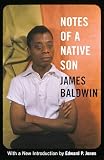
James Baldwin was an American novelist, essayist, and activist whose searing explorations of race, sexuality, and identity in twentieth-century America made him one of the most essential and morally urgent writers in the language.
James Baldwin was born in Harlem in 1924, the eldest of nine children raised by his mother and his stepfather — a storefront preacher whose fierce, terrifying faith would become one of the central subjects of Baldwin’s first novel. He left the United States for Paris in 1948, at the age of twenty-four, having concluded that he could not write honestly about Black American life while living inside the suffocating pressure of American racism. The distance gave him the angle of vision his work required, and the essays and novels he produced from exile are among the sharpest accounts of America ever written by an American.
His early novels — Go Tell It on the Mountain and Giovanni’s Room — established the two great subjects that would define his career: the Black American experience in all its religious, familial, and historical weight, and the question of sexuality and desire across the boundaries that American society polices most violently. Giovanni’s Room, written in 1956 entirely about white characters in Paris, was his way of testing whether he could write about homosexuality without the subject becoming lost inside the race question; the answer was yes, and the novel remains one of the most lucid accounts of sexual self-knowledge and its refusal in literature. His essay collections — Notes of a Native Son, Nobody Knows My Name, The Fire Next Time — brought his moral clarity and rhetorical power to a wider audience and made him one of the most prominent voices of the civil rights era.
Baldwin spent his life moving between the United States and Europe, never fully at home in either, and this position outside — seeing America from a distance that did not diminish his love for it but allowed him to see exactly what it was — is what gave his work its particular authority. He died in Saint-Paul-de-Vence, France, in 1987, having written five novels, two plays, a collection of short stories, and several volumes of essays that together constitute one of the most sustained and unflinching moral examinations of American life ever undertaken.
Reading Guides