The best popular science books do not simplify — they translate. They take ideas that took decades to develop and render them with enough clarity and depth that a non-specialist can genuinely understand them. These books do that.
Pulitzer Prize-winning science journalist Ed Yong explores the concept of Umwelt — the unique sensory world each animal species inhabits — and reveals how different creatures perceive colours we cannot see, sounds we cannot hear, electric fields we cannot feel, and magnetic compasses we cannot sense.
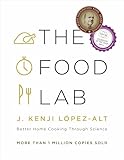
J. Kenji López-Alt's landmark culinary science book explains the science behind everyday cooking and provides hundreds of recipes built on tested, proven techniques.
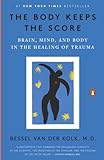
A landmark work in trauma psychology by one of the world's foremost authorities on PTSD. Van der Kolk reveals how trauma reshapes both body and brain, undermining survivors' capacity for pleasure, engagement, self-control, and trust.
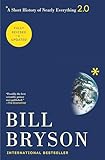
Bill Bryson's quest to understand everything that has ever happened, from the Big Bang to the rise of civilisation — written with his characteristic wit and warmth.
Epidemiologist and data storyteller Hans Rosling identifies ten deep-rooted instincts — from the Gap Instinct to the Fear Instinct — that systematically distort our understanding of the world, and offers a fact-based framework for seeing global progress clearly. Drawing on decades of public health data, Rosling shows that the world is, on almost every measurable dimension, far better than most people believe.
The co-creator of ImageNet and a pioneer of modern computer vision tells the story of her journey from immigrant teenager to AI's most influential scientist — and reflects on what AI's creators owe to the humans whose data made it possible.
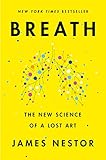
A science journalist investigates the health implications of how we breathe — and finds that most people are doing it wrong, with significant consequences for their health.
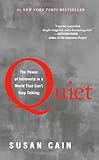
A compelling argument that our society dramatically undervalues introverts and the tremendous power of their deep thinking, focus, and quiet contributions.
Using data from archaeology, history, psychology, and criminology, Steven Pinker argues that violence in virtually every form — war, murder, torture, child abuse, animal cruelty — has declined dramatically over human history, and identifies the institutional, cognitive, and cultural forces responsible.
Twenty-four case histories from Sacks's neurological practice — patients who have lost the ability to recognise faces, who have Tourette's, who have lost all sense of their own body, who see the world as if it were a painting. Each case is also a meditation on what it means to be a self.
A neuroscientist reveals the life-transforming power of sleep. Walker shows why sleep is the single most effective thing you can do to reset your brain and body — and the catastrophic consequences of neglecting it.
A Stanford psychiatrist explains how the flood of dopamine-triggering pleasures in modern society creates compulsive behaviour — and how to reset the pleasure-pain balance.
The groundbreaking book that introduced the concept of emotional intelligence to mainstream audiences and argued that EQ matters more than IQ for life success.
What happens to human bodies donated to science — surgical training, crash testing, forensic decomposition research, ballistics testing, and the specific history of what cadavers have contributed to human knowledge. Rendered with Roach's characteristic meticulous research and deadpan wit.
An exploration of the new science of psychedelics — LSD, psilocybin, DMT, 5-MeO-DMT — and their potential to treat depression, addiction, and end-of-life anxiety. Part science reporting, part cultural history, part personal memoir of Pollan's own experiences with plant medicines.
Richard Preston's harrowing true account follows the 1989 appearance of a lethal strain of the Ebola virus in a primate research facility in Reston, Virginia—just outside Washington, D.C.—and traces the virus's earlier outbreaks in Central Africa, where it killed with near-total lethality. It is one of the most terrifying science books ever written.
The definitive life of J. Robert Oppenheimer — the theoretical physicist who directed the Manhattan Project, witnessed the first atomic detonation at Trinity, and was subsequently destroyed by the McCarthyite security apparatus he had helped to empower. Twenty-five years in the making, it won the 2006 Pulitzer Prize for Biography.
A Pulitzer Prize-winning exploration of how consciousness, self-reference, and meaning emerge from formal systems, through the intertwined work of a mathematician, an artist, and a composer.
A Pulitzer Prize-winning history of cancer — its origins, treatments, and future — told through the stories of patients, scientists, and physicians across centuries.
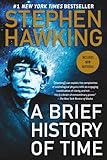
A Brief History of Time by Stephen Hawking, The Selfish Gene by Richard Dawkins, and The Gene by Siddhartha Mukherjee are among the most acclaimed popular science books. For neuroscience, The Brain That Changes Itself by Norman Doidge is an excellent starting point.
Scientists frequently recommend The Double Helix by James Watson (DNA discovery narrative), Surely You're Joking, Mr. Feynman! by Richard Feynman, and The Structure of Scientific Revolutions by Thomas Kuhn as essential reading inside and outside the sciences.
A Short History of Nearly Everything by Bill Bryson is the most praised popular science book for general readers — it covers physics, chemistry, geology, and biology with wit and clarity. The Elegant Universe by Brian Greene is the best introduction to string theory and modern physics.
Disclosure: Amazon links on this page are affiliate links. If you purchase through them we earn a small commission at no extra cost to you.
We use cookies to understand how visitors use our site (Google Analytics). No data is collected until you accept.
Privacy Policy