Bill Gates lays out a comprehensive framework for understanding the climate crisis — who emits what, which sectors are hardest to decarbonize, and what combination of existing technology and needed breakthroughs can plausibly get global emissions to zero. The book is part primer, part investment thesis, and part call to action.
David Wallace-Wells's harrowing account of climate change. Expanding his viral magazine essay, he surveys the cascading catastrophes a warming planet will bring — heat, hunger, drowning, wildfire, plague, economic collapse — in an unflinching alarm about the future we are choosing.
Michael Pollan's exploration of three psychoactive plant substances — opium, caffeine, and mescaline. Blending history, science, memoir, and participatory journalism, he examines the strange and arbitrary ways societies decide which plant drugs to celebrate, tolerate, or condemn.
Dr. Steven Gundry argues that longevity depends primarily on gut microbiome health, and provides a comprehensive protocol for living vigorously into old age.
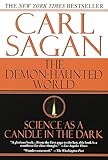
Carl Sagan's passionate defense of scientific thinking and critical reasoning, arguing that the tools of skepticism are the only reliable protection against superstition, pseudoscience, and those who would exploit human credulity.
A nephrologist argues that obesity is caused by insulin resistance and chronic insulin elevation — not by calories in/calories out — and that intermittent fasting is the solution.
Primatologist Frans de Waal argues that our methods for measuring animal intelligence have systematically underestimated cognitive complexity in non-human species — because we designed tests for human cognition and then measured animals against human benchmarks rather than attending to their evolutionary context.
The author of the world's standard AI textbook argues that the standard model of AI development — building systems that optimise for fixed objectives — is fundamentally flawed, and proposes a new model based on building machines that are uncertain about what humans want.
Inspired by the famous photograph of Earth from four billion miles away, Sagan's visionary meditation on humanity's place in the cosmos argues for space exploration as a moral imperative — and offers some of the most beautiful science writing ever put to paper.
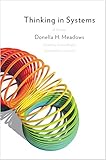
Environmental scientist Donella Meadows provides a primer on systems thinking — the art of seeing the world as interconnected structures of feedback, stocks, and flows — with applications from ecology to economics to policy.
Jared Diamond examines why some of the world's great civilizations collapsed while others survived, identifying five key factors — environmental damage, climate change, hostile neighbors, lost trading partners, and societal response — that determine a society's fate.
Frans de Waal uses the filmed farewell between a dying chimpanzee named Mama and a human friend she had known for decades to explore the science of animal emotions — arguing that the emotional lives of non-human animals are more complex, more varied, and more continuous with human emotional experience than most scientific orthodoxy acknowledges.
Dr. Satchin Panda, the world's leading researcher on circadian rhythms, explains how aligning your eating, sleeping, and activity with your internal clock dramatically improves health outcomes.
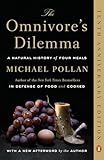
Michael Pollan traces four meals from their origins to the table — industrial, industrial organic, local pastoral, and hunted-gathered — and asks what we should eat in a world of infinite choice.
Charles Darwin's world-changing 1859 work, which set out the theory of evolution by natural selection. Marshalling two decades of evidence with patience and care, Darwin transformed our understanding of life on Earth and the place of humanity within it.
Hawking's final book addresses ten of humanity's most pressing questions: Is there a God? Will we survive on Earth? Is time travel possible? Should we colonize space? Assembled posthumously from his notes and essays, it is the clearest expression of his intellectual legacy.
Through the story of a young patient in Sierra Leone, John Green traces how tuberculosis shaped art, history, and injustice — and why a curable disease still kills more than a million people a year. A passionate, deeply human work of narrative nonfiction.
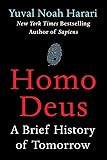
A sweeping vision of humanity's future as Homo sapiens pursues the ancient goals of immortality, bliss, and divinity — and what we risk losing in the process.
Robert Lustig argues that chronic disease is driven by processed food and metabolic dysfunction — and that the current medical and food industry response actively worsens the problem.
The actual science and logistics of sending human beings into space — what zero gravity does to the body, how astronauts eat and use the toilet, the psychology of confinement, the history of space medicine research, and why Mars is significantly harder than the moon.
Dawkins dismantles the argument from design — the claim that complex organisms require a designer — by demonstrating how natural selection can generate complexity from simplicity without guidance. His most fully realised work of popular science.
Pinker argues that language is a biological instinct — an evolved faculty, not a cultural invention. Weaving together linguistics, cognitive science, evolutionary biology, and neuroscience, he makes one of the most compelling cases in popular science.
Rachel Carson's National Book Award–winning portrait of the ocean. With scientific authority and lyrical grace, she tells the story of the sea — its origins, its tides and currents, its hidden depths and teeming life — in one of the most beloved works of nature writing ever published.
Jared Diamond's first major popular book asks what makes humans unique among the great apes — examining language, art, agriculture, drugs, and genocide as distinctly human traits — and what our evolutionary history predicts about our future.