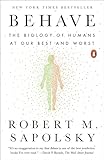
A comprehensive exploration of the biological underpinnings of human behaviour — from the neural firing a second before an act to the evolutionary pressures that shaped our species over millions of years.
James Gleick chronicles the birth of chaos theory and the scientists who discovered that randomness and disorder follow surprising mathematical patterns.
A writer and researcher examines the central technical challenge of AI development: ensuring that AI systems do what we actually want them to do rather than what we literally told them to do — a problem that grows in complexity as systems grow in capability.
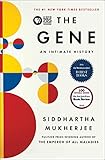
A comprehensive history of the gene from Mendel's peas to CRISPR — and a searching investigation of what our growing power over the genome means for humanity.
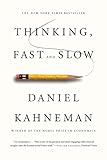
Nobel laureate Daniel Kahneman explains the two systems that drive the way we think — and reveals how our intuitive System 1 thinking leads us astray in predictable, correctable ways.
Why did Europeans conquer the Americas, Africa, and Australia rather than the other way around? Jared Diamond's Pulitzer Prize-winning answer overturns centuries of racial and cultural explanations: the answer lies in geography, agriculture, and the uneven distribution of domesticable plants and animals.
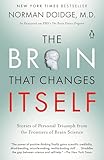
Stories of personal triumph from the frontiers of brain science, revealing how the brain's lifelong capacity to change its own structure — neuroplasticity — offers hope for previously untreatable conditions.
James Gleick traces the history of information from African talking drums through Claude Shannon's information theory to the digital deluge of the modern age.
Richard Dawkins's landmark restatement of Darwinian natural selection from the perspective of the gene, introducing the meme concept and transforming evolutionary biology.
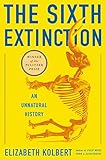
Elizabeth Kolbert reports from the front lines of the ongoing mass extinction event — the sixth in Earth's history, and the first caused by a single species.
Computer science algorithms offer surprisingly practical guidance for everyday human decisions — from optimal stopping to the explore-exploit tradeoff to how to sort your email.
Oliver Sacks's collection of seven 'paradoxical tales' of neurological difference. From a colorblind painter to a surgeon with Tourette's to the autistic scientist Temple Grandin, Sacks explores how the brain's variations reshape entire worlds — and finds richness rather than mere deficit.
In the late 1960s, Sacks treated a group of patients who had been encephalitic 'sleeping sickness' survivors since the 1920s. He administered the new drug L-DOPA and watched them awaken — often dramatically — after decades of stasis. Then, as the drug's effects became erratic, he watched them struggle.
Steven Pinker's comprehensive argument that the Enlightenment values of reason, science, humanism, and progress have dramatically improved the human condition — and why we should defend them.
A Harvard geneticist argues that aging is a disease — one that can be treated — and shares the cutting-edge research on sirtuins, NAD+, and the information theory of aging.
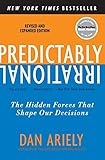
A behavioural economist reveals the hidden forces that shape our decisions — and why we repeatedly make the same irrational choices despite knowing better.
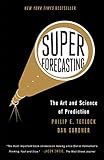
Philip Tetlock's twenty-year research programme found that a small group of ordinary people — 'superforecasters' — consistently outperform intelligence analysts with access to classified information. This book explains what they do differently.
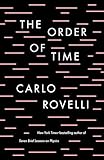
A theoretical physicist's meditation on the nature of time — what it is, why it flows in one direction, and what physics reveals about its deepest structure.
MIT physicist Max Tegmark explores the landscape of possible futures as artificial intelligence approaches and then surpasses human-level intelligence — and what choices humanity must make now.
A Nobel-winning scientist convicted of sexual abuse writes his memoir from prison, describing the 1950 expedition that discovered a remote jungle tribe — and a population of apparently immortal humans.
Harvard paleoanthropologist Daniel Lieberman traces six million years of human evolution to explain how the bodies we inhabit were shaped for a world that no longer exists, and why the mismatch between our evolved biology and modern life is the root cause of many of today's most common chronic diseases. The book is both a natural history of the human body and a provocative argument for rethinking how we treat it.