Technology books at their best are not manuals — they explain how the tools remaking our world were built, who built them, and what they are doing to us. From the histories of Silicon Valley to clear-eyed accounts of artificial intelligence and surveillance, these are the books for understanding the defining force of the age.
The co-creator of ImageNet and a pioneer of modern computer vision tells the story of her journey from immigrant teenager to AI's most influential scientist — and reflects on what AI's creators owe to the humans whose data made it possible.
Wharton professor Ethan Mollick — one of the most trusted guides to AI in the business world — offers practical wisdom on how individuals and organisations can work effectively with AI systems while maintaining the human judgment that makes the collaboration valuable.
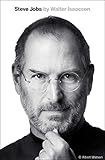
The authorised biography of Apple co-founder Steve Jobs, based on more than forty interviews with Jobs and over one hundred with family members, friends, adversaries, and colleagues.
A writer and researcher examines the central technical challenge of AI development: ensuring that AI systems do what we actually want them to do rather than what we literally told them to do — a problem that grows in complexity as systems grow in capability.
A philosophy of technology use in which you focus your online time on a small number of carefully selected activities that strongly support things you value.
James Gleick traces the history of information from African talking drums through Claude Shannon's information theory to the digital deluge of the modern age.
A sweeping history of the digital revolution — from Ada Lovelace and Charles Babbage through Alan Turing, Claude Shannon, William Shockley, and the personal computer pioneers — arguing that the most important innovations were always the product of collaboration, not lone genius.
Computer science algorithms offer surprisingly practical guidance for everyday human decisions — from optimal stopping to the explore-exploit tradeoff to how to sort your email.
Harvard Business School professor Shoshana Zuboff's landmark analysis of how Google, Facebook, and the surveillance economy extract human behavioural data as a raw material, process it into prediction products, and sell certainty about future behaviour to advertisers and others.
MIT physicist Max Tegmark explores the landscape of possible futures as artificial intelligence approaches and then surpasses human-level intelligence — and what choices humanity must make now.
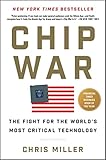
Economic historian Chris Miller traces the history of the semiconductor industry from the invention of the transistor to the US-China technology war, showing how computer chips became the defining resource of the twenty-first century.
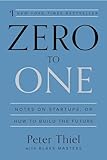
Peter Thiel — PayPal co-founder, first outside Facebook investor — argues that true progress comes from creating something genuinely new (0 to 1), not copying what already works (1 to n). A contrarian framework for building companies that matter.
A Harvard-trained mathematician and data scientist examines how algorithmic models — used in hiring, credit scoring, education, criminal justice, and policing — encode and amplify existing human biases while hiding behind a veneer of mathematical objectivity.
A former president of Google China and venture capitalist argues that China, not the United States, is likely to dominate AI in the coming decades — and examines what this means for geopolitics, the global economy, and the human future.
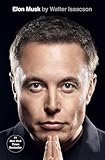
Walter Isaacson's biography of Elon Musk, based on two years of access and hundreds of interviews, covering Tesla, SpaceX, Twitter, and the tortured psychology behind his drive.
The author of Sapiens argues that the defining question of the AI age is not whether AI is intelligent but whether AI is reliable — and traces the history of information networks, from cave paintings through printing presses to social media, to argue that AI represents something qualitatively new in kind.
The co-founder of DeepMind argues that AI and synthetic biology together constitute a wave of technological change so profound and so fast that the current nation-state order cannot contain it — and proposes a framework for thinking about what containment might look like.
Bill Gates lays out a comprehensive framework for understanding the climate crisis — who emits what, which sectors are hardest to decarbonize, and what combination of existing technology and needed breakthroughs can plausibly get global emissions to zero. The book is part primer, part investment thesis, and part call to action.
The author of the world's standard AI textbook argues that the standard model of AI development — building systems that optimise for fixed objectives — is fundamentally flawed, and proposes a new model based on building machines that are uncertain about what humans want.
The definitive guide to modern technology product management — how the best product teams at companies like Amazon, Google, and Netflix discover and deliver products that customers love.
The untold story of how four friends — Jack Dorsey, Ev Williams, Biz Stone, and Noah Glass — created Twitter and then destroyed their friendships fighting for control of it.
The Innovators by Walter Isaacson, Weapons of Math Destruction by Cathy O'Neil, and The Shallows by Nicholas Carr are widely recommended. For artificial intelligence, Life 3.0 by Max Tegmark and Superintelligence by Nick Bostrom are the most discussed.
Life 3.0 by Max Tegmark is the most accessible big-picture introduction to artificial intelligence and its implications. For the risks, Superintelligence by Nick Bostrom is the foundational text, and for the present-day social impact, Weapons of Math Destruction by Cathy O'Neil is essential.
The Innovators by Walter Isaacson traces the people who built the digital age from Ada Lovelace to the internet. Hackers by Steven Levy and Where Wizards Stay Up Late by Hafner and Lyon are excellent histories of computing and the internet's origins.
Disclosure: Amazon links on this page are affiliate links. If you purchase through them we earn a small commission at no extra cost to you.
We use cookies to understand how visitors use our site (Google Analytics). No data is collected until you accept.
Privacy Policy