On the human-settled world of Anjiin, where humanity's origins are forgotten, a brilliant research team is captured when the alien Carryx empire conquers the planet and carries off useful humans as enslaved labor to compete for survival.
The Ganguli family navigates the immigrant experience across generations — from Calcutta to Boston — as son Gogol rebels against the name and culture he was born into.
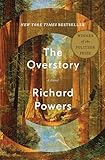
Nine Americans whose lives intertwine around trees and forests, forming a novel about activism, loss, and humanity's relationship with the natural world. Winner of the Pulitzer Prize for Fiction.
Birmingham in the 1970s — four boys at a grammar school navigating adolescence against the backdrop of IRA bombings, the first Thatcher election, race relations, punk rock, and the decline of British manufacturing. A warm, funny, and genuinely melancholy novel of a decade and a generation.
Charles Arrowby, retired theatre director, retreats to a house on the English coast to write his memoirs and renounce the world. He then discovers that his childhood sweetheart, Hartley, lives nearby — and becomes obsessed with rescuing her from her marriage. Murdoch's Booker Prize winner is a novel about the self-deceptions of obsessive love.
Art historian Max Morden, recently widowed, returns to the Irish seaside town where he spent a childhood summer with the Grace family — a summer that ended in tragedy he has spent decades not quite understanding. The novel interweaves present grief with recovered memory in prose of extraordinary density.
Quoyle, a hapless journalist from New York, moves to Newfoundland with his daughters after his wife's death. He takes a job at the local paper covering shipping news. The novel is about recovery — from grief, from humiliation, from a life that has been defined by the needs of others — in a landscape of fog, ice, and sudden violent weather.
Two brothers return to their ancestral village in a forest valley in Shikoku to restore the family storehouse and confront their family's history. One brother descends into political activism and mythologized violence; the other watches, drinks, and tries to understand. Against the backdrop of Japan's 1960s student protests, Ōe creates his most ambitious novel.
A history of the cell — from its discovery in the 17th century through the present era of cellular medicine — that is simultaneously a meditation on what it means to be a body made of cells, and a tour of the frontier of medicine where cells are being engineered to cure cancer, repair organs, and rewrite genetic destiny.
Shingo, an aging Tokyo businessman, hears the mountain sound at night—a premonition of death. He is more tender toward his daughter-in-law than toward his wife or children. The novel traces a year through seasons, dreams, and daily life in postwar Japan, rendering old age and desire without judgment or resolution.
Will Beckwith, 25, aristocratic and promiscuous, spends the last summer before AIDS transforms gay London life. He is asked by an elderly peer, Lord Nantwich, to write his biography — and discovers a connection between Nantwich's past and his own grandfather's role in the persecution of gay men.
Stan Parker clears land in the Australian bush, marries Amy, raises children, tends cattle, and dies. The novel follows their ordinary life across half a century, from the clearing of the first acre to the death of the last survivor, finding in the ordinary life the full weight of existence. White's response to the question of whether ordinary Australian life can sustain great fiction.
The final volume of Beckett's trilogy: a disembodied voice, without body or location, continues to speak. It cannot stop speaking and cannot speak truly. It does not know who or what it is. The Unnamable ends with 'I can't go on, I'll go on'—the most famous sentence in modernist fiction—and continues after that.
Frank Cauldhame, 16, lives on a small Scottish island with his father. He has killed three children in the past — all family members — and maintains the island through an elaborate system of rituals centred on the Wasp Factory, a contraption of fate. His brother Eric has escaped from a psychiatric hospital and is coming home.
In a remote English village in 1491, a priest investigates the drowning of the richest man in the parish — the novel moves backwards through four days of Lent, arriving at the confessions that reveal what actually happened.
Toru Okada's cat goes missing, then his wife, and his investigation takes him from the quiet streets of suburban Tokyo through visions of World War II-era Manchuria into the deepest well of his unconscious.
In an alternative history, Jewish refugees settled in Sitka, Alaska after World War II instead of Palestine. Now the Federal District of Sitka is about to revert to Alaskan jurisdiction, and detective Meyer Landsman has a body in his hotel room and a chess piece near the corpse. A genre novel that is also a meditation on home, diaspora, and the limits of belonging.
Three generations of the Wendall family — Loretta, her son Jules, her daughter Maureen — struggle through poverty, violence, and desire in Detroit from the 1930s to the 1967 riots. Oates's National Book Award winner traces the working-class American century through one family's attempt to survive it.
Anton Chekhov's masterpiece of thwarted longing. Stranded in a dull provincial town, the cultured Prozorov sisters — Olga, Masha, and Irina — dream endlessly of returning to Moscow and a fuller life, as the years slip by and their hopes quietly recede. A landmark of modern drama.
Ten stories from Alice Munro, culminating in the extraordinary title story about the mathematician Sophia Kovalevsky. The collection moves through women navigating violence, grief, illness, and the strangeness of time—with Munro's characteristic refusal to explain or console.
Why do soldiers miss war? Why do PTSD rates in modern armies exceed those of many historical conflicts? Junger argues that humans evolved to live in small, interdependent tribes with shared purpose and genuine mutual dependence — and that wealthy modern societies cannot provide this, producing alienation, depression, and the specific tragedy of veterans who find civilian life unbearable after combat.
Ned Kelly, Australia's most famous outlaw, narrates his own life in a single long letter to his unborn daughter — from his impoverished Irish-Australian childhood through his years as a bushranger to the siege at Glenrowan and his capture in the iron armour he forged himself.
Eight stories about Bengali-American families navigating between generations, cultures, and continents. Lahiri's second collection confirmed her as the definitive chronicler of the immigrant experience — more assured and emotionally devastating than Interpreter of Maladies.
A magistrate in an unnamed empire at the edge of its territory has kept an uneasy peace with the barbarians beyond the frontier; when the Empire sends a colonel to extract confessions, the magistrate's complicity in the imperial project becomes something he can no longer suppress.
Disclosure: Editors Reads is a participant in the Amazon Services LLC Associates Program. When you click an Amazon link and make a purchase, we may earn a commission at no additional cost to you. This helps fund our independent editorial team.
We use cookies to understand how visitors use our site (Google Analytics). No data is collected until you accept.
Privacy Policy