The best decision-making books don't just describe cognitive biases — they give you tools to counteract them. These are the books that will change how you think under pressure.
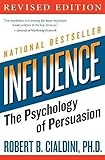
The definitive book on the psychology of persuasion. Cialdini identifies six universal principles — reciprocity, commitment, social proof, authority, liking, and scarcity — that drive human compliance, and shows how they are exploited in sales, marketing, and everyday life.
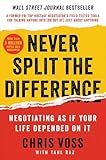
Former FBI lead hostage negotiator Chris Voss reveals the counter-intuitive techniques he developed for life-or-death negotiations — and shows how they apply to salary talks, business deals, and everyday persuasion. The key insight: humans are not rational actors, and the best negotiators use emotional intelligence, not logic.
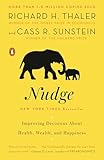
Richard Thaler and Cass Sunstein show how small changes to the way choices are presented can steer people toward better decisions without restricting freedom.
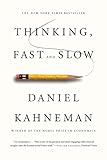
Nobel laureate Daniel Kahneman explains the two systems that drive the way we think — and reveals how our intuitive System 1 thinking leads us astray in predictable, correctable ways.
Nobel laureate Richard Thaler tells the inside story of how behavioral economics upended the rational-actor model and transformed our understanding of human decision-making.
Computer science algorithms offer surprisingly practical guidance for everyday human decisions — from optimal stopping to the explore-exploit tradeoff to how to sort your email.
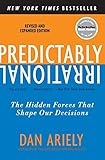
A behavioural economist reveals the hidden forces that shape our decisions — and why we repeatedly make the same irrational choices despite knowing better.
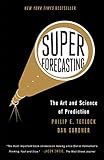
Philip Tetlock's twenty-year research programme found that a small group of ordinary people — 'superforecasters' — consistently outperform intelligence analysts with access to classified information. This book explains what they do differently.
Former World Series of Poker champion Annie Duke argues that all decisions are bets — commitments made under uncertainty — and that the key skill in life and business is separating the quality of a decision from the quality of its outcome.
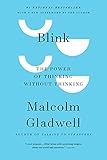
An exploration of the power of intuitive snap judgments — when they are reliable, when they fail, and how thin-slicing works in experts and everyday people.
An economist and a journalist explore the hidden side of everything — using data and economic analysis to expose unexpected truths about sumo wrestling, real estate agents, crime, and parenting.
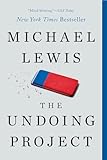
The story of Daniel Kahneman and Amos Tversky, the Israeli psychologists whose collaboration upended our understanding of human judgment and decision-making.
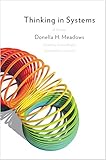
Environmental scientist Donella Meadows provides a primer on systems thinking — the art of seeing the world as interconnected structures of feedback, stocks, and flows — with applications from ecology to economics to policy.
The Heath brothers identify the four villains of good decision-making — narrow framing, confirmation bias, short-term emotion, and overconfidence — and offer a four-step WRAP process for systematically overcoming them.
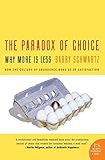
A psychologist argues that the explosion of choice in modern life, while seemingly liberating, actually produces anxiety, paralysis, and dissatisfaction.
A catalogue of 99 cognitive errors, logical fallacies, and psychological biases — from confirmation bias and survivorship bias to the sunk cost fallacy — presented as short, standalone chapters with vivid examples.
Thinking, Fast and Slow by Daniel Kahneman is the most comprehensive and widely respected — it covers System 1 and System 2 thinking, cognitive biases, and prospect theory with Nobel Prize-level rigour. Superforecasting by Philip Tetlock is the best book specifically on improving predictive accuracy.
The most evidence-based approaches: slow down on important decisions (activate deliberate System 2 thinking), consider the outside view (base rates and reference classes), actively seek disconfirming evidence, and use pre-mortems — imagining a decision has failed and asking why.
Disclosure: Amazon links on this page are affiliate links. If you purchase through them we earn a small commission at no extra cost to you.
We use cookies to understand how visitors use our site (Google Analytics). No data is collected until you accept.
Privacy Policy