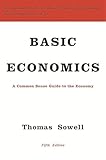
Basic Economics
by Thomas Sowell
4.7
Thomas Sowell delivers a comprehensive, jargon-free introduction to economic thinking that trains readers to see beyond immediate effects to the full consequences of policies and actions.
Economics at its most readable — from behavioural economics to global inequality, these books explain the forces that shape prosperity.
15 expert-reviewed books
by Thomas Sowell
Thomas Sowell delivers a comprehensive, jargon-free introduction to economic thinking that trains readers to see beyond immediate effects to the full consequences of policies and actions.
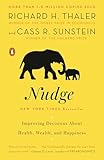
by Richard Thaler & Cass Sunstein
Richard Thaler and Cass Sunstein show how small changes to the way choices are presented can steer people toward better decisions without restricting freedom.
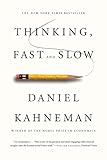
by Daniel Kahneman
Nobel laureate Daniel Kahneman explains the two systems that drive the way we think — and reveals how our intuitive System 1 thinking leads us astray in predictable, correctable ways.

by Richard Thaler
Nobel laureate Richard Thaler tells the inside story of how behavioral economics upended the rational-actor model and transformed our understanding of human decision-making.
Check Price on Amazon (paid link)
by Shoshana Zuboff
Harvard Business School professor Shoshana Zuboff's landmark analysis of how Google, Facebook, and the surveillance economy extract human behavioural data as a raw material, process it into prediction products, and sell certainty about future behaviour to advertisers and others.
Check Price on Amazon (paid link)
by Michael Lewis
The story of the small group of outsiders who bet against the American mortgage market and won as the 2008 financial crisis unfolded.
Check Price on Amazon (paid link)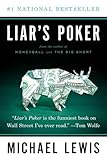
by Michael Lewis
Michael Lewis's memoir of his years as a bond salesman at Salomon Brothers in the 1980s, capturing the greed and absurdity of Wall Street's most explosive decade.
Check Price on Amazon (paid link)
by Morgan Housel
A collection of 23 short essays on the timeless behaviors and patterns that drive human decision-making — the things that never change even as the world changes around them.
Check Price on Amazon (paid link)
by Daron Acemoglu and James Robinson
Two economists argue that the difference between rich and poor countries is not geography, culture, or ignorance, but the presence of inclusive versus extractive political and economic institutions.
Check Price on Amazon (paid link)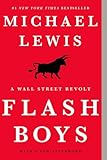
by Michael Lewis
An investigation into high-frequency trading and how a small group of Wall Street outsiders fought to expose a rigged stock market.
Check Price on Amazon (paid link)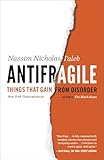
by Nassim Nicholas Taleb
Nassim Taleb introduces the concept of antifragility — the property of systems that gain from disorder, stress, and volatility rather than merely surviving it.
Check Price on Amazon (paid link)
by Thomas Piketty
Thomas Piketty draws on centuries of data to argue that capitalism structurally tends toward rising inequality unless actively counteracted.
Check Price on Amazon (paid link)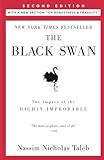
by Nassim Nicholas Taleb
Nassim Nicholas Taleb's argument that highly improbable, high-impact events drive history and that our models systematically fail to account for them.
Check Price on Amazon (paid link)
by Nassim Nicholas Taleb
Taleb's argument that bearing personal consequences for one's decisions is both an ethical imperative and the only reliable mechanism for producing good outcomes in complex systems.
Check Price on Amazon (paid link)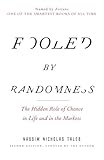
by Nassim Nicholas Taleb
Nassim Taleb's first major book explores how humans systematically mistake luck for skill, especially in financial markets, and the psychological machinery that makes the mistake so persistent.
Check Price on Amazon (paid link)Disclosure: Amazon links on this page are affiliate links. If you purchase through them we earn a small commission at no extra cost to you.