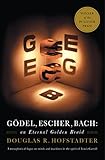
A Pulitzer Prize-winning exploration of how consciousness, self-reference, and meaning emerge from formal systems, through the intertwined work of a mathematician, an artist, and a composer.
James Gleick traces the history of information from African talking drums through Claude Shannon's information theory to the digital deluge of the modern age.
A sweeping history of the digital revolution — from Ada Lovelace and Charles Babbage through Alan Turing, Claude Shannon, William Shockley, and the personal computer pioneers — arguing that the most important innovations were always the product of collaboration, not lone genius.
Computer science algorithms offer surprisingly practical guidance for everyday human decisions — from optimal stopping to the explore-exploit tradeoff to how to sort your email.
Harvard Business School professor Shoshana Zuboff's landmark analysis of how Google, Facebook, and the surveillance economy extract human behavioural data as a raw material, process it into prediction products, and sell certainty about future behaviour to advertisers and others.
MIT physicist Max Tegmark explores the landscape of possible futures as artificial intelligence approaches and then surpasses human-level intelligence — and what choices humanity must make now.
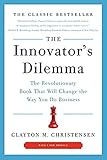
Why great companies can do everything right and still lose market leadership — and how new entrants use disruptive innovation to topple industry leaders.
Wall Street Journal reporter John Carreyrou tells the complete story of how Elizabeth Holmes and Theranos defrauded investors and endangered patients with a blood-testing technology that didn't work.
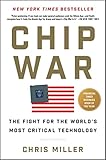
Economic historian Chris Miller traces the history of the semiconductor industry from the invention of the transistor to the US-China technology war, showing how computer chips became the defining resource of the twenty-first century.
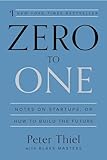
Peter Thiel — PayPal co-founder, first outside Facebook investor — argues that true progress comes from creating something genuinely new (0 to 1), not copying what already works (1 to n). A contrarian framework for building companies that matter.
Intel CEO Andrew Grove introduces the concept of strategic inflection points — moments when the fundamentals of a business are changed by forces beyond its control — and explains how leaders can recognize and navigate them.
The definitive guide to modern technology product management — how the best product teams at companies like Amazon, Google, and Netflix discover and deliver products that customers love.
Eric Ries argues that startups can shorten their product development cycles and discover what customers actually want through validated learning, scientific experimentation, and iterative product releases. The Lean Startup changed how the world builds companies.
The untold story of how four friends — Jack Dorsey, Ev Williams, Biz Stone, and Noah Glass — created Twitter and then destroyed their friendships fighting for control of it.
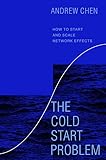
A comprehensive framework for understanding and building network effects — the most powerful and most misunderstood force in technology — from a partner at Andreessen Horowitz who has studied them across dozens of companies.
Nicholas Carr's Pulitzer Prize finalist argues that the internet is reshaping human cognition — training brains for distraction, skimming, and rapid switching at the expense of deep reading and sustained thought.
The Innovator's Dilemma by Clayton Christensen, Zero to One by Peter Thiel, and The Code Breaker by Walter Isaacson are among the most widely recommended. For AI, Life 3.0 by Max Tegmark and Human Compatible by Stuart Russell provide the most rigorous perspectives on where the technology is heading.
Disclosure: Amazon links on this page are affiliate links. If you purchase through them we earn a small commission at no extra cost to you.
We use cookies to understand how visitors use our site (Google Analytics). No data is collected until you accept.
Privacy Policy