The best business books are not about business — they are about how organisations work, how people make decisions under uncertainty, and what separates companies that last from those that don't.
Nike founder Phil Knight's memoir of building one of the world's most iconic brands — from $50 borrowed from his father and a handshake deal for Japanese running shoes to a multi-billion dollar empire. Brutally honest and compulsively readable.
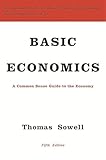
Thomas Sowell delivers a comprehensive, jargon-free introduction to economic thinking that trains readers to see beyond immediate effects to the full consequences of policies and actions.
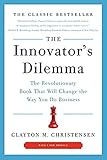
Why great companies can do everything right and still lose market leadership — and how new entrants use disruptive innovation to topple industry leaders.
Former World Series of Poker champion Annie Duke argues that all decisions are bets — commitments made under uncertainty — and that the key skill in life and business is separating the quality of a decision from the quality of its outcome.
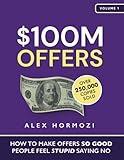
Alex Hormozi breaks down how to construct irresistible business offers by maximizing value and eliminating the objections that prevent customers from saying yes.
Wall Street Journal reporter John Carreyrou tells the complete story of how Elizabeth Holmes and Theranos defrauded investors and endangered patients with a blood-testing technology that didn't work.
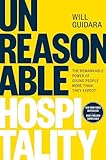
The former co-owner of Eleven Madison Park recounts how an obsessive commitment to making guests feel seen and celebrated transformed a failing restaurant into the best in the world.
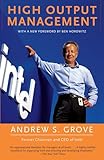
Intel CEO Andrew Grove's systematic guide to management as a measurable, improvable discipline, organized around the concept of managerial output and leverage.
The story of how Oakland A's general manager Billy Beane used statistical analysis to build a competitive baseball team on a fraction of the payroll of richer clubs.
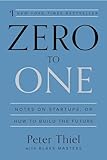
Peter Thiel — PayPal co-founder, first outside Facebook investor — argues that true progress comes from creating something genuinely new (0 to 1), not copying what already works (1 to n). A contrarian framework for building companies that matter.
Gino Wickman presents the Entrepreneurial Operating System, a practical framework for helping small and mid-size businesses achieve clarity, accountability, and execution.
Donald Miller applies the seven universal elements of storytelling to marketing, arguing that businesses fail because they make themselves the hero rather than their customer.
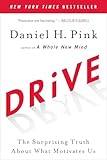
Daniel Pink argues that the science of human motivation has been ignored by business, which relies on carrot-and-stick incentives that actually undermine performance for complex work.
Intel CEO Andrew Grove introduces the concept of strategic inflection points — moments when the fundamentals of a business are changed by forces beyond its control — and explains how leaders can recognize and navigate them.
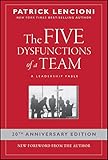
Through a business fable, Lencioni identifies the five core dysfunctions that prevent teams from achieving their potential and offers a practical framework for addressing them.
Daniel Pink argues that the Conceptual Age is replacing the Information Age, and that right-brain directed abilities — design, empathy, play, story, symphony, and meaning — are becoming the new competitive advantage.
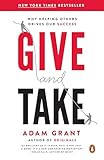
Adam Grant challenges the assumption that success requires self-promotion and strategic relationships, showing that the most successful people are often those who focus on giving rather than getting.
Organizational psychologist Adam Grant examines how individuals champion new ideas, overcome doubt and fear, and drive change in organizations and society.
Pulitzer Prize-winning journalist Charles Duhigg investigates the science of extraordinary communicators, discovering a framework of conversation types and the skills that allow people to genuinely connect across difference.
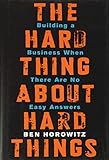
Zero to One by Peter Thiel, The Lean Startup by Eric Ries, Good to Great by Jim Collins, and Thinking, Fast and Slow by Daniel Kahneman form the core reading list for most serious business professionals. The Hard Thing About Hard Things by Ben Horowitz is essential for founders.
The most consistently cited titles among executives include Good to Great, The Hard Thing About Hard Things, Zero to One, Sapiens, and Thinking, Fast and Slow — books that combine strategic frameworks with genuine intellectual depth rather than simple advice.
One high-quality business book per month is the most common recommendation — enough to absorb and apply each book before moving to the next. Quality matters more than volume: rereading a great book often yields more than reading ten mediocre ones.
Disclosure: Amazon links on this page are affiliate links. If you purchase through them we earn a small commission at no extra cost to you.
We use cookies to understand how visitors use our site (Google Analytics). No data is collected until you accept.
Privacy Policy