Ólafur Kárason of Ljósavík is a sickly Icelandic boy who grows up in bondage to farmers and dreams of being a poet. He achieves his ambition and is destroyed by it—cheated, humiliated, loved by the wrong people, ignored by the world. The most lyrical of Laxness's novels, and his meditation on beauty's price.
Late seventeenth-century Virginia, before race solidified into the defining hierarchy of American slavery. A small farm operated by a Dutch trader, his English wife, a Native American servant, and an enslaved African woman whose daughter Florens is given away as partial payment of a debt—an act the mother calls a mercy.
Bird—a young Japanese man obsessed with Africa and escape—learns his wife has given birth to a baby with a brain abnormality. Faced with the choice of accepting this life-defining burden or arranging for the baby to die, Bird spends three days in a moral crisis, fleeing into the arms of an old girlfriend while the hospital awaits his decision.
Mevlut Karataş comes to Istanbul from a village in central Anatolia at age twelve and spends the next four decades selling boza—a traditional fermented drink—on the city's streets at night. His life and Istanbul's transformation from 1969 to 2012 unfold together in Pamuk's most warmhearted and expansive novel.
German East Africa in the early twentieth century: Ilyas was taken as a child by German colonial troops and served them as an askari soldier. When he returns to his village, he discovers his sister Afiya has grown up in servitude. Their lives intersect with Hamza—another askari, damaged by his years in German service—and with the chaos of World War One in East Africa. Gurnah's most recent novel before the Nobel was awarded.
An unnamed Caribbean dictator—ancient, powerful, possibly immortal—is discovered dead in his palace. Six long chapters, each a single paragraph, circle around his life and reign from multiple perspectives, accumulating a portrait of absolute power, absolute loneliness, and absolute corruption.
Portugal, 1711. A soldier with a missing hand and a woman who can see inside human bodies fall in love against the backdrop of the Inquisition, the building of the great Mafra Convent by King João V, and a mad priest's plan to build a flying machine powered by human wills. Saramago's most romantic novel.
On the eightieth birthday of Heinrich Fähmel, three generations of a German architect family reckon with what was built and what was destroyed: the grandfather designed an abbey, his son destroyed it during the war, his grandson—a billiards player—must decide what to do with what remains. Böll's most structurally ambitious novel.
Mary Roach investigates the science of sex — from the Victorian researchers who conducted the first systematic studies to modern laboratory work on arousal, anatomy, and dysfunction. She attends research sessions, interviews scientists, and reads the primary literature with the same deadpan curiosity she applies to corpses and astronauts.
Saleh Omar, an elderly man from Zanzibar, arrives at an English airport claiming asylum and pretending not to speak English. Separately, Latif Mahmud—a Zanzibari exile who has lived in England for years—is asked to translate for him. The two men share a history and a secret from decades before, and their encounter becomes an excavation of memory, betrayal, and the weight of the past.
Danzig, World War II: the narrator Pilenz obsessively remembers Mahlke, his schoolmate with an enormous Adam's apple—the 'mouse' to a cat's pounce—who became a war hero and then a deserter. The second book of Grass's Danzig Trilogy is the most concentrated and the most disturbing.
Six nested stories spanning centuries — from a 19th-century Pacific voyage to a post-apocalyptic Hawaii — each one influencing the next in a meditation on power, predacity, and civilization.
A French bishop and his vicar work to establish the Catholic Church in the New Mexico Territory in the mid-nineteenth century. Cather's most beloved novel is not a conventional narrative but a series of luminous episodes, meditations on landscape, and character sketches across forty years.
The follow-up to Behave makes the full case that free will is an illusion — that every decision we make is the product of biology, environment, and history we did not choose. Sapolsky argues this should change not just our self-understanding but the moral and legal frameworks we use to judge human behavior.
A German shepherd dog—passing from a miller's family to a German boy to Hitler himself—becomes the thread connecting three narrators' accounts of Danzig, the Nazi period, and postwar West Germany. The third and most complex volume of the Danzig Trilogy.
On a distant planet, human colonists live in Embassytown, a city bordering an alien race whose language is unlike any other — they can only speak truth, and only through two voices speaking simultaneously. When a human learns to speak their language, it triggers a catastrophe that could destroy the alien civilization.
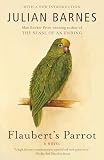
Geoffrey Braithwaite, a retired English doctor, is obsessed with Gustave Flaubert — particularly with establishing which of the two stuffed parrots in French museums was actually the one that sat on his desk while he wrote Un Coeur Simple. What follows is a novel about scholarship, obsession, and the impossibility of knowing anything.
Susan Barton is a castaway who finds herself on Cruso's island (Cruso, not Crusoe). There is also Friday, whose tongue has been cut out. When rescued and returned to England, she seeks out the writer Daniel Foe (Defoe) to tell the story—but whose story is it, and can the story of Friday be told by anyone who is not Friday? Coetzee's reply to Robinson Crusoe.
A writer in rural China sends a series of letters to a Japanese playwright about his aunt—a village midwife and family planning enforcer under the one-child policy who delivered over ten thousand babies, then spent decades enforcing forced abortions and sterilizations. One of the most direct literary reckonings with China's one-child policy.
In 1920s Mexico, a young woman accidentally frees the Mayan god of death from a wooden chest and must accompany him on a quest to reclaim his throne from his usurping brother. A lush fantasy rooted in genuine Mayan mythology, set against the Jazz Age and the Mexican Revolution's aftermath.
Moses E. Herzog, a twice-divorced intellectual in a Chicago-adjacent breakdown, writes unsent letters to everyone — living and dead, famous and unknown — trying to make sense of what has happened to him and whether it matters.
Charlie Citrine is a successful Chicago playwright haunted by the memory of Von Humboldt Fleisher, the brilliant, doomed poet who was his mentor. While Humboldt died broke and mad in New York, Charlie faces alimony, a gangster creditor, and a beautiful younger woman—and discovers that Humboldt left him a gift from beyond the grave.
Winner of the 1971 Booker Prize, this composite novel contains three stories of displacement and freedom—a West Indian in Washington, an Indian in London, and two English expatriates driving through a newly independent African country—framed by journal entries from Naipaul's own travels. Five pieces, one argument: the freedom of displacement is always partly illusion.
Louki is a young woman who appears at the Condé, a Paris café on the Left Bank, and is loved by its regulars without being known by any of them. Four narrators attempt to reconstruct who she was after her disappearance. Modiano's most formally elegant novel—four incomplete accounts of an absence.
Disclosure: Editors Reads is a participant in the Amazon Services LLC Associates Program. When you click an Amazon link and make a purchase, we may earn a commission at no additional cost to you. This helps fund our independent editorial team.
We use cookies to understand how visitors use our site (Google Analytics). No data is collected until you accept.
Privacy Policy