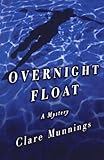
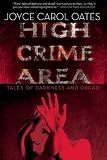
Tom Ripley is insulted at a party by Jonathan Trevanny, a picture framer in Fontainebleau with a terminal blood disease, and decides to arrange a small act of vengeance: he has Jonathan recruited, through an intermediary, to carry out a Mafia killing on a train. Jonathan, desperate for money for his family, agrees — and Ripley watches, and then becomes involved in ways he didn't plan. Widely considered the best novel in the Ripley series.
Two strangers meet on a train: Guy Haines, an architect trying to escape his unhappy marriage, and Charles Bruno, a wealthy charming sociopath. Bruno proposes a perfect crime — they will swap murders, each killing the other's problem person. Guy refuses, but Bruno kills his wife anyway, then demands Guy complete the bargain. Highsmith's debut novel and the template for her entire career: the complicity between the guilty and the innocent, the creeping contamination of violence.
Inspector Javier Falcón of the Seville homicide squad is called to the scene of a man found dead in front of a painting of Goya's Saturn Devouring His Son — eyes burnt out, posed with deliberate horror. The investigation pulls Falcón into his own family history, specifically the life of his celebrated father, the painter Francisco Falcón. Set against Seville's streets and its Moorish architecture, the first Falcón novel establishes one of crime fiction's most psychologically complex detectives.
Vic Van Allen is the model suburban husband — except that he allows his wife Melinda to carry on a series of affairs openly, to prevent her from leaving him. When one of her lovers is found dead, Vic lets it be known that he killed him. He didn't — but the bluff establishes something. A portrait of suburban American life as a theatre of controlled violence, and one of Highsmith's most chilling studies in the psychology of a particular kind of man.
Tom Ripley has settled into comfortable French country life at his villa Belle Ombre with his wealthy wife Héloïse. He is co-managing a scheme to sell forged paintings attributed to a dead artist named Derwatt. When an American collector arrives convinced the paintings are fraudulent, Ripley must manage the situation — which escalates, as Ripley situations always do. The second Ripley novel, fifteen years after The Talented Mr. Ripley.
A bomb destroys an apartment building in Seville, killing dozens and injuring hundreds. The investigation pulls Falcón into the world of Islamist extremism, Spanish intelligence, and the specifically Sevillian world of the Moorish quarter — the Barrio Santa Cruz — where the city's Christian and Islamic histories are still legible in the architecture. Wilson's most politically charged Falcón novel, written in the aftermath of the 2004 Madrid bombings.
Sonchai is sent a snuff film by an anonymous source — a murder so perfectly executed that it functions as art. The investigation leads into the world of the Thai sex industry, the Buddhist concept of karma and rebirth, and a case that forces Sonchai to examine his own complicity in the system he polices. The third Sonchai novel, the most Buddhist in its philosophical dimension.
A CIA agent is found murdered in a Bangkok brothel, his body covered in religious tattoos. Detective Sonchai Jitpleecheep investigates — navigating between the American intelligence community, the Thai sex industry, the Buddhist spirit world, and his mother's complex position as a mamasan. The second Sonchai novel deepens the portrait of Bangkok as a city where Western and Thai moral frameworks operate in permanent collision.
Medway is drawn into the toxic world of Nigerian oil money and the corruption that surrounds it — a missing girl, a lethal cargo, and the specific violence of Lagos. Winner of the CWA Gold Dagger for Best Crime Novel of the Year. The third and finest Medway novel.
Walter Stackhouse reads in the newspaper about the case of Melchior Kimmel, a bookseller accused of staging his wife's death as a bus accident. Walter, trapped in his own unhappy marriage, becomes obsessed with Kimmel's method. When his wife subsequently dies in similar circumstances, Kimmel turns the tables — he begins investigating Walter with the intensity of someone who recognises a mirror image.
Set partly in WWII Lisbon — neutral Portugal as the espionage capital of Europe — and partly in the present day, as Javier Falcón investigates a case that connects to wartime intelligence operations. Wilson returns to the Portugal of A Small Death in Lisbon to interweave Falcón's modern investigation with the wartime story of an SOE agent and the shadowy world of competing intelligence services in neutral Lisbon.
Philip Carter serves six years in an American federal prison for a crime he didn't commit — a financial conspiracy his employer framed him for. He comes out changed: harder, drug-dependent, capable of violence in ways he wasn't before. A novel about what prison does to a person and what happens when that person returns to a life that has changed without him.
Falcón is called to investigate a domestic murder-suicide in a Seville suburb — a prominent businessman apparently shot his wife and then himself. The investigation reveals the case is far more complex, pulling Falcón into the world of Seville's wealthy elite and the corruption that underlies the city's surface prosperity. The third Falcón novel deepens the detective's psychological portrait while delivering Wilson's most tightly plotted thriller.
Howard Ingham, an American writer, has come to Tunisia to work on a screenplay. His fiancée doesn't arrive. A colleague dies ambiguously. One night Ingham may have killed an intruder with a typewriter. He isn't certain. Set almost entirely in Hammamet, Tunisia, this is Highsmith's most existential novel — the question of whether Ingham committed a crime becomes less important than the question of whether it matters to him that he might have.
Athens, 1960s. Rydal Keener, a young American drifting through Greece on his father's money, encounters Chester MacFarland — a small-time con man on the run with his wife Colette. When Chester accidentally kills a man and Rydal witnesses it, the two become fatally linked. A thriller set across Greek landscapes — Athens, Crete, Istanbul — exploring the father-son dynamic between two men who are drawn to each other and threatening to each other.
David Kelsey maintains a double life: during the week he lives in a boarding house and works as a chemist; on weekends he retreats to a house he has secretly bought and furnished for a woman named Annabelle — who doesn't love him and has married someone else. A study in erotic obsession so complete that the obsessive has replaced reality with a private fiction. One of Highsmith's most psychologically acute portraits of a particular masculine pathology.
The fourth and final Bruce Medway novel, returning to Benin — where the series began — as Medway investigates a brutal murder connected to the region's vodoun culture and its underworld of ritual and violence. A fitting close to the West African series, darker and more interior than the earlier books.
The first Bruce Medway novel, introducing the fixer and sometime investigator who operates in West Africa's underworld of corrupt business, smuggling, and sudden violence. Medway is hired to find a missing German businessman in Benin — a job that quickly becomes far more dangerous than advertised. The first of four West African thrillers that established Robert Wilson's reputation before the Falcón series.
Bruce Medway takes on a job in Ivory Coast that involves a dead American, a missing consignment of weapons-grade materials, and the fractious politics of West African civil conflict. The second Medway novel deepens the portrait of the region's corruption and violence while sending its protagonist deeper into danger than the first book managed.
A sixteen-year-old American boy, Frank Pierson, appears at Tom Ripley's door in France claiming to have pushed his wheelchair-bound millionaire father off a cliff. Ripley, intrigued, takes the boy under his wing and accompanies him to Berlin — where they attend transvestite clubs in West Berlin, encounter kidnappers, and where Ripley must decide how much he cares about what happens to this strange, guilty young man.
Robert Forester has been watching a young woman, Jenny, through her kitchen window each evening — not prurient but drawn to the warmth of her domestic life, which contrasts with his disintegrating own. When Jenny discovers him, she is not frightened — she is fascinated. The novel spirals into false accusation, murder, and the complete unravelling of social reality as everyone around Robert becomes convinced he is responsible for things he didn't do.
A foreign film director is found dead in a luxury Bangkok hotel. Sonchai's investigation leads him to the heroin trade, a Tibetan Buddhist master in Kathmandu who is also a drug lord, and a meditation on the nature of attachment — the root of suffering in Buddhist teaching, and also the engine of the drug trade. The fourth Sonchai novel, expanding the series to Nepal.
Ray Garrett's wife has died — a probable suicide — and her father, Ed Coleman, blames Ray and has tried to shoot him in Rome. The novel follows the two men as they circle each other through Venice and its islands — Coleman hunting Ray, Ray unable to leave, drawn back to a man who wants to kill him in a city that seems to conspire with grief.
Sonchai is sent to Dubai and beyond to investigate a human organ-trafficking operation — the harvesting and sale of kidneys, corneas, and hearts from the living poor to the wealthy dying. The fifth Sonchai novel takes the series global, from Bangkok to Shanghai to Dubai, asking what Buddhist teachings have to say about the commodification of the human body.