Bill Bryson returns to America after twenty years in England and decides to hike the Appalachian Trail — 2,200 miles from Georgia to Maine — with his out-of-shape friend Stephen Katz. They complete a memorable portion of it.
Hemingway's memoir of his years in 1920s Paris: the cafés where he wrote, the poverty and pleasure of expatriate life, F. Scott Fitzgerald's insecurities, Gertrude Stein's salon, Ezra Pound's generosity, and the first wife he would lose by leaving her. Published posthumously, it remains one of the most beautiful books about writing and Paris ever written.
Part memoir, part urban history, Pamuk's portrait of Istanbul through his own childhood and adolescence explores the concept of hüzün—the melancholy that permeates the city's self-understanding after the fall of the Ottoman Empire—through family photographs, street scenes, and the Western writers who tried to capture Istanbul from the outside.
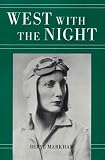
Beryl Markham's memoir of growing up in Kenya in the early twentieth century, training horses, becoming the first person to fly solo non-stop from England to North America west to east, and living a life that defied every category available to women of her era.
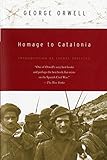
George Orwell's first-person account of fighting for the POUM militia in the Spanish Civil War — the trenches outside Huesca, the revolutionary Barcelona of 1936, the May Days street fighting, the Stalinist suppression of the independent left, and his narrow escape from arrest and execution.
Bill Bryson travels across Australia — a country he cheerfully admits he knows almost nothing about — and discovers that it is simultaneously one of the most beautiful, most deadly, most overlooked, and most underrated countries on earth.
Young Gerald Durrell's account of five years living on Corfu with his eccentric family in the 1930s — a childhood paradise of wildlife, sunshine, and complete freedom to roam.
Peter Matthiessen and zoologist George Schaller trek 250 miles into the Himalayas to study the bharal (Himalayan blue sheep) and their predator, the nearly mythical snow leopard — a physical journey that becomes a meditation on grief, Zen Buddhism, and the nature of consciousness.
Soyinka's memoir of his childhood in the Yoruba town of Aké in colonial Nigeria—the parsonage compound where he grew up, his early encounter with spirits and schooling, his mother's role in a women's tax revolt, his father's dignity as a colonial schoolteacher. The most beautifully written African memoir.
In 1988, Modiano found a newspaper notice from 1941: a missing girl, Dora Bruder, fifteen years old, gone from her parents' home in Paris. He spent eight years tracing her—through the bureaucratic records of occupied Paris, the transit camp at Drancy, and eventually to Auschwitz. His investigation of her life becomes a meditation on memory, disappearance, and what the city keeps.
Bruce Chatwin's account of travelling through Patagonia — the vast, wind-scoured southern cone of South America — in search of a piece of skin he remembered from his grandmother's cabinet, which turned out to belong to a mylodon.
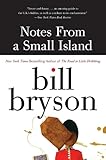
Before moving back to America after twenty years in Britain, Bill Bryson makes a farewell tour of the country that adopted him — by bus, train, and foot, from Dover to the Highlands — in search of what makes Britain lovably, infuriatingly, irreducibly itself.
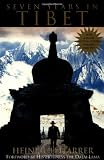
Austrian mountaineer Heinrich Harrer escapes a British prisoner-of-war camp in India during World War II and, after a twenty-one-month crossing of the Himalayas, reaches Lhasa — where he becomes a tutor and friend to the young Dalai Lama as the Chinese invasion closes in.
Dave Eggers, twenty-one, loses both parents to cancer within weeks of each other and becomes the primary guardian of his eight-year-old brother — a memoir that is also a meditation on memoirs and on the absurdity of claiming to capture grief in prose.
Peter Handke's mother killed herself in 1971 at the age of 51. He wrote this account six weeks later: an attempt to write a biography of someone who has been erased from history by her ordinariness, and a meditation on whether literary language can represent a real person without falsifying her. One of the great grief memoirs.
Peter Mayle and his wife abandon advertising careers in England to restore a farmhouse in the Luberon region of Provence — and spend a year navigating unpredictable tradesmen, extraordinary markets, and a way of life entirely organised around food.
Paul Theroux, one of the great travel writers in the English language, travels overland from Cairo to Cape Town — by bus, truck, ferry, and train — through some of the most troubled and beautiful countries in Africa, forty years after teaching there as a Peace Corps volunteer.
The fourth volume of Maya Angelou's autobiography — New York in the late 1950s, the Harlem Writers Guild, the civil rights movement, her friendship with Malcolm X and Martin Luther King Jr., and her years in Cairo and Accra.
In 1952, twenty-three-year-old medical student Ernesto Guevara and his friend Alberto Granado set off on a motorcycle to travel the length of South America — a nine-month, 8,000-mile journey that transformed the future revolutionary's understanding of his continent.
After her father's death, Ernaux wrote the book about him she had always been afraid to write: an account of a working-class Norman man who crossed from peasant to petit-bourgeois in one generation, and whose daughter crossed further still, into the educated bourgeoisie—and away from him forever.
A Moroccan sociologist's memoir of growing up in a traditional domestic harem in Fez in the 1940s — a world of courtyard gardens, female solidarity, strict boundaries, and the constant negotiation between tradition and the desire for freedom.
In June 1952, Ernaux's father tried to kill her mother. She was twelve. This book begins with that event and uses it to reconstruct everything about provincial Normandy in 1952: the class world that produced her, the shame that was her inheritance, the world she escaped by writing herself out of it.
From 1988 to 1990, Annie Ernaux was obsessed with a married man. She did nothing but wait for him to call, and recorded the experience with the clinical precision of a social scientist examining a specimen—herself. The shortest of her major books, and a landmark in writing about female desire.
After a painful divorce, Elizabeth Gilbert spends a year travelling — eating in Italy, praying in India, and finding love in Bali — in this memoir that became one of the bestselling travel narratives of the century.
The Glass Castle by Jeannette Walls, Educated by Tara Westover, and Becoming by Michelle Obama are among the most widely read modern memoirs. For literary craft, Mary Karr's The Liar's Club and Frank McCourt's Angela's Ashes are considered models of the form.
The best memoirs combine narrative propulsion with emotional honesty and a clear authorial perspective — a sense that the writer has genuinely reckoned with their material rather than simply documented it. The best test: does it feel true, and does it say something beyond the specific story being told?
Disclosure: Amazon links on this page are affiliate links. If you purchase through them we earn a small commission at no extra cost to you.
We use cookies to understand how visitors use our site (Google Analytics). No data is collected until you accept.
Privacy Policy