Books Like Educated: 11 Memoirs of Survival
If Tara Westover's Educated moved you, these memoirs share the same unflinching honesty about family, escape, and the cost of becoming yourself.
By Natalie Osei
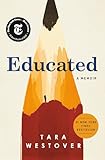
Tara Westover grew up on a mountain in rural Idaho, the youngest child in a survivalist Mormon family that distrusted schools, doctors, and the government with equal conviction. She did not have a birth certificate for years. She was not vaccinated. She never attended school. What she had was the mountain, her family’s canning and scrap-metal work, and a father whose certainty about the end of the world organized every aspect of their lives. Educated, published in 2018, is her account of how she taught herself enough to pass the ACT, enrolled in Brigham Young University, and eventually earned a PhD in history from Cambridge — and what all of that cost her.
The book is nonfiction, but it moves with the pacing of a thriller. Westover is a controlled and precise prose stylist, and she applies that precision to material that could easily tip into victimhood narrative or inspirational arc. She does neither. The portrait of her family — particularly her father’s dangerous idealism and her brother Shawn’s violence — is complicated by the love that runs alongside it. The question at the heart of Educated is not simply whether Westover escaped, but what escape requires you to surrender, and whether the self you construct in its wake is authentically yours.
The books below share one or more of those concerns: difficult families and the loyalty they demand, survival in conditions that were not designed for you, the transformative and sometimes violent work of education, and the particular grief of becoming someone your origins did not prepare for.
Survival Memoirs: Chaotic Childhoods and Complicated Parents
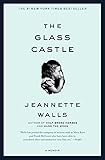
#1 — The Glass Castle by Jeannette Walls
The most direct parallel to Educated on this list. Jeannette Walls grew up with parents who were brilliant, charismatic, and profoundly unable to provide the stability their children needed. Her father Rex was an alcoholic with grand architectural plans he never built; her mother was a painter who resented domestic obligation. The family moved constantly, often without electricity or reliable food, across a series of American towns before ending up in a squatter’s community in West Virginia. Walls tells this story without sentimentality and without simple condemnation — she loved her parents, and the book holds that alongside the damage. Anyone who finished Educated wanting more of the same moral complexity will find it here.
#2 — Wild by Cheryl Strayed
After her mother’s death and the collapse of her marriage, Cheryl Strayed walked over a thousand miles of the Pacific Crest Trail alone, with no hiking experience, as an act of self-reclamation. Wild is a survival narrative in the most literal sense — there are moments where Strayed nearly does not make it — but the real terrain it covers is internal. Like Westover, Strayed is examining what it means to build a self after the structures that defined you have fallen away. The voice is warmer and more digressive than Westover’s, but the emotional stakes are the same.
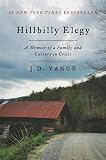
#3 — Hillbilly Elegy by J.D. Vance
J.D. Vance grew up in the Appalachian working class, raised largely by his grandmother after his mother’s drug addiction made stable home life impossible. He eventually graduated from Yale Law School. Hillbilly Elegy is partly a memoir and partly a sociological account of the white working class in post-industrial America, and it has generated significant controversy for its political interpretations. As a story about the distance between where you come from and where you end up — and the ambivalence that distance produces — it shares real territory with Educated. Westover and Vance are writing about different worlds, but the grief of social mobility is recognizable in both books.
Memoirs About Identity, Race, and the Education of the Self
#4 — Between the World and Me by Ta-Nehisi Coates
Written as a letter to his teenage son, Ta-Nehisi Coates’s meditation on what it means to inhabit a Black body in America is one of the most important works of nonfiction of the past decade. The book is explicitly about education — not formal schooling so much as the ongoing, often painful process of learning who you are and what the world will do to you. Coates grew up in Baltimore, attended Howard University, and describes his intellectual awakening there with the same sense of doors being opened as Westover describes hers. The register is different — essayistic and urgent rather than narrative — but readers who responded to Educated’s investigation of how knowledge reshapes identity will find this essential.
#5 — Becoming by Michelle Obama
Michelle Obama’s memoir covers her childhood on Chicago’s South Side, her education at Princeton and Harvard Law, her career, her marriage, and her years in the White House. It is a warmer and more public-facing book than Educated, but the thread running through it — the work required for a woman from a particular background to enter spaces that were not built for her, and the constant negotiation of identity that requires — is directly comparable. Obama writes about the skepticism she encountered, the people who told her to lower her ambitions, and the internal pressure of always being aware of what your presence represents.
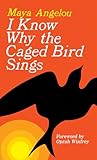
#6 — I Know Why the Caged Bird Sings by Maya Angelou
Maya Angelou’s memoir of her childhood in Stamps, Arkansas — the racism, the trauma, the grandmother who raised her, the transformative discovery of literature — is one of the foundational texts of American memoir. Like Educated, it is a story about a child finding in books and language a world larger than the one she was born into, and about surviving a family and community whose love was real but insufficient to protect her. Published in 1969, it invented a great deal of what the coming-of-age memoir can do. Westover has cited Angelou as an influence, and readers who encounter Educated without having read I Know Why the Caged Bird Sings should read it next.
Fiction That Covers the Same Ground
#7 — The Kite Runner by Khaled Hosseini
A novel about guilt, class, and the impossible distance between the Afghanistan Amir left and the one he must return to. Hosseini’s debut is not a memoir, but it functions as one emotionally — the vivid specificity of Kabul in the 1970s and the Taliban’s Afghanistan draw on his own experience of exile. The themes of a child shaped by forces larger than his family, the rupture of a world that cannot be returned to, and the cost of building a life in a different country resonate directly with Educated. Readers who want more of Hosseini will find A Thousand Splendid Suns covers similar ground with even greater emotional force.
#8 — A Thousand Splendid Suns by Khaled Hosseini
Two Afghan women — Mariam and Laila, born a generation apart — are bound together by the circumstances of a terrible marriage and the decades of war that transform their country. The novel is about endurance under conditions designed to crush women’s ambitions and identities, and about the unexpected forms that solidarity and love can take. Where Educated is a single woman’s account of escaping a controlling family structure, A Thousand Splendid Suns broadens that story to include the political and historical structures that function the same way. It is one of the most emotionally powerful novels about women’s survival in recent decades.
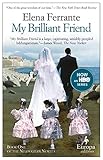
#9 — My Brilliant Friend by Elena Ferrante
The first volume of Elena Ferrante’s Neapolitan quartet follows Elena and Lila from childhood through adolescence in a poor Naples neighborhood in the 1950s and 60s. The central question — why does one girl pursue education as a way out while the other, arguably the more brilliant of the two, turns away from it — is one of the most searching examinations of what education costs women in fiction. Elena’s narration is driven by ambivalence and envy as much as by love, and the neighborhood they grew up in functions as a gravitational force that education can temporarily escape but never fully outrun. Readers who want the emotional texture of Educated rendered as literary fiction will find no better option.
Nonfiction That Zooms Out
#10 — A Fine Balance by Rohinton Mistry
Mistry’s novel — set in India during the Emergency of the 1970s — follows four people thrown together by circumstance: a widow, her student nephew, and two tailors who have escaped caste violence to find work in the city. It is a long and demanding novel, and one of the most sustained examinations in literature of what structural forces do to individuals who are trying, simply, to survive. The connection to Educated is thematic rather than tonal: both are about people navigating systems that were built to exclude them, and about the cost — sometimes total — of that navigation.
#11 — Sapiens by Yuval Noah Harari
A deliberate change of register: Sapiens is Harari’s account of human history from the cognitive revolution to the present, structured as a sequence of arguments about how shared fictions — religion, nations, money, law — shaped and continue to shape human societies. Westover’s father’s worldview was itself a kind of competing mythology, and one of Educated’s implicit arguments is about the power of the stories we are told about reality in childhood. Sapiens provides a framework for understanding how those stories work at scale. It will appeal to readers who finished Educated wanting to think more broadly about how belief systems are constructed and maintained.
How to Choose Your Next Read
If you want the most direct parallel: The Glass Castle — another memoir about brilliant, chaotic parents and the children who survived them.
If you want survival and self-reinvention: Wild by Cheryl Strayed, which covers similar emotional terrain through physical endurance.
If you want education as liberation: I Know Why the Caged Bird Sings or Becoming, depending on whether you want poetry or directness.
If you want the same emotional intensity in fiction: My Brilliant Friend for the cost of education on women, or A Thousand Splendid Suns for endurance under patriarchal control.
If you want context for Westover’s world: Hillbilly Elegy for the sociology of the rural working class, Sapiens for the broader question of how belief systems organize lives.
For the Best Biographies and Memoirs
For the definitive guide to biography and memoir across history, politics, and science, see our Best Biographies Ever Written list.
More Memoir and Non-Fiction Guides
- Books Like Into the Wild: Escape and the American Wilderness
- Books Like The Glass Castle: Dysfunctional Families and Escape
Also Recommended
Affiliate disclosure: Links to Amazon on this page are affiliate links. We earn a small commission at no extra cost to you. This does not influence our editorial recommendations.
Frequently Asked Questions
Is Educated a true story?
Yes, Educated is a memoir — Tara Westover's account of her own life growing up in a survivalist Mormon family in rural Idaho, her self-directed education, and her eventual path to a PhD from Cambridge. Some members of her family have disputed specific details and characterizations in the book, which Westover has acknowledged. She has been clear that memoir is an account of memory, not a court document, and that her family's version of events differs from her own.
What are the best memoirs similar to Educated?
The memoirs most similar to Educated are The Glass Castle by Jeannette Walls, Wild by Cheryl Strayed, and Hillbilly Elegy by J.D. Vance. All three deal with difficult upbringings, complicated family loyalty, and the work of building a life that diverges from the one you were handed. For readers drawn to the family-dysfunction side of Educated, The Glass Castle is the most direct parallel. For readers drawn to the survival and self-reinvention side, Wild is the closest match.
What books deal with education and self-determination the way Educated does?
For books about education as a form of liberation or self-making, I Know Why the Caged Bird Sings by Maya Angelou and Becoming by Michelle Obama are the most resonant nonfiction titles. Elena Ferrante's My Brilliant Friend, though a novel, is perhaps the most sustained literary treatment of what it costs a woman to pursue education when her background and family pull in the opposite direction. Between the World and Me by Ta-Nehisi Coates addresses the relationship between knowledge, identity, and survival from a different angle but with the same urgency.
Is Educated more of a survival story or a coming-of-age story?
It is genuinely both. The early sections read as a survival story — Westover describes a childhood defined by physical danger, medical emergencies treated without doctors, and psychological control. The later sections read as a coming-of-age narrative about identity, intellectual awakening, and the grief of separating from a family that cannot accept who you are becoming. The book's power comes from holding both registers at once.