Best Biographies of All Time: 24 Lives Worth Reading (2026)
The 24 greatest biographies ever written — covering political leaders, scientists, artists, and business builders. Whether you want history, inspiration, or insight into extraordinary minds, these are the lives worth studying.
By Elena Marsh
Best biographies to start with: The Power Broker (the greatest American biography ever written — on power itself), Educated (memoir, extraordinary, one sitting), Alexander Hamilton (the founding era at full depth). If you only read one, The Power Broker — though at 1,200 pages you should be ready for a commitment.
Great biography is among the most demanding forms of writing. The author must marshal decades of research, resist the temptation to simplify a complex life into a simple arc, maintain narrative momentum across hundreds of pages, and ultimately illuminate something true about the human condition through the prism of one particular life.
The biographies on this list achieve all of this. Some are monuments of historical scholarship. Some are intimate memoirs. Several are so compulsively readable that they’ve introduced millions of people to lives they’d never have sought out otherwise.
Quick Reference: All 24 Books at a Glance
| # | Book | Subject | Type | Best For |
|---|---|---|---|---|
| 1 | Team of Rivals | Abraham Lincoln | Biography | American political history |
| 2 | Alexander Hamilton | Alexander Hamilton | Biography | US Founding Era |
| 3 | Long Walk to Freedom | Nelson Mandela | Memoir | Moral courage, South Africa |
| 4 | A Promised Land | Barack Obama | Memoir | Modern presidency |
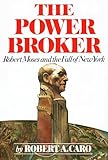
| 5 | The Power Broker | Robert Moses | Biography | Power, urban planning |
| 6 | Grant | Ulysses S. Grant | Biography | Civil War, American history |
| 7 | Benjamin Franklin | Benjamin Franklin | Biography | Founding Era, self-invention |
| 8 | Leonardo da Vinci | Leonardo da Vinci | Biography | Creativity, Renaissance |
| 9 | The Emperor of All Maladies | Cancer | Biography of a disease | Science, medicine |
| 10 | The Immortal Life of Henrietta Lacks | Henrietta Lacks | Biography | Science, race, medicine |
| 11 | Surely You’re Joking, Mr. Feynman! | Richard Feynman | Memoir | Science, curiosity |
| 12 | Meditations | Marcus Aurelius | Memoir/Journal | Philosophy, stoicism |
| 13 | Steve Jobs | Steve Jobs | Biography | Business, technology |
| 14 | Elon Musk | Elon Musk | Biography | Startups, innovation |
| 15 | Shoe Dog | Phil Knight | Memoir | Business, founding |
| 16 | Bad Blood | Elizabeth Holmes | Investigative | Fraud, startup culture |
| 17 | Educated | Tara Westover | Memoir | Self-education, family |
| 18 | Becoming | Michelle Obama | Memoir | American identity, politics |
| 19 | Born a Crime | Trevor Noah | Memoir | South Africa, race |
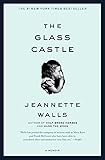
| 20 | The Glass Castle | Jeannette Walls | Memoir | Family, resilience |
| 21 | Open | Andre Agassi | Memoir | Sports, honesty |
| 22 | Greenlights | Matthew McConaughey | Memoir | Philosophy, life lessons |
| 23 | The Diary of a Young Girl | Anne Frank | Diary | WWII, adolescence |
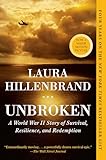
| 24 | Unbroken | Louis Zamperini | Biography | WWII, endurance |
Political and Historical Figures
#1 — Team of Rivals by Doris Kearns Goodwin
Goodwin’s portrait of Abraham Lincoln through the lens of his political cabinet — all of whom he’d defeated for the Republican nomination — is one of the great works of American political biography. Her central argument: Lincoln’s political genius was the ability to choose people who challenged him, maintain their loyalty, and use their competing perspectives to make better decisions. Steven Spielberg used it as the basis for his Lincoln film.
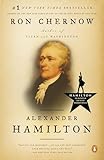
#2 — Alexander Hamilton by Ron Chernow
Chernow’s 900-page biography of the most overlooked Founding Father is also one of the most gripping American political narratives in print. Hamilton’s story — illegitimate immigrant, Revolutionary War aide-de-camp, first Treasury Secretary, killed in a duel at 49 — has everything. Chernow gives it the weight it deserves. This is the book that inspired Lin-Manuel Miranda’s Hamilton.
#3 — Long Walk to Freedom by Nelson Mandela
Mandela wrote his autobiography largely in secret during his 27-year imprisonment, hiding the manuscript in the prison garden. The result is one of the most extraordinary political memoirs of the 20th century: a first-person account of colonialism, apartheid, the decision to turn to armed resistance, imprisonment, and the negotiated end of apartheid. Essential reading for anyone interested in moral courage and political transformation.
#4 — A Promised Land by Barack Obama
The first volume of Obama’s presidential memoir is one of the most introspective accounts of political leadership published by a sitting head of state. Obama’s willingness to examine his own uncertainties and compromises — not just his successes — makes it unusually honest for a book by a politician. His account of the Osama bin Laden operation alone is worth the price.
#5 — The Power Broker by Robert Caro
Caro’s 1,200-page biography of Robert Moses — the unelected official who shaped New York City’s highways, parks, and housing projects for five decades — is the most celebrated American biography of the 20th century and the definitive study of how political power actually works. Moses never held elected office, yet wielded more lasting influence over New York than any mayor or governor. Caro spent seven years researching it. It won the Pulitzer Prize in 1975 and has never been out of print. If you read one big biography in your life, this is the strongest candidate.
#6 — Grant by Ron Chernow
Chernow’s 1,000-page biography of Ulysses S. Grant rescues one of American history’s most misunderstood figures from a century of unfair reputation. Grant’s story — from near-destitute obscurity before the Civil War to the general who won it, to a presidency sabotaged by corruption he didn’t commit — is one of the more dramatic arcs in American political life. Chernow gives him the same rigorous, sympathetic treatment he gave Hamilton.
#7 — Benjamin Franklin: An American Life by Walter Isaacson
Isaacson’s biography of the most relentlessly practical of the Founding Fathers traces Franklin’s transformation from Boston printer’s apprentice to colonial diplomat, scientist, and architect of the American alliance with France. Franklin invented himself repeatedly across a long life, and Isaacson’s account is a study in applied ambition and self-reinvention. A perfect companion to the Hamilton biography for anyone interested in the founding generation.
Scientists and Thinkers
#8 — Leonardo da Vinci by Walter Isaacson
Isaacson’s biography of Leonardo draws on 7,200 pages of Leonardo’s own notebooks to reconstruct a life that spanned art, science, engineering, anatomy, music, and theatre. His central argument — that Leonardo’s genius was not superhuman but a product of extraordinary curiosity and the willingness to ask questions he could not immediately answer — makes the book both inspiring and accessible.
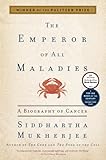
#9 — The Emperor of All Maladies by Siddhartha Mukherjee
This Pulitzer Prize-winning “biography of cancer” traces humanity’s understanding and treatment of the disease from ancient Egypt to modern molecular oncology. Mukherjee combines the biography of individual patients, the history of medicine, and the science of oncology in a way that makes a profoundly difficult subject genuinely engaging. It is one of the few books in the genre that could fairly be called important.
#10 — The Immortal Life of Henrietta Lacks by Rebecca Skloot
In 1951, a Black tobacco farmer named Henrietta Lacks died of cervical cancer at Johns Hopkins. Without her knowledge or consent, her cells were taken and became the first human cells to survive and multiply in a laboratory — the HeLa cell line, which has since been used in tens of thousands of scientific studies including the development of the polio vaccine. Skloot’s book tells two stories simultaneously: the science, and the human story of the Lacks family, who did not learn what had happened to Henrietta’s cells until decades later. It is a profound meditation on race, medicine, and what we owe each other.
#11 — Surely You’re Joking, Mr. Feynman! by Richard Feynman
Feynman’s anecdote-driven memoir is one of the most readable accounts of a scientific mind on record. His adventures — cracking safes at Los Alamos, learning bongo drums, decoding Mayan hieroglyphs, debunking the O-ring failures that caused the Challenger disaster — are entertaining in themselves. The deeper portrait is of someone who approached every domain of human knowledge with the same playful rigour he applied to physics.
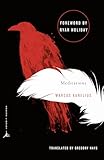
#12 — Meditations by Marcus Aurelius
The private journal of a Roman emperor — written for no audience but himself during military campaigns — has become one of the most widely read books in the Stoic tradition. Marcus Aurelius was arguably the most powerful man in the world when he wrote these notes on how to live with integrity, control anger, and focus on what is within one’s control. The fact that he wrote them for himself rather than for posterity makes them more convincing than any philosophical treatise.
Business Builders
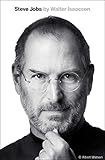
#13 — Steve Jobs by Walter Isaacson
Isaacson’s authorised biography of Apple’s co-founder is the most widely read business biography of the 21st century. Jobs gave Isaacson extraordinary access and then — by all accounts — didn’t try to control what he wrote. The result is a portrait of a genuinely difficult person who also produced genuinely great work: the Mac, the iPod, the iPhone, Pixar. The book asks uncomfortable questions about whether the two are connected.
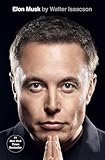
#14 — Elon Musk by Walter Isaacson
Isaacson’s 2023 biography of Musk is the most comprehensive account yet of the man who simultaneously runs Tesla, SpaceX, and X (formerly Twitter). Isaacson spent two years following Musk closely, and the portrait that emerges is of someone driven by a genuine — if extreme and often destructive — belief that humanity’s survival depends on becoming multi-planetary and on accelerating the transition to sustainable energy. Whether you find Musk inspiring or alarming, this is the most revealing account of his psychology available.
#15 — Shoe Dog by Phil Knight
Knight’s memoir of building Nike is the rare business biography where the writing itself is worth the reading. His account of the years before Nike had a name — importing Japanese running shoes and selling them from the trunk of his car — is vivid and self-deprecating in a way that most founder memoirs are not. The business lessons are there, but they’re embedded in a human story rather than labeled as lessons.
#16 — Bad Blood by John Carreyrou
The definitive account of Elizabeth Holmes and Theranos is one of the greatest business investigations ever written. Carreyrou, the Wall Street Journal reporter who broke the story, reconstructs how Holmes convinced investors and partners that her blood-testing technology worked when it didn’t, at the cost of real patient harm. It is a cautionary tale about charisma, secrecy, and the failure of institutional oversight.
Memoir and Personal Biography
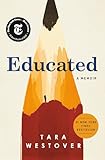
#17 — Educated by Tara Westover
Westover’s memoir of growing up in a survivalist family in rural Idaho without formal schooling — and eventually earning a PhD from Cambridge — is one of the most remarkable self-education stories in contemporary literature. The questions it raises about family loyalty, identity, and what education actually does to a person are profound.
#18 — Becoming by Michelle Obama
Michelle Obama’s memoir is the best-selling memoir in American publishing history. Her account of growing up on Chicago’s South Side, navigating Princeton and Harvard Law School, building a career, and ultimately inhabiting the role of First Lady is told with uncommon directness. Her portrait of the pressures and compromises of the White House is more honest than most political memoirs.
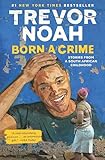
#19 — Born a Crime by Trevor Noah
Noah’s account of growing up mixed-race in apartheid-era South Africa is structured around the fact that his existence — the product of a relationship between a Black South African woman and a white Swiss man — was literally illegal. The book is funny, specific, and carries the weight of history with a lightness that makes the serious parts land harder. One of the best memoirs of the last decade.
#20 — The Glass Castle by Jeannette Walls
Walls’s memoir of her deeply unconventional childhood — with nomadic, often impoverished parents who believed in radical self-sufficiency at the cost of their children’s safety and education — is one of the most compelling accounts of resilience and the complexity of family loyalty available. She writes about her parents without sentimentality and without contempt.
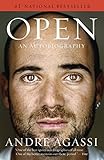
#21 — Open by Andre Agassi
Agassi’s autobiography is the most honest sports memoir ever written. He opens with the revelation that he hated tennis — the sport that made him one of the most recognisable athletes in the world. The account that follows — of his troubled relationship with his driven father, his drug use, his marriages, his transformation from a talent-wasting prodigy to a serious champion — is riveting.
#22 — Greenlights by Matthew McConaughey
McConaughey’s memoir, built partly around decades of journal entries, is a philosophical account of how he made sense of a chaotic and unusual life. Less interested in chronological storytelling than in principles and lessons, it is one of those books that either resonates completely or leaves you cold — but those for whom it resonates tend to read it multiple times.
The Most Famous Diary
#23 — The Diary of a Young Girl by Anne Frank
Anne Frank’s diary of her two years in hiding in an Amsterdam attic during the Nazi occupation of the Netherlands is one of the most widely read books in the world. It is also, beyond its historical significance, a remarkable document of adolescence — the private thoughts of a thirteen-year-old who happened to be writing in extraordinary circumstances. The postscript — that she died in Bergen-Belsen weeks before liberation — makes it unbearable.
One Definitive Epic
#24 — Unbroken by Laura Hillenbrand
Hillenbrand’s account of Louis Zamperini — Olympic runner, World War II bombardier, prisoner of war subjected to sustained torture in Japanese camps, and ultimately survivor — is one of the most extraordinary narratives of endurance in popular non-fiction. Hillenbrand spent seven years researching it and the depth shows. If you read one war memoir in your life, make it this one.
Also Worth Reading
Kitchen Confidential by Anthony Bourdain — One of the great voices in American memoir. Bourdain’s account of 25 years in New York professional kitchens — the drug use, the hierarchy, the obsessive craft — changed how the public understood restaurant culture. Raw, funny, technically precise, and impossible to put down.
Hatching Twitter by Nick Bilton — The best Silicon Valley origin story in print. How four friends created Twitter and then destroyed their friendship fighting for control of it — with meticulous reporting that complicates the mythology around Jack Dorsey’s founding role. Reads like a thriller.
Heat by Bill Buford — Buford quit his New Yorker editor job to apprentice in Mario Batali’s restaurant kitchen and then in Italian village butcher shops and pasta-making households. The result is one of the great food-and-obsession memoirs: part culinary history, part apprenticeship narrative, entirely gripping.
How to Choose Your Starting Point
If you want American political history: Team of Rivals or Alexander Hamilton. If you want the definitive study of power: The Power Broker. If you want science and ideas: Leonardo da Vinci or The Emperor of All Maladies. If you want business: Shoe Dog or Bad Blood. If you want memoir: Educated or Born a Crime. If you want to understand the 20th century: Long Walk to Freedom or The Diary of a Young Girl. If you want philosophy as biography: Meditations by Marcus Aurelius.
Frequently Asked Questions
What is the best biography about Abraham Lincoln?
Team of Rivals by Doris Kearns Goodwin is the most widely recommended Lincoln biography for general readers. It focuses specifically on Lincoln’s political genius — his cabinet, his decision-making style, his management of competing factions. For a more comprehensive single-volume Lincoln biography, Abraham Lincoln: A Life by Michael Burlingame (condensed edition) is the academic standard. Goodwin’s approach, through the lens of the men Lincoln outmanoeuvred, makes it the more compelling read.
What is the longest biography ever written?
Robert Caro’s multi-volume biography of Lyndon B. Johnson — The Years of Lyndon Johnson — is likely the longest serious biography in English, running across four published volumes totalling over 3,000 pages (with a fifth volume still in progress as of 2026). The Power Broker, Caro’s biography of Robert Moses, is a single-volume biography at 1,200 pages and is the more accessible starting point for readers new to Caro.
What are the best biographies for women readers?
The best biographies for and about women include Becoming by Michelle Obama (the best-selling memoir in American publishing history), Educated by Tara Westover (one of the most compelling accounts of self-determination in contemporary literature), Know My Name by Chanel Miller, and The Immortal Life of Henrietta Lacks by Rebecca Skloot. For historical figures, The Diary of a Young Girl by Anne Frank remains irreplaceable.
What is the best biography to understand political power?
The Power Broker by Robert Caro is the definitive answer. Caro’s 1,200-page study of Robert Moses — an unelected official who wielded more lasting influence over New York City than any elected leader — is the most thorough examination of how political power is actually acquired, held, and exercised available in English. The question Caro asks — how does someone accumulate power without holding elected office — is still the right question for understanding modern governance.
What biographies have been adapted into successful films or TV series?
Several on this list have major adaptations: Alexander Hamilton inspired Lin-Manuel Miranda’s Broadway musical (2015), which became a filmed stage performance on Disney+. Unbroken was adapted by Angelina Jolie as a 2014 film. Bad Blood became Hulu’s The Dropout (2022, starring Amanda Seyfried). Steve Jobs became a Danny Boyle film (2015, screenplay by Aaron Sorkin). The Diary of a Young Girl has been adapted multiple times, including a 1959 film and several stage productions. The Power Broker has been in development as a limited series for several years.
Related Reading
For the full list of Barack Obama’s reading recommendations — including the books he read across his presidency — see our Barack Obama Reading List guide.
Affiliate disclosure: Links to Amazon on this page are affiliate links. We earn a small commission at no extra cost to you. This does not influence our editorial recommendations.
Frequently Asked Questions
What is the best biography ever written?
The Power Broker by Robert Caro is most frequently cited as the greatest biography ever written, a 1,200-page study of Robert Moses and political power in New York. Alexander Hamilton by Ron Chernow and Team of Rivals by Doris Kearns Goodwin are among the most read and acclaimed in recent decades.
What biography should I read first?
If you are new to biography, start with The Diary of a Young Girl by Anne Frank or Long Walk to Freedom by Nelson Mandela. Both are written in the first person, read almost like novels, and carry immediate emotional weight. Alexander Hamilton by Ron Chernow is the best entry point for political biography.
What is the difference between a biography and a memoir?
A biography is written by someone other than the subject and relies on research, interviews, and documents. A memoir is written by the subject themselves and focuses on personal memory and experience. Biographies tend to be more comprehensive; memoirs are more intimate and subjective.
Which biographies are best for business readers?
The best biographies for business readers are Steve Jobs by Walter Isaacson, Shoe Dog by Phil Knight, and Elon Musk by Walter Isaacson. All three reveal how founders think under extreme pressure and how company culture is built and destroyed by individual decisions.