Barack Obama's Reading List: 14 Books the President Recommends (2026)
Every year, Barack Obama shares the books he's been reading — a remarkably eclectic mix of fiction, history, and big ideas. Here are the titles he keeps recommending.
By Oliver Kane

Every December, Barack Obama releases a list of books he read over the past year. What began as a social media habit has become one of the most-watched reading lists in the world — not because Obama is a former president, but because his selections are genuinely surprising, consistently excellent, and span far wider than the typical politician’s bookshelf.
Obama reads literary fiction alongside cutting-edge social science. He picks up debut novelists and Nobel laureates with equal enthusiasm. He reads books that challenge his own worldview, and he says so publicly. The result is a reading list that functions as both a cultural barometer and a reliable guide to books worth your time.
Here are the recurring favourites and standout picks from Obama’s annual recommendations.
Obama’s Reading List at a Glance
| Book | Author | Category |
|---|---|---|
| A Promised Land | Barack Obama | Memoir |
| Becoming | Michelle Obama | Memoir |
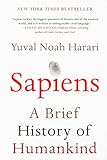
| Sapiens | Yuval Noah Harari | History |
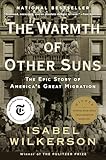
| The Warmth of Other Suns | Isabel Wilkerson | History |
| Between the World and Me | Ta-Nehisi Coates | Essay |
| Lincoln in the Bardo | George Saunders | Literary Fiction |
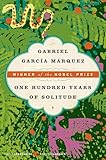
| One Hundred Years of Solitude | Gabriel García Márquez | Literary Fiction |
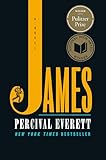
| James | Percival Everett | Literary Fiction |
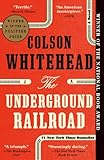
| The Underground Railroad | Colson Whitehead | Literary Fiction |
| Pachinko | Min Jin Lee | Literary Fiction |
| The Sympathizer | Viet Thanh Nguyen | Literary Fiction |
| Trust | Hernan Diaz | Literary Fiction |
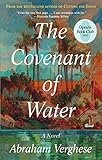
| The Covenant of Water | Abraham Verghese | Literary Fiction |
| Think Again | Adam Grant | Social Science |
A Promised Land by Barack Obama
Before diving into what Obama reads, it’s worth mentioning what he wrote. A Promised Land — the first volume of his presidential memoir — is a book about the nature of power, the gap between idealism and governance, and the weight of decisions made at 3am in the Situation Room.
Obama writes with unusual self-awareness about his own limitations and mistakes, which makes the memoir more valuable than the triumphalist variety. It’s a long book, but it earns its length.
Becoming by Michelle Obama
Obama has repeatedly pointed readers toward his wife’s memoir, and for good reason — it is the better-written of the two Obama memoirs. Michelle’s voice is sharper and more personal, and her account of growing up on Chicago’s South Side, navigating Princeton, and eventually inhabiting the White House is consistently compelling.
It also provides an essential counterpoint to Barack’s more policy-focused memoir: the same events, seen from a different vantage point.
Sapiens by Yuval Noah Harari
Obama included Sapiens on multiple reading lists and praised Harari’s ability to compress enormous stretches of human history into coherent, thought-provoking arguments. The book asks big questions about what makes humans unique, why Homo sapiens survived while other human species did not, and how the stories we tell ourselves — about money, nations, and religion — are the actual operating system of civilisation.
Whatever your quibbles with the book’s ambition, it is the rare work of popular history that makes you see the present differently.
The Warmth of Other Suns by Isabel Wilkerson
Wilkerson’s magisterial account of the Great Migration — the movement of six million Black Americans from the Jim Crow South to the cities of the North and West between 1915 and 1970 — is one of the most important American history books of the past two decades. Obama has cited it as a work that helped him understand a fundamental reshaping of American society that most history books barely mention.
The book follows three individuals across three decades, using personal narrative to make a vast demographic movement viscerally real.
Between the World and Me by Ta-Nehisi Coates
Written as a letter to his teenage son, Coates’s short, urgent book is about the experience of living in a Black body in America — the constant awareness of vulnerability, the limits of the American Dream as sold, and the history that produced the present. Obama has praised it as a book that makes readers uncomfortable in exactly the right way.
It is not an easy read, but it is a necessary one, and at 150 pages it demands no excuses.
Lincoln in the Bardo by George Saunders
When Obama praised this novel — George Saunders’s debut in the form — it promptly sold out on Amazon. The book imagines President Lincoln’s grief after his young son Willie dies in 1862, told through the voices of dozens of ghosts occupying the graveyard where Willie is buried.
It is structurally bizarre, historically grounded, and genuinely moving. Obama called it one of the most original novels he’d read in years. He was right.
One Hundred Years of Solitude by Gabriel García Márquez
Obama has spoken of One Hundred Years of Solitude as one of the novels that shaped his thinking — not a recent discovery but a formative text. He read García Márquez in college, and the book’s exploration of family, myth, memory, and the cyclical nature of history left a visible imprint on his own writing style.
If you haven’t read it, Obama’s enthusiasm is as good a reason as any to start. The novel follows seven generations of the Buendía family in the fictional town of Macondo — a story that is at once intimate and cosmic.
James by Percival Everett
Obama selected Everett’s 2024 novel — a retelling of Adventures of Huckleberry Finn from the perspective of the enslaved man Jim — as one of his standout reads. The novel reframes one of the most celebrated books in American literature by restoring the voice and interiority of the character who, in the original, exists primarily to serve Huck’s journey.
It is a brilliant act of literary reclamation, and it arrives with the full weight of Everett’s decades-long career behind it.
Think Again by Adam Grant
Among the social science books Obama recommends, Adam Grant’s Think Again stands out for its focus on intellectual humility — the capacity to update your beliefs when confronted with new evidence. For a former president reflecting on the gap between campaign promises and governing reality, it’s an apt recommendation.
Grant argues that the most effective thinkers are those who approach their own convictions with the scepticism of a scientist. It’s a readable, well-researched case for changing your mind.
The Covenant of Water by Abraham Verghese
Obama praised Verghese’s sprawling multigenerational novel set across three generations of a family in Kerala, India. The book spans from 1900 to 1977 and is rooted in Verghese’s experience as a physician — themes of medicine, family, and the long shadow of the past run through every chapter.
It is old-fashioned literary fiction in the best sense: patient, deeply researched, and populated with characters you genuinely care about.
The Underground Railroad by Colson Whitehead
Obama has described Whitehead as among the finest American novelists working today and recommended his books consistently since the Pulitzer-winning The Underground Railroad appeared in 2016. The novel imagines the Underground Railroad as a literal network of trains and tunnels beneath the antebellum South, following a young enslaved woman named Cora across a series of states that each represent a different dimension of American racism. It is a historical novel that operates as allegory — audacious, disturbing, and impossible to put down.
Pachinko by Min Jin Lee
Obama named Pachinko as one of his standout reads and recommended it with particular enthusiasm for what it reveals about identity, exclusion, and the long reach of history. Lee’s multigenerational saga follows a Korean family across four generations in Japan, where Korean immigrants and their descendants face persistent discrimination despite being born and raised in the country. It is a sweeping novel about the cost of belonging — or being denied it — and one of the great American-immigrant novels of the 21st century, despite being set in Japan.
The Sympathizer by Viet Thanh Nguyen
Obama recommended this Pulitzer Prize-winning novel about a communist double agent who escapes Vietnam after the fall of Saigon. Written as a confession, the novel gives voice to the Vietnamese perspective on a war that American culture has always narrated from the American side — it is funny, furious, and structurally brilliant. Obama has praised Nguyen for restoring a suppressed perspective to one of the defining events of the 20th century.
Trust by Hernan Diaz
Obama selected Hernan Diaz’s Pulitzer Prize-winning novel as one of his recent standout reads. Trust tells the same story four times, from four different vantage points — a fictional gilded-age novel, a memoir, a manuscript, and a diary — each version contradicting and complicating the last. It is a formally intricate novel about wealth, power, and who gets to write history, and it rewards rereading in a way that very few contemporary novels do.
What Makes Obama’s Reading List Worth Following
Three things distinguish Obama’s recommendations from the typical celebrity reading list.
Range. In any given year, Obama might recommend a debut literary novel, a work of African history, a social psychology study, and a children’s book. He is genuinely curious across domains, and it shows.
Diversity of perspective. Obama consistently reads — and recommends — books by writers whose experiences differ from his own. The list skews toward voices that are underrepresented in mainstream literary culture.
Honesty about difficulty. Obama doesn’t only recommend books he found uplifting. He recommends books that challenged him, disturbed him, and made him reconsider assumptions. That’s a harder editorial standard than most curators apply.
Frequently Asked Questions
How many books does Barack Obama read per year?
Obama has said he reads between 15 and 25 books per year during his presidency, and more since leaving office. He reads across fiction, history, science, and philosophy.
Does Obama prefer fiction or non-fiction?
Both — genuinely. His annual lists consistently include literary fiction alongside history, biography, and social science. He has said that fiction develops empathy in ways non-fiction cannot replicate.
Where can I find Obama’s full annual reading lists?
Obama posts his reading lists on his social media accounts (Instagram and Facebook) each December. He also sometimes mentions books in interviews and podcast appearances throughout the year.
Related Reading Lists
Obama’s list has the widest literary range of any prominent public reading list. For comparison:
- Bill Gates Reading List — science, health, and energy; more non-fiction-focused, more philanthropically oriented
- Elon Musk Favourite Books — physics, science fiction, and civilisational ambition; the most unusual tech reading list
- Mark Zuckerberg Reading List — political economy and institutions; notable for the Year of Books challenge in 2015
- Warren Buffett Recommended Books — business biography, investing philosophy, and the long view
Affiliate disclosure: Links on this site are affiliate links. We earn a small commission at no extra cost to you. This does not influence our editorial recommendations.
Frequently Asked Questions
What books does Barack Obama recommend?
Barack Obama has recommended a wide range of fiction and non-fiction, including The Nickel Boys by Colson Whitehead, A Promised Land (his own memoir), and Demon Copperhead by Barbara Kingsolver. His annual reading lists consistently include both American literary fiction and international voices.
How many books does Barack Obama read per year?
Barack Obama has not publicly stated an exact number, but he has described reading as a core daily habit and has published annual reading lists of 10 to 20 books. He reads across fiction, history, science, and biography, and has said novels in particular help him maintain empathy during political work.
What fiction has Obama recommended most highly?
Obama has most enthusiastically recommended The Underground Railroad by Colson Whitehead, Pachinko by Min Jin Lee, and The Nickel Boys by Colson Whitehead. He has described Whitehead as among the finest American novelists working today and recommended his books consistently since 2016.
Where does Barack Obama share his reading list?
Barack Obama shares his reading lists on his personal website and through his social media accounts. He publishes end-of-year reading and watching lists annually and occasionally shares individual book recommendations throughout the year. His Spotify playlists and reading lists are among the most followed cultural recommendations from any public figure.