Elon Musk's Favorite Books: The Reading List Behind His Ambition (2026)
The books that shaped Elon Musk's thinking on physics, business, AI, and space exploration — from Hitchhiker's Guide to the Galaxy to Zero to One and beyond.
By Marcus Webb
Elon Musk is a self-described autodidact who taught himself rocket science largely through books. Before SpaceX existed, before Tesla’s first prototype rolled off the line, Musk was consuming technical textbooks on aerospace engineering, trying to understand why rocket costs were so high and whether they could be dramatically reduced.
That approach — using books to build expertise fast — has characterised his entire career. When Musk says a book shaped his thinking, he usually means it in a literal engineering sense: he absorbed the principles and applied them. What follows is the most complete account of what he has actually read and recommended.
All 15 Books at a Glance
| Book | Why Musk Loves It | Category |
|---|---|---|
| The Hitchhiker’s Guide to the Galaxy | Questions matter more than answers | Science Fiction |
| Foundation | Blueprint for civilisational thinking | Science Fiction |
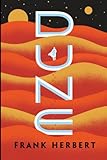
| Dune | Scarcity, planets, long-term consequences | Science Fiction |
| The Moon Is a Harsh Mistress | Lunar colony independence; freedom through technology | Science Fiction |
| Zero to One | Building genuinely new things | Business |
| The Lean Startup | Build, test, iterate fast | Business |
| Only the Paranoid Survive | Strategic inflection points | Business |
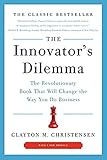
| The Innovator’s Dilemma | Why incumbents fail at disruption | Business |
| Surely You’re Joking, Mr. Feynman! | First-principles problem-solving | Physics |
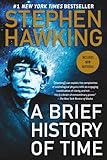
| A Brief History of Time | The biggest questions in physics | Physics |
| Thinking, Fast and Slow | Cognitive biases in humans and AI | Psychology |
| The Selfish Gene | Why organisations behave as they do | Biology |
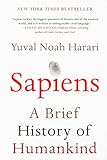
| Sapiens | Long-term view of human civilisation | History |
| Benjamin Franklin: An American Life | Entrepreneur, inventor, scientist combined | Biography |
| Einstein: His Life and Universe | How transformative scientific thinking works | Biography |
The Books That Formed His Worldview
The Hitchhiker’s Guide to the Galaxy by Douglas Adams
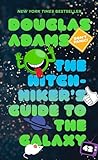
Musk has called The Hitchhiker’s Guide one of the most important books he has read — a surprising answer for someone who makes rockets and electric cars. His reasoning is philosophical: Adams’s core premise is that asking the right question is harder and more valuable than finding the answer. Musk took this seriously. He has described his goal not as building companies but as asking better questions about humanity’s future. The book shaped his view that civilisation becoming multi-planetary is the right question to be asking.
Foundation by Isaac Asimov
Musk read Asimov’s Foundation series as a teenager and has cited it repeatedly as foundational to his long-term thinking. The series follows a mathematician who uses statistical modelling to predict the collapse of galactic civilisation and builds an institution to preserve human knowledge. Musk drew a direct line between Asimov’s fictional Hari Seldon and his own goal of ensuring humanity’s survival across multiple planets. “The lessons of history suggest that civilisations move in cycles,” he has said — a near-direct paraphrase of the Foundation premise.
Dune by Frank Herbert
Musk lists Dune among his favourite science fiction. The book’s themes — the relationship between scarcity of resources and power, the danger of dependency on a single planet, the long-term consequences of technological and ecological choices — map directly onto his stated reasons for pursuing Mars colonisation. Herbert’s sand planet, Arrakis, is in some sense the anti-Mars: a place humanity cannot afford to leave. Mars, for Musk, is the place humanity cannot afford not to reach.
The Moon Is a Harsh Mistress by Robert A. Heinlein
Musk has cited Heinlein’s novel about a lunar colony fighting for independence as one of the science fiction works that most influenced his thinking about space colonisation. The book’s central argument — that a self-sufficient off-world community is both technically possible and necessary for human freedom — maps directly onto Musk’s case for making humanity multiplanetary. Heinlein’s detailed treatment of how a small, technically sophisticated population could govern itself on another world is the kind of systems-level thinking Musk gravitates toward.
Business and Entrepreneurship
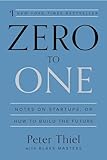
Zero to One by Peter Thiel
Musk has recommended Zero to One consistently and explicitly. He and Thiel share a PayPal origin story — both were founders — and Musk has described Thiel’s framework for building companies that create genuinely new things (going from zero to one) rather than copying existing models (going from one to n) as the clearest articulation of how transformative companies actually work. The chapter on secrets — things that are true but that most people don’t believe — is the one Musk returns to most often.
The Lean Startup by Eric Ries
Musk has recommended The Lean Startup to engineers and product managers at both SpaceX and Tesla. Ries’s core concept — build something minimal, test it against reality, learn, iterate — maps onto the rapid-iteration engineering culture Musk has built at both companies. The SpaceX approach to rapid prototyping and deliberate destruction of early Starship prototypes is, in principle, applied lean methodology.
Only the Paranoid Survive by Andrew Grove
Musk has cited Andy Grove’s memoir on Intel’s near-death experience and the concept of “strategic inflection points” as relevant to how he thinks about competitive threats. Grove’s argument — that industry-changing moments are almost invisible until they have already happened — influenced how Musk thinks about competitive risks to Tesla in the EV space.
The Innovator’s Dilemma by Clayton Christensen
Christensen’s landmark study of why well-managed companies fail when confronted with disruptive technology is one of the most influential business books of the past three decades, and Musk has referenced its framework repeatedly. The insight that incumbents are destroyed by technologies they knew about and chose not to pursue — because those technologies initially served smaller, less profitable markets — explains both why the established automakers were slow on EVs and why SpaceX could undercut rocket prices that Boeing and Lockheed had no incentive to reduce.
Physics and Engineering
Surely You’re Joking, Mr. Feynman! by Richard Feynman
Musk has mentioned this book in interviews about what it means to actually understand physics rather than just repeat formulas. Feynman’s “first principles” approach to problem-solving — breaking problems down to fundamental physical laws rather than reasoning by analogy — is the methodology Musk explicitly champions at SpaceX. When asked why SpaceX can build rockets so cheaply, Musk almost always reaches for first-principles reasoning, and Feynman is the model.
A Brief History of Time by Stephen Hawking
Musk read Hawking’s classic during his teenage years and has described it as one of the books that convinced him that physics, done seriously, is the most important intellectual discipline. The questions Hawking asked — about the origin of the universe, the nature of time, the structure of black holes — shaped Musk’s sense that the largest questions are also the most interesting ones to try to answer.
Biography and History
Benjamin Franklin: An American Life by Walter Isaacson
Musk has mentioned Franklin’s biography repeatedly. The parallel he draws is explicit: Franklin was an entrepreneur, inventor, and scientist simultaneously — someone who moved between building things and thinking about ideas without treating these as separate activities. Musk sees Franklin’s career arc as a model. Isaacson wrote the biography as well as the Steve Jobs biography that Musk has also referenced.
Einstein: His Life and Universe by Walter Isaacson
Musk has recommended Isaacson’s Einstein biography as a study in how transformative scientific thinking actually happens — not through access to better equipment or data, but through a willingness to question assumptions everyone else takes for granted. Einstein’s “thought experiments” — imagining himself riding a beam of light — are the philosophical equivalent of Musk’s first-principles reasoning.
Human Nature and Society
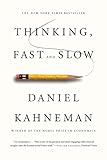
Thinking, Fast and Slow by Daniel Kahneman
Musk has cited Kahneman’s work on cognitive biases in the context of artificial intelligence — he is interested in understanding the failure modes of human cognition precisely because he thinks AI will inherit and amplify them. Thinking, Fast and Slow gave him a vocabulary for discussing how human reasoning systematically goes wrong, which he applies directly to discussions of AI safety.
The Selfish Gene by Richard Dawkins
Musk recommended The Selfish Gene in response to a question about understanding human motivation at scale. Dawkins’s argument — that organisms are essentially “vehicles” for genes that are optimising for their own replication — gave Musk a biological framework for understanding why organisations, institutions, and societies behave the way they do, independent of the stated intentions of the individuals within them.
Sapiens: A Brief History of Humankind by Yuval Noah Harari
Musk has recommended Sapiens as context for why the long-term matters. Harari’s argument that Homo sapiens became dominant through the ability to coordinate around shared fictions — money, corporations, nations, religions — connects to Musk’s thinking about what makes companies like Tesla or SpaceX possible as collective endeavours.
What Makes Musk’s Reading List Distinctive
Unlike many billionaire reading lists, which skew toward business memoirs and management theory, Musk’s picks are unusually physics-heavy and science-fiction-heavy. Two themes run through almost everything he has recommended:
First principles over analogy. The books Musk gravitates toward — Feynman, Hawking, Thiel’s chapter on secrets — all share a disdain for received wisdom. They model reasoning from fundamental truths rather than from what existing competitors or institutions already do.
Civilisational timescale. Asimov, Herbert, Adams, and Harari all operate on timescales of centuries or millennia. Musk has said directly that he thinks about human civilisation across hundreds of years, and the reading list reflects this: almost none of his picks are about the next quarter.
Other Tech Leader Reading Lists
Musk’s reading list is unusual in its emphasis on physics, engineering, and civilisational timescales. For comparison, the other major tech reading lists are:
- Bill Gates Reading List — Gates reads more broadly across science, health, and energy; his list is more philanthropically oriented and less dominated by science fiction
- Barack Obama Reading List — Obama’s picks skew toward literary fiction, history, and social science; the widest literary range of any prominent reading list
- Mark Zuckerberg Reading List — political economy, institutions, and the determinants of societal success; the Year of Books (2015) is the most systematic reading challenge on this list
- Tim Ferriss Book Recommendations — Stoic philosophy, cognitive science, and practical performance; the list with the most direct lifestyle application
Frequently Asked Questions
What was the first book that shaped Elon Musk’s thinking?
Musk has cited The Hitchhiker’s Guide to the Galaxy and Isaac Asimov’s Foundation series as the books that most shaped his thinking during his teenage years in South Africa.
Does Elon Musk read business books?
Yes, but selectively. His business reading tends toward foundational texts (Zero to One, Only the Paranoid Survive) rather than popular management books. He has expressed scepticism toward most management literature and generally prefers books on engineering, physics, and science fiction.
What technical books did Musk read to learn rocket engineering?
Musk has mentioned that he taught himself rocket science primarily from textbooks, including Rocket Propulsion Elements by Sutton and Structures by Gordon. These are not light reading — they are engineering textbooks. His willingness to read primary technical sources rather than popular science summaries is itself part of the story.
What is Elon Musk’s favourite science fiction series?
Musk has cited two series most frequently: Isaac Asimov’s Foundation series, which he credits as a primary inspiration for why he believes humanity must become multiplanetary, and Iain M. Banks’s Culture series, which represents his positive vision for a spacefaring civilisation. He named SpaceX’s autonomous drone ships (Of Course I Still Love You and Just Read the Instructions) after ships in the Culture novels.
How many books does Elon Musk read?
Musk has said in interviews that he grew up reading two books per day as a child and teenager, across fiction and non-fiction. As an adult, the pace has slowed but he remains an unusually voracious reader by any standard. He has described reading as his primary method of self-education — how he learned rocket science, aerospace engineering, and energy technology without formal training in those fields.
What books does Elon Musk recommend for young people?
Musk most consistently recommends The Hitchhiker’s Guide to the Galaxy (for learning to ask better questions), the Foundation series (for civilisational thinking), and Zero to One (for entrepreneurship). For technical education, he recommends reading primary engineering textbooks rather than popular science, citing Structures by Gordon and Rocket Propulsion Elements by Sutton.
What is Elon Musk reading now in 2026?
Musk does not maintain a public reading list in the way Bill Gates does via GatesNotes. Recommendations emerge from interviews and social media posts. His most recent publicly noted interests have been in AI, physics, and the history of civilisations.
Affiliate disclosure: Links to Amazon on this page are affiliate links. We earn a small commission at no extra cost to you. This does not influence our editorial recommendations.
Frequently Asked Questions
What books does Elon Musk recommend?
Elon Musk most frequently recommends The Hitchhiker's Guide to the Galaxy by Douglas Adams, Zero to One by Peter Thiel, Structures by J.E. Gordon, and the Iain M. Banks Culture series. He has said The Hitchhiker's Guide taught him that questions are harder than answers, which influenced how he approaches engineering problems.
What books influenced Elon Musk the most?
The books that have most influenced Musk according to his own accounts are The Hitchhiker's Guide to the Galaxy (existential thinking), Superintelligence by Nick Bostrom (AI risk), and the Foundation series by Isaac Asimov (civilisational thinking). He has described Isaac Asimov's Foundation as the primary inspiration for why he considers making humanity multiplanetary so important.
What science fiction does Elon Musk read and recommend?
Elon Musk's recommended science fiction includes The Hitchhiker's Guide to the Galaxy, the Foundation series by Isaac Asimov, and the Culture series by Iain M. Banks. He has said the Culture series represents his aspirational vision for a future spacefaring civilisation. He named his autonomous drone ships after ships in the Culture novels.
What business books does Elon Musk recommend?
Elon Musk recommends Zero to One by Peter Thiel, which he considers one of the best books on startups ever written. He has also recommended Howard Hughes's biography and Benjamin Franklin's autobiography. Musk tends to prefer books on engineering, physics, and history over traditional business books.