Mark Zuckerberg Reading List: The Books Behind Meta's Founder
The books Mark Zuckerberg has recommended publicly — from his Year of Books challenge to interviews and Meta announcements. The reading list of the world's most influential technology founder.
By Marcus Webb

In 2015, Mark Zuckerberg set himself a public reading challenge: one new book every two weeks, focused on “different cultures, beliefs, histories and technologies.” The challenge generated substantial coverage and drove significant sales for the books he selected — the so-called “Zuckerberg effect” proved comparable to the Oprah effect for non-fiction.
What the Year of Books revealed, more than the challenge itself, was the intellectual framework behind Facebook’s founder: a consistent interest in why societies succeed or fail, what drives large-scale historical change, and how institutions shape the incentives and behaviour of individuals. These are not incidental preoccupations — they are the same questions that govern how a global social network thinks about its own role.
This guide covers both the Year of Books selections and Zuckerberg’s broader recommendations across interviews and public appearances.
Quick answer: The most important books from the Zuckerberg list are Why Nations Fail (his most cited), Sapiens (shared intellectual DNA with his interests), and The New Jim Crow (the most politically significant pick).
The Year of Books (2015): Essential Selections
Why Nations Fail by Daron Acemoglu and James Robinson
The Year of Books began with this, and it is the book that most clearly reveals Zuckerberg’s analytical framework. Acemoglu and Robinson’s central argument — that the difference between rich and poor countries is not culture, geography, or natural resources but the quality of their institutions, specifically whether political and economic institutions are inclusive (distributing power broadly) or extractive (concentrating it) — is the most rigorous treatment of what determines national success. Zuckerberg has returned to its framework in subsequent interviews about how platform governance relates to institutional design.
Sapiens by Yuval Noah Harari
Harari’s philosophical sweep through 70,000 years of human history — asking what makes Homo sapiens dominant, how large-scale cooperation became possible, and what “progress” actually means — is the book that most closely shares Zuckerberg’s own intellectual preoccupations. Its argument that the key human capability is the ability to cooperate around shared fictions (nations, corporations, money, religion) is directly relevant to the questions a social network’s founder would find most urgent. Part of the Year of Books and returned to in subsequent discussions.
The Better Angels of Our Nature by Steven Pinker
Pinker’s argument — supported by extensive data — that human violence has declined dramatically across history and that the trajectory of civilisation is toward greater peace and flourishing, despite the sense that things are getting worse — reflects a broader techno-optimism in Zuckerberg’s worldview. The book’s emphasis on institutions, commerce, and expanding circles of empathy as drivers of reduced violence maps directly onto the social network’s stated ambitions.
Political Economy and Society
The New Jim Crow by Michelle Alexander
Alexander’s study of mass incarceration as a system of racial control in the United States was Zuckerberg’s most politically significant Year of Books selection and the furthest from his usual intellectual territory. Its argument — that the American criminal justice system functions as a contemporary caste system, with racialised application of drug laws and permanent civic exclusion for felony convictions — was a public statement about the social issues Zuckerberg considered important. Its inclusion alongside books on political economy and history suggests an interest in institutions as the unit of analysis for social inequality.
Technology and Business
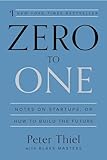
Zero to One by Peter Thiel
Thiel’s argument that genuine value creation requires building something that did not previously exist — and his scepticism of competition for its own sake — aligns closely with Zuckerberg’s stated philosophy about why Facebook pursued social networking rather than iterating on existing platforms. Thiel and Zuckerberg have had a long intellectual relationship (Thiel was Facebook’s first outside investor), and Zero to One represents the most articulate statement of their shared framework.
The Hard Thing About Hard Things by Ben Horowitz
Horowitz’s account of the unreferenced situations that founders actually face — not case studies but the specific, pressured choices that no MBA prepares you for — is the most honest business memoir in the Silicon Valley tradition. Its value for Zuckerberg’s list is not the overlap in experience (the specifics differ) but the acknowledgement that building significant companies involves genuine difficulty that most business literature obscures.
The Lean Startup by Eric Ries
Ries’s build-measure-learn methodology — the argument that startups should use validated learning rather than long product cycles to reduce the risk of building something nobody wants — became the foundational operating framework of Silicon Valley in the 2010s. Its influence on how Facebook and subsequent technology companies were built and iterated is direct.
Thinking and Decision-Making
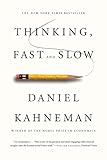
Thinking, Fast and Slow by Daniel Kahneman
Kahneman’s account of the two cognitive systems — System 1 (fast, intuitive, prone to specific biases) and System 2 (slow, deliberate, effortful) — is among the most cited books in Zuckerberg’s network for understanding why intelligent people make predictable mistakes. The bias mapping has specific applications to product design: understanding how users actually think, rather than how they report thinking, is foundational to interface and feature decisions.
Outliers by Malcolm Gladwell
Gladwell’s argument that extraordinary success is the product of circumstance, timing, and accumulated advantage as much as individual talent is a partial corrective to the Silicon Valley mythology of the lone genius founder. Zuckerberg’s recommendation reflects the kind of structural analysis of success that appears throughout his reading list — the same interest in systems and conditions that makes Why Nations Fail his most cited book.
For Related Reading Lists
For more technology founder reading lists:
- Bill Gates Reading List — shares some titles (Sapiens, Thinking, Fast and Slow) but skews more toward science and public health
- Elon Musk Favourite Books — physics, science fiction, and civilisational timescales; the most unusual of the major tech reading lists
- Barack Obama Reading List — the widest literary range; heavy on fiction, history, and social science
- Tim Ferriss Book Recommendations — Stoic philosophy, cognitive science, and performance frameworks
For the business titles on this list, our best business books guide covers the genre more broadly.
Affiliate disclosure: Links on this site are affiliate links. We earn a small commission at no extra cost to you. This does not influence our editorial recommendations.
Frequently Asked Questions
What books does Mark Zuckerberg recommend?
Zuckerberg's most recommended books include Why Nations Fail (Acemoglu and Robinson), Sapiens (Harari), The Better Angels of Our Nature (Pinker), The New Jim Crow (Alexander), Zero to One (Thiel), and books on science, history, and political economy. His Year of Books challenge in 2015 covered 23 books across these themes.
What was Mark Zuckerberg's Year of Books?
In 2015, Zuckerberg challenged himself to read a new book every two weeks — 26 books total — focusing on 'different cultures, beliefs, histories and technologies.' He shared each selection publicly on Facebook, generating significant coverage and sales for books like Why Nations Fail, The Better Angels of Our Nature, and The Varieties of Religious Experience.
What type of books does Mark Zuckerberg like?
Zuckerberg's reading skews heavily toward non-fiction: political economy, history of civilisations, cognitive science, neuroscience, and technology. He is particularly interested in books that explain large-scale systems — why societies succeed or fail, how institutions shape behaviour, what drives historical change. He reads less fiction than most of the tech reading lists.
What is the most important book Mark Zuckerberg has recommended?
Why Nations Fail by Daron Acemoglu and James Robinson appears to have most shaped Zuckerberg's thinking about institutions and incentive structures — he has returned to its framework in interviews about governance and how organisations succeed or fail. Sapiens by Yuval Noah Harari is the second most cited in terms of stated influence.
How does Zuckerberg's reading list compare to other tech leaders?
Zuckerberg's list is more explicitly political and sociological than Bill Gates's (which is more science-focused) or Elon Musk's (which is more engineering and science fiction). The emphasis on political economy, institutions, and the determinants of societal success reflects his preoccupation with how large-scale systems — including his own platform — affect society.