Tim Ferriss Book Recommendations: The Essential Reading List
The books Tim Ferriss recommends most often — from his podcast, his books, and his interviews with world-class performers. The essential reading list from the 4-Hour Workweek author.
By Marcus Webb
Tim Ferriss has interviewed more than 700 world-class performers on The Tim Ferriss Show — athletes, investors, artists, military commanders, scientists, and entrepreneurs — and one consistent element of those interviews is the question: what books have most influenced how you live and work? Over nearly a decade of episodes, a core library has emerged from those conversations, alongside Ferriss’s own frequently cited recommendations.
What is distinctive about the Ferriss reading list is its range. He reads across Stoic philosophy, cognitive science, business biography, and fiction, with a consistent preference for books that change how the reader thinks rather than simply add information. The books below are the ones he has recommended most often and across the widest range of contexts.
Quick answer: Start with Man’s Search for Meaning (his most consistent recommendation), Meditations (distributed free to podcast listeners), and The 4-Hour Workweek (his own most important book).
The Most Consistently Recommended
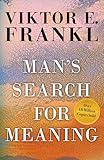
Man’s Search for Meaning by Viktor Frankl
The book Ferriss has recommended most consistently across the widest range of contexts — interviews, his own books, and podcast discussions of purpose and suffering. Frankl’s account of his survival in Auschwitz and his development of logotherapy (the idea that the primary human need is meaning, and that people can endure almost anything if they have a reason) is 150 pages of distilled clarity about what sustains human beings under pressure. Ferriss has described it as essential reading for anyone working on their relationship with difficulty and purpose.
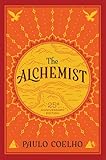
The Alchemist by Paulo Coelho
Coelho’s fable about a Spanish shepherd’s journey to find treasure has sold more than 65 million copies, making it one of the best-selling books in history. Ferriss has recommended it consistently as a philosophical text disguised as a story — its ideas about following one’s “Personal Legend” and reading the signs that the universe provides are more nuanced than their self-help appropriation suggests. A book that rewards rereading at different life stages.
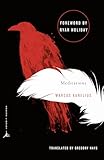
Meditations by Marcus Aurelius
Ferriss has distributed free copies of Meditations to his newsletter subscribers and returned to it across hundreds of podcast episodes. Marcus Aurelius’s private notebooks — reminders to himself about Stoic practice, never intended for publication — are the most directly useful philosophical text for anyone under pressure: they are practical rather than theoretical, self-directed rather than rhetorical. The Gregory Hays translation (Modern Library) is the one Ferriss recommends.
Letters from a Stoic by Seneca
Ferriss has described Seneca’s letters as among the best practical philosophy available — more accessible than the academic Stoics and more self-aware than most self-help. The letters cover time, friendship, ambition, death, and the relationship between how we live and what we believe about how we should live. Ferriss has paired it consistently with Meditations as Stoic foundation reading.
Thinking and Decision-Making
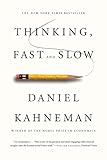
Thinking, Fast and Slow by Daniel Kahneman
Ferriss regards Kahneman’s account of the two systems of human cognition as foundational to understanding why intelligent people make predictable mistakes. The practical consequence — learning to identify when you are using System 1 (fast, intuitive, often wrong in specific ways) versus System 2 (slow, deliberate, effortful) — is significant for anyone making high-stakes decisions. Among the most cited books across the Ferriss network of podcast guests.
Poor Charlie’s Almanack by Charlie Munger (ed. Peter Kaufman)
The collected speeches, essays, and letters of Warren Buffett’s partner Charlie Munger, covering his “mental models” framework — the idea that clear thinking requires a latticework of models from different disciplines rather than deep expertise in a single domain. Ferriss has described it as one of the most important books he has read for developing the ability to think across domains. More demanding than most business books but proportionally more useful.
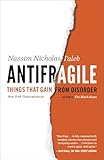
Antifragile by Nassim Nicholas Taleb
Taleb’s concept of antifragility — systems that gain from disorder and stress rather than merely surviving it — has become one of the most useful frameworks in the Ferriss network for thinking about careers, investments, and personal resilience. The book is denser and more polemical than Thinking, Fast and Slow but its core concept is among the most practically applicable in Ferriss’s library.
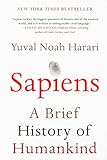
Sapiens by Yuval Noah Harari
Harari’s philosophical history of the human species has been recommended by Ferriss as essential context for understanding the systems — cognitive, economic, political — within which individual decisions are made. Its sweep through 70,000 years of human development provides a frame that makes the concerns of any individual or organisation easier to hold with appropriate proportion.
Work, Creativity, and Resistance
The War of Art by Steven Pressfield
Ferriss has recommended Pressfield’s analysis of resistance — the internal force that prevents creative work from being done — as the most useful book he knows for anyone struggling to start or sustain a creative or entrepreneurial project. Pressfield’s concept of “Turning Pro” (the decision to treat your work as a professional rather than an amateur) has become a touchstone in the Ferriss community.
Deep Work by Cal Newport
Newport’s argument that the ability to focus without distraction — what he calls deep work — is becoming both rarer and more valuable is directly aligned with Ferriss’s core interests in performance and effectiveness. His practical frameworks for protecting concentration time complement the 80/20 principles in The 4-Hour Workweek.
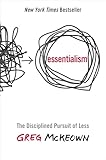
Essentialism by Greg McKeown
McKeown’s argument for doing less but better — applying a more selective standard to what deserves your time and energy — is among the most frequently recommended books in Ferriss’s network for readers feeling overwhelmed by commitments. Its intellectual parent is the 80/20 principle that runs through Ferriss’s own work.
Business and Entrepreneurship
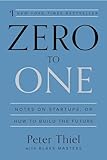
Zero to One by Peter Thiel
Thiel’s argument that valuable companies create genuinely new things (going from zero to one) rather than competing in existing markets (going from one to N) is the most intellectually interesting business strategy book in Ferriss’s library. His preference for definite rather than indefinite thinking about the future, and his scepticism of conventional ambition, are consistently cited by Ferriss as frameworks he uses.
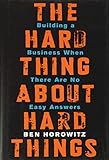
The Hard Thing About Hard Things by Ben Horowitz
Horowitz’s account of building and running companies through genuine difficulty — not the hypothetical difficulties of business school case studies but the specific, unreferenced situations that real founders face — is the most practically honest business memoir in the Ferriss library. Ferriss recommends it specifically for anyone running or planning to run a company.
Ferriss’s Own Work
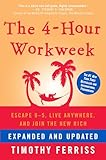
The 4-Hour Workweek by Tim Ferriss
Ferriss’s first book introduced the concepts of lifestyle design (engineering a life around what you actually want rather than deferring enjoyment to retirement), the 80/20 principle (most results come from a small fraction of efforts), and remote work to a mass audience that had not yet considered them. Its 2007 ideas about outsourcing, automation, and location independence now feel prescient in ways they could not have at publication. Essential reading for understanding the Ferriss framework before engaging with his recommendations.
Related Reading Lists
Ferriss’s list is the most performance-and-philosophy-focused of the major public reading lists. For comparison:
- Elon Musk Favourite Books — physics, science fiction, and civilisational ambition; overlaps with Ferriss on Sapiens and cognitive science titles
- Bill Gates Reading List — science, health, and philanthropy; less Stoic philosophy, more empirical science
- Mark Zuckerberg Reading List — political economy and institutions; shares the Kahneman and Harari recommendations
- Barack Obama Reading List — the widest literary range; the strongest fiction selections of any major reading list
For the full Tim Ferriss bibliography, reviews, and biography, visit the Tim Ferriss author page on Editors Reads.
Affiliate disclosure: Links on this site are affiliate links. We earn a small commission at no extra cost to you. This does not influence our editorial recommendations.
Frequently Asked Questions
What books does Tim Ferriss recommend most often?
Ferriss returns most often to Man's Search for Meaning (Frankl), The Alchemist (Coelho), Poor Charlie's Almanack (Munger), Letters from a Stoic (Seneca), Meditations (Marcus Aurelius), and Sapiens (Harari). These appear across his podcast interviews, his books, and his newsletter as foundational texts rather than passing recommendations.
What is Tim Ferriss's most recommended book?
Man's Search for Meaning by Viktor Frankl is the book Ferriss has recommended most consistently across the widest range of contexts — podcast, Twitter, books, interviews. He has described it as one of the books that changed how he thinks about suffering and purpose. The Alchemist by Paulo Coelho is the runner-up.
What is Tim Ferriss's own most important book?
The 4-Hour Workweek (2007) is Ferriss's most important book by impact — it introduced concepts like lifestyle design, remote work, and the 80/20 principle to a mass audience. The Tim Ferriss Show podcast has since become his most influential platform, introducing recommendations across more than 700 episodes.
What Stoic philosophy books does Tim Ferriss recommend?
Ferriss has been one of the most prominent popularisers of Stoic philosophy. His core recommendations are Meditations by Marcus Aurelius (translated by Gregory Hays), Letters from a Stoic by Seneca, and The Daily Stoic by Ryan Holiday (a friend and collaborator). He has distributed free copies of Meditations and Letters from a Stoic to podcast listeners.
What business books does Tim Ferriss recommend?
Ferriss's business book recommendations include Poor Charlie's Almanack (Munger), Zero to One (Thiel), The Hard Thing About Hard Things (Horowitz), The Lean Startup (Ries), and The War of Art (Pressfield). He often recommends books about decision-making and mental models over standard business strategy titles.