Books Like Man's Search for Meaning: Purpose Reads
Viktor Frankl's account of surviving Auschwitz — and the logotherapy he developed from that experience — is one of the most influential books of the twentieth century. These books share its insistence that meaning can be found even in the worst circumstances, and the particular authority of testimony written from inside suffering.
By Oliver Kane
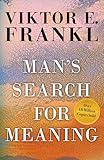
Viktor Frankl’s Man’s Search for Meaning is a book that asks the hardest possible question in the hardest possible setting: can life have meaning inside a Nazi concentration camp? Frankl, a Viennese psychiatrist who lost his wife, his parents, and his brother in the camps, answered yes — not as a consolation but as a clinical observation. He watched prisoners survive or collapse, and he noticed that those who found some reason to endure, some meaning to attach to their suffering, were more likely to live. He built a therapy from those observations, and he wrote about it in a book that has sold over sixteen million copies since its first publication in 1946.
What makes Man’s Search for Meaning so hard to shake is the combination of testimony and theory. Frankl is not a philosopher writing about suffering from a distance; he is a survivor writing from inside it, with a clinician’s precision about what he saw and felt. The memoir section of the book is spare to the point of being almost unbearable: the details are chosen not for horror but for illumination, each one showing something about what happens to a human being stripped of everything except the freedom to choose their own response. The theory section that follows is almost austere, but it is grounded in that testimony in a way that purely academic psychology rarely is.
The books below were chosen for readers who responded to Frankl’s central themes: the insistence that meaning is the primary human need, the question of what sustains a person inside impossible circumstances, and the particular authority of testimony written from inside suffering rather than observed from outside it. They range from other Holocaust memoirs to psychological science to philosophical fiction that asks the same questions through different forms.
Holocaust Testimony and Witness
#1 — Night by Elie Wiesel
Wiesel’s account of his deportation to Auschwitz at fifteen, the death of his father in Buchenwald, and the systematic destruction of his religious faith is Frankl’s companion volume rather than its equivalent. Where Frankl found meaning sustained — or discovered — in the camps, Wiesel found meaning shattered. Night is the testimony of what happened to faith when it encountered the reality of the ovens, and it carries the weight of that confrontation on every page. It is barely one hundred pages long and absolutely unsparing. Reading it alongside Man’s Search for Meaning gives the fullest picture of the range of human responses to the same horror: the psychiatrist who built a philosophy and the novelist who lost God.
#2 — The Diary of a Young Girl by Anne Frank
Anne Frank’s diary, written between 1942 and 1944 while she and her family were hiding in a sealed annex in Amsterdam, is the document that precedes the camps — the witness from before. What it shares with Frankl is the same effort to find meaning in confinement: Anne writes about her ambitions, her conflicts, her developing sense of herself as a person with a future, right up until the moment the Gestapo came. The diary is the record of the belief in human goodness that Frankl’s camps tested to its limit, and it has the additional weight of knowing how the story ends. For many readers it is the point of entry into Holocaust literature; for readers who have already encountered Frankl, it deepens the context.
#3 — If This Is a Man by Primo Levi
Levi, an Italian Jewish chemist who survived Auschwitz because the camp needed his professional skills, wrote what is arguably the most analytically precise account of the concentration camp system ever produced. Where Frankl is a psychologist looking for meaning and Wiesel is a novelist confronting God, Levi is a scientist observing a system with as much detachment as he can maintain, and that detachment makes his account more rather than less devastating. If This Is a Man (published in the United States as Survival in Auschwitz) answers Frankl’s question — what keeps a person alive inside impossible circumstances — with a chemist’s attention to exact conditions rather than a therapist’s attention to internal states. The two books are in productive tension with each other.
Meaning, Purpose, and Psychology
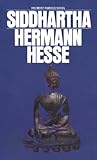
#4 — Siddhartha by Hermann Hesse
Hesse’s 1922 novella follows a young Brahmin who abandons privilege and doctrine to find enlightenment through direct experience — asceticism, commerce, love, and finally the silence of a river. The journey covers similar philosophical ground to Frankl’s logotherapy: meaning is not given by any external authority but discovered through lived experience and chosen response. What Siddhartha adds is the idea that the search itself is the meaning — that the ferryman’s wisdom at the end of the book is inseparable from everything that came before it, including the suffering. For readers who found Frankl’s argument about meaning compelling and want to see it worked through in the form of a parable, this is the most direct literary equivalent.
#5 — The Power of Now by Eckhart Tolle
Tolle’s argument — that most human suffering comes from living in mental projections of the past or future rather than in the present moment — belongs to the same therapeutic tradition that Frankl helped found. Where Frankl’s contribution was the emphasis on meaning and future purpose as sources of resilience, Tolle’s is the emphasis on presence as the site where meaning is actually experienced. The two books complement each other: Frankl asks why we endure, Tolle asks where we actually live. The Power of Now is more accessible and less clinically rigorous than Frankl, but for readers looking for the contemporary continuation of logotherapy’s insight that inner life is a site of freedom, it is the most widely read expression of that idea.
#6 — Flow by Mihaly Csikszentmihalyi
Csikszentmihalyi’s theory of optimal experience — the state of complete absorption in a challenging task that he calls flow — is the academic extension of Frankl’s insight about the centrality of engagement to human well-being. Where Frankl derived his theory from the observation of people in extremis, Csikszentmihalyi derives his from the study of people at their best: artists, athletes, surgeons, chess players describing the moments when time disappeared and they were most fully themselves. Flow is more empirical and less urgent than Man’s Search for Meaning, but it addresses the same question — what makes life feel worth living — and answers it with decades of systematic research rather than the authority of a single terrible experience.
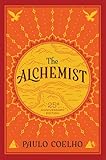
#7 — The Alchemist by Paulo Coelho
Coelho’s fable of a shepherd who gives up everything to follow a recurring dream about treasure is the popular-fiction version of Frankl’s core argument: that a person’s life has a purpose, that following it requires courage and loss, and that the universe, in some not-quite-metaphorical sense, conspires to help those who pursue what they love. Where Frankl derives his theory from the extremity of the camps, Coelho illustrates his through the warmth of a journey across sunny landscapes toward a symbolic treasure. The contrast is instructive: The Alchemist shows what the search for personal meaning looks like as aspiration; Man’s Search for Meaning shows what it looks like as necessity.
Suffering, Resilience, and What We Can Control
#8 — The Obstacle Is the Way by Ryan Holiday
Holiday’s book applies Stoic philosophy — primarily Marcus Aurelius, Seneca, and Epictetus — as a practical toolkit for turning adversity into advantage. The argument is structurally identical to Frankl’s: that what happens to us is less important than how we choose to respond, and that the constraint itself can become the source of strength. Holiday draws on the same Stoic tradition that Frankl drew on — he explicitly acknowledges the connection — but he writes for a contemporary business and self-improvement audience, with examples drawn from athletes, generals, and entrepreneurs rather than concentration camp inmates. For readers who found Frankl’s argument about freedom within constraint compelling and want a more immediately applicable version, this is the direct heir.
#9 — Educated by Tara Westover
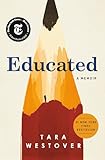
Westover’s memoir of growing up in a survivalist family in the mountains of Idaho — without schooling, without birth certificate, without access to the outside world — and educating herself into Cambridge and Harvard is the contemporary memoir that most directly enacts Frankl’s argument about the capacity to choose meaning under impossible circumstances. Westover does not frame her story in Frankl’s terms, but the structure is the same: a person in an extreme situation, stripped of normal resources, who finds that the freedom to pursue understanding cannot be taken away. The memoir is also a more psychologically complex portrait of the damage that extreme circumstances do — the cost of survival that Frankl’s spare style tends to bracket.
#10 — The Glass Castle by Jeannette Walls
Walls’s memoir of growing up with brilliant, charismatic, and catastrophically irresponsible parents — the family perpetually moving, perpetually hungry, perpetually promised a glass castle that would never be built — asks Frankl’s question from the domestic register: what keeps a person alive inside impossible circumstances, and what do they become on the other side? Walls’s answer is a mixture of love, fury, and hard-won clarity that refuses both sentimentality and simple condemnation. The memoir is more novelistic than Frankl and less philosophical, but the same refusal to be broken by circumstances that should have broken her — and the same unsentimental account of what that survival cost — makes it one of the most compelling contemporary responses to the questions Frankl raised.
How to Choose Your Next Read
If you want the closest companion testimony: Night by Elie Wiesel — the same camps, the opposing response.
If you want the most analytically precise survivor account: If This Is a Man by Primo Levi — the scientist’s version.
If you want the philosophical fable version: Siddhartha — the same search for meaning through experience.
If you want the applied Stoic toolkit: The Obstacle Is the Way — Frankl’s argument in Marcus Aurelius’s tradition.
If you want the contemporary memoir equivalent: Educated — self-creation against impossible odds.
For the Best Biographies and Memoirs
For the definitive guide to biography and memoir across history, politics, and science, see our Best Biographies Ever Written list.
More Memoir and Philosophy Guides
Affiliate disclosure: Links to Amazon on this page are affiliate links. We earn a small commission at no extra cost to you. This does not influence our editorial recommendations.
Frequently Asked Questions
Is Man's Search for Meaning a psychology book or a memoir?
It is both, which is part of what makes it unusual and unusually powerful. The first section is a memoir — Frankl's account of his time in Auschwitz and other Nazi concentration camps, written with restraint and precision. The second section is a clinical introduction to logotherapy, the school of psychotherapy Frankl developed from the experience. The two halves reinforce each other: the theory gains authority from the memoir, and the memoir gains meaning from the theory. Most readers come for the memoir and find themselves persuaded by the psychology almost without noticing.
Why has Man's Search for Meaning remained so influential?
The book has sold over 16 million copies and is regularly named among the most influential books of the twentieth century. Its staying power comes from the directness of its central claim: that meaning — not pleasure, not power — is the primary human motivation, and that it can be found even in unavoidable suffering. Frankl made that argument from inside Auschwitz, which gives it a moral authority no armchair philosopher could match. The book is also short, rigorously organized, and written without sentimentality, which means it has not dated the way more effusive books from the same period have.
What is logotherapy and how does it differ from other forms of therapy?
Logotherapy is the school of psychotherapy Frankl founded, based on the premise that the primary human drive is the search for meaning rather than the search for pleasure (Freud) or power (Adler). Where Freudian analysis looks backward to childhood trauma, logotherapy looks forward: it asks what the patient could do, create, or experience that would give their life meaning. Frankl argued that even suffering itself can be a source of meaning if the person chooses their attitude toward it. This emphasis on choice within constraint — the idea that the last human freedom is the freedom to choose one's response to any circumstance — is the insight that resonates most widely outside clinical settings.