Books Like Into the Wild: Wilderness Escape Memoirs
Jon Krakauer's account of Chris McCandless — who gave away his savings, walked into the Alaskan wilderness, and starved to death — is one of the most argued-over books of the last thirty years. These books share its fascination with the person who rejects civilization, its love of wild places, and its unresolved question: was McCandless a romantic idealist or a fool?
By Natalie Osei
Jon Krakauer’s Into the Wild is built around a mystery that the book never quite resolves: what does it mean that a young man with every apparent advantage — college education, loving family, an obvious intelligence — gave it all away, changed his name, and walked into the Alaskan wilderness to die? Krakauer reconstructs Chris McCandless’s two-year journey from 1990 to 1992 with the skills of a reporter and the sympathy of someone who recognizes something of his own younger self in the story, and the result is a book that cannot be reduced to either a cautionary tale or a celebration.
The arguments the book generates are the point. Into the Wild was published in 1996, adapted from a magazine article Krakauer wrote for Outside after the story broke, and it has been generating arguments ever since. Was McCandless brave or reckless? Did Krakauer romanticize a preventable death? Does the question even matter? The wilderness literature tradition McCandless drew on — Thoreau, Muir, Abbey — has always contained this tension between the genuine spiritual claims of wild solitude and the real dangers of under-preparation and hubris, and Into the Wild sits exactly on that fault line.
The books below were chosen for readers who responded to Into the Wild’s central preoccupations: the American relationship with wild landscape, the person who rejects the life civilization has prepared for them, and the question of what the wilderness offers and what it demands in return. They range from Krakauer’s other books to the Thoreau and Abbey that McCandless carried with him to fiction that explores the same philosophical position he embodied.
Into the Wild and Nature Writing
#1 — Into Thin Air by Jon Krakauer
Krakauer was on Everest as a journalist when the 1996 climbing season turned fatal, killing eight climbers in a single storm. Into Thin Air is his account of what happened and what he saw, and it asks the same question as Into the Wild from a different angle: what drives people to take risks that may kill them, and who is responsible when they do? Where McCandless was alone and unknown, the Everest climbers were part of a guided commercial operation, which raises additional questions about the commodification of adventure and the responsibilities guides owe clients. Krakauer’s prose here is at its most urgent, shaped by guilt and grief, and the book is considered one of the best pieces of narrative nonfiction ever written about extreme risk.
#2 — A Walk in the Woods by Bill Bryson
Bryson’s account of attempting to hike the Appalachian Trail with his unfit friend Stephen Katz is the comic version of the civilization-escape narrative — the same impulse to leave ordinary life behind, rendered as sustained absurdist comedy rather than tragedy. Where McCandless was earnest and solitary, Bryson is ironic and sociable, and he is fully aware of how ill-suited he is to the enterprise. But the book is not merely funny: Bryson’s research into the history, ecology, and threatened status of the Trail gives it genuine weight, and his observations about the gap between the idea of wilderness and the reality of walking through it day after day are sharper than the jokes suggest.
#3 — Wild by Cheryl Strayed
After her mother’s death, her marriage’s collapse, and a period of heroin use and self-destruction, Strayed hiked the Pacific Crest Trail alone — nearly 1,100 miles from the Mojave Desert to the Oregon-Washington border — with almost no hiking experience and a backpack she could barely lift. Wild is the female version of McCandless’s search, with a crucial difference: Strayed is excruciatingly self-aware about her own motivations and limitations in a way McCandless was not. Where Krakauer’s book raises the question of whether McCandless’s journey was wisdom or folly and leaves it open, Strayed’s memoir resolves toward healing and self-knowledge without dishonesty about the cost. For readers who found Into the Wild compelling but wanted more self-examination, this is the natural companion.
The Rejection of Civilization
#4 — Walden by Henry David Thoreau
Thoreau’s account of the two years he spent living deliberately at Walden Pond — building his own cabin, growing his own food, reducing his needs to their essentials — is the founding document of the American wilderness-escape tradition and the book McCandless carried with him intellectually if not literally. Thoreau’s argument — that most people live lives of quiet desperation, and that simplicity and solitude offer the conditions for genuine thought — is the argument McCandless enacted at its most extreme. Reading Walden after Into the Wild is to understand both where McCandless came from philosophically and how much further he took the argument than Thoreau himself ever intended. Thoreau left Walden after two years and went home; McCandless did not.
#5 — Desert Solitaire by Edward Abbey
Abbey spent a season as a ranger at Arches National Monument in Utah in the late 1950s and wrote about it with a radicalism and fury that Thoreau never quite reached. Desert Solitaire is an argument for wilderness as a moral and political necessity, and against the industrialization and tourism that Abbey saw as destroying it. It is also one of the most beautiful books about landscape in American literature: Abbey’s prose in the chapters describing the canyon country is genuinely extraordinary. McCandless had read Abbey and was influenced by him, and the connection is legible — the anarchist anti-civilization position, the sense that the wild is the only honest alternative to a corrupt society.
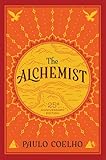
#6 — The Alchemist by Paulo Coelho
Coelho’s shepherd who gives up comfort and safety to follow a dream across the desert to a buried treasure is the kinder, more optimistic version of McCandless’s journey: the young man who rejects the life assigned to him and chooses something more dangerous and more meaningful. Santiago succeeds where McCandless did not, and the fable’s warmth is deliberately reassuring in a way Into the Wild refuses to be. But the underlying impulse — the refusal to live a safe, diminished life when something more essential is calling — is the same. Reading both together illuminates the difference between the journey as allegory and the journey as fact.
#7 — The Stranger by Albert Camus
Meursault, Camus’s famous protagonist, is indifferent to society’s demands in a way that is philosophical rather than adventurous: he does not go anywhere, he simply fails to perform the emotions and obligations that social life requires, and then kills a man on a beach for reasons that are never quite clear. The Stranger explores the same philosophical position McCandless enacted physically — the refusal to accept society’s terms as binding — but from the inside of a mind that has reached that position through intellectual detachment rather than romantic idealism. The Absurdist tradition Camus represents is the European philosophical equivalent of what American wilderness literature expresses through landscape.
Nonfiction Survival and Adventure
#8 — Endurance by Alfred Lansing
In 1914, Ernest Shackleton’s ship was trapped and then crushed by Antarctic ice, stranding twenty-eight men on the ice for nearly two years. Lansing’s account of their survival — the open-boat journey, the crossing of South Georgia Island, the eventual rescue of every man — is one of the great survival narratives in the literature, and it makes an interesting counterpoint to Into the Wild because it is about precisely the opposite situation. Where McCandless chose isolation and was underprepared, Shackleton’s men had no choice and were resourceful beyond any reasonable expectation. The question the book raises — what do people find in themselves when there is no alternative — is related to McCandless’s question, but the answer is strikingly different.
#9 — The Revenant by Michael Punke
In 1823, frontiersman Hugh Glass was mauled nearly to death by a grizzly bear in the Dakota Territory, abandoned by his companions, and left to die. He crawled two hundred miles to the nearest settlement to survive and eventually to find the men who had abandoned him. Punke’s novelization of the historical record is the American wilderness myth in its most elemental form: the man alone, the vast indifferent landscape, the question of what the body and will can endure. It shares with Into the Wild an obsession with the specific reality of wilderness survival, but where McCandless sought the wild as spiritual retreat, Glass was simply trying not to die in it.
#10 — Barbarian Days by William Finnegan
Finnegan’s Pulitzer Prize-winning memoir of a life spent chasing waves — from Hawaii to Madeira to South Africa to the surf breaks of mainland America — is the sustained adult version of the anti-civilization restlessness that McCandless enacted in his brief life. Finnegan was not romantic about the risks; he was a working journalist and writer who surfed seriously for decades, and the memoir is as much about the difficulty of integrating that obsession with adult life as it is about the waves themselves. But the underlying drive — the refusal to live entirely inside the arrangements society has made, the compulsion to find places where something wild and real is still happening — connects it directly to the tradition Into the Wild represents.
How to Choose Your Next Read
If you want the closest Krakauer equivalent: Into Thin Air — the same author, the same question, a different mountain.
If you want the philosophical source material: Walden — the book McCandless was living by.
If you want the female version, with more self-awareness: Wild by Cheryl Strayed.
If you want the most beautiful prose about landscape: Desert Solitaire — Abbey’s canyon country.
If you want survival rather than escape: Endurance — what people find when there is no alternative.
For the Best Biographies and Memoirs
For the definitive guide to biography and memoir across history, politics, and science, see our Best Biographies Ever Written list.
More Memoir and Narrative Non-Fiction Guides
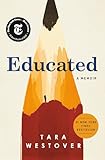
- Books Like Educated: Memoirs About Survival and Finding Yourself
- Books Like In Cold Blood: True Crime and Narrative Journalism
Affiliate disclosure: Links to Amazon on this page are affiliate links. We earn a small commission at no extra cost to you. This does not influence our editorial recommendations.
Frequently Asked Questions
Is Into the Wild a true story?
Yes. Chris McCandless was a real person who graduated from Emory University in 1990, gave his savings to charity, abandoned his car and most of his possessions, and spent the next two years hitchhiking across North America under the name Alexander Supertramp. In April 1992 he walked into the Alaskan wilderness north of Denali with minimal supplies. His body was found by hunters in August 1992. He was twenty-four years old. Krakauer's book reconstructs his journey from his journals, photographs, letters, and interviews with the people he met along the way.
Why is Into the Wild so divisive?
The book divides readers because it divides people at a fundamental level over what McCandless's death means. For some he is a romantic idealist who took seriously the Thoreau and Tolstoy he had read and paid with his life for an authentic rejection of the materialism around him. For others he was reckless, underprepared, and ultimately selfish in the grief he caused his family. Krakauer is sympathetic — he identifies with McCandless explicitly — and that sympathy has made the book controversial. The argument the book generates is, in a sense, its point: it forces readers to examine how much risk and self-determination they actually believe in.
What books did Chris McCandless take into the Alaskan wilderness?
McCandless carried a small selection of books into the wild, including Tolstoy's *Family Happiness*, Gogol's *Taras Bulba*, Pasternak's *Doctor Zhivago*, and a field guide to Alaskan edible plants. He had Thoreau's *Walden* with him — or at least its ideas, which he had internalized deeply. He annotated his books in the margins, sometimes arguing with the authors, and those annotations are part of the evidence Krakauer uses to reconstruct his state of mind. The field guide was particularly significant: botanists later concluded that McCandless may have inadvertently poisoned himself with seeds the guide did not identify as toxic.