Books Like In Cold Blood: True Crime Classics
Truman Capote's account of the 1959 Clutter family murders in Kansas — and the killers who committed them — invented the true crime genre and the narrative nonfiction form. These books share its intimacy with violence, its literary ambition, and the moral problem of making art from real suffering.
Truman Capote spent six years on In Cold Blood. He was in Holcomb, Kansas, within weeks of the Clutter family murders in November 1959, accompanied by his childhood friend Harper Lee. He interviewed residents, law enforcement, neighbors, and eventually the killers themselves — Perry Smith and Dick Hickock — in the years before their execution. When the book was published in 1966, it was unlike anything that had appeared before: a sustained account of a real crime rendered with the pacing, character interiority, and structural control of a novel, but documented to the standard of serious journalism.
The form Capote invented — which he called the nonfiction novel — has become the dominant mode of literary journalism. Its characteristics are now so familiar as to seem natural: the omniscient narrator who knows what each person was thinking, the scene-setting that lingers on sensory detail, the portrait of the killer as a complex interior consciousness rather than an external threat. What is sometimes forgotten, in the genre’s proliferation, is how morally dangerous those characteristics are. Capote’s portrait of Perry Smith, in particular — the sympathy he extended to a man who killed four people, the intimacy that may have distorted his account — raised questions that the true crime genre has never fully answered.
The books below were chosen for readers who responded to the literary ambition of In Cold Blood as well as to the crime. They include other works of narrative nonfiction that have pushed the form forward, fictional treatments of the psychology that Capote exposed, and one essential interrogation of the ethics of the form itself. They are grouped by what connects them most directly to Capote’s achievement.
Literary True Crime
#1 — The Executioner’s Song by Norman Mailer
Gary Gilmore murdered two young men in Utah in 1976 and then demanded that the state execute him — the first execution under the reinstated death penalty in the United States. Mailer spent years interviewing everyone connected to Gilmore: family, girlfriends, attorneys, journalists, prison officials. The resulting book is 1,000 pages, written in a flat declarative style that keeps the author almost invisible, and it covers not just the murders but the entire ecology of a life — Gilmore’s, the victims’, the bureaucracy of death. Mailer brought a novelist’s ambition to the same project Capote undertook, with more scale and less elegance. The most serious attempt to do what In Cold Blood did and go further.
#2 — Helter Skelter by Vincent Bugliosi
Vincent Bugliosi prosecuted Charles Manson and his followers for the Tate-LaBianca murders and then wrote the definitive account of the case — from the investigation through the trial to the verdict. Helter Skelter is the original true crime bestseller, the book that established the genre’s commercial possibilities in the wake of Capote. Bugliosi’s perspective is prosecutorial rather than literary: he is interested in the mechanics of how the murders were organized and how the case was made, not in the inner lives of the killers. The result is denser and less beautiful than In Cold Blood but more complete as a piece of criminal reporting.
#3 — I’ll Be Gone in the Dark by Michelle McNamara
Michelle McNamara spent years obsessively researching the Golden State Killer — a serial rapist and murderer who operated in California in the 1970s and 1980s and was never caught. She died before the book was finished; her husband, Patton Oswalt, completed it from her notes. McNamara’s innovation is the turn of the genre on itself: the book is as much about the investigator as about the killer, about what it means to spend years of your life in intimate proximity to another person’s violence. The prose is the best in the genre since Capote, and the posthumous circumstances give the book a quality that no amount of craft could manufacture.
#4 — Say Nothing by Patrick Radden Keefe
Jean McConville was a widowed mother of ten children who was abducted from her Belfast home in 1972 and murdered by the IRA. Her body was not found for thirty years. Keefe’s book reconstructs the killing, the decades of silence, and the eventual testimony of the people involved — including Dolours Price, one of the abductors. Say Nothing is narrative journalism at its most devastating: the portrait of people who did terrible things for reasons they believed were righteous, the decades of reckoning, and the question of how communities live with what they have done. The most literary and most morally serious true crime book of the past decade.
The Psychology of Violence
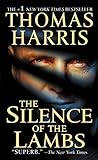
#5 — The Silence of the Lambs by Thomas Harris
Clarice Starling, an FBI trainee, is sent to interview the imprisoned serial killer Hannibal Lecter to help profile another killer still at large. What follows is a study in the exchange that occurs when a young woman of intelligence and integrity gives a brilliant monster access to her mind in order to gain access to his. Harris’s novel is the fictional version of what Capote did in Kansas: the investigator who must get close enough to a killer to understand them, who risks something of themselves in the process, who comes away changed. Lecter is more extreme than Perry Smith, but the dynamic — the intimacy of the interview, the cost of understanding — is the same.
#6 — Crime and Punishment by Fyodor Dostoevsky
Raskolnikov, a destitute student in St. Petersburg, murders a pawnbroker and her sister and then spends the novel consumed by guilt, paranoia, and the philosophical argument he used to justify the act. Dostoevsky’s novel is what In Cold Blood shows from outside viewed from inside: the psychology of someone who has committed murder and must now live inside their own mind with what they have done. Perry Smith’s interior life, as Capote reconstructs it, reads as the American vernacular version of what Dostoevsky provides in full. Reading them together is to see the same psychology rendered in two completely different formal traditions.
#7 — We Need to Talk About Kevin by Lionel Shriver
Eva Khatchadourian writes letters to her estranged husband reconstructing their son Kevin’s childhood, adolescence, and eventual mass killing at his high school. Shriver’s novel is the novelization of true crime psychology: it asks what the relationship between a killer and their family actually looked like in the years before the crime, whether the signs were visible, and whether anything could have been done. Eva is the witness Capote never had — the person closest to the killer, reconstructing events in the full knowledge of how they ended. For readers who want the psychological interiority of In Cold Blood extended to everyone around the killer.
Journalism, Ethics, and the Subject
#8 — The Journalist and the Murderer by Janet Malcolm
Malcolm opens with the claim that every journalist who befriends a subject in order to extract their story is a kind of confidence trickster. She then examines the lawsuit brought by Jeffrey MacDonald — convicted of murdering his family — against journalist Joe McGinniss, who befriended MacDonald while writing about his case and then concluded he was guilty. The book is the essential interrogation of Capote’s method: what does it mean to get close to a subject for journalistic purposes, what does the subject have a right to expect, and whether the journalist’s obligation to truth can coexist with the human relationship they have cultivated. Mandatory reading after In Cold Blood.
#9 — Devil in the White City by Erik Larson
Chicago, 1893. Daniel Burnham builds the World’s Columbian Exposition — the White City — against almost impossible odds. H.H. Holmes builds a hotel near the fairgrounds and uses it to murder an unknown number of women. Larson interweaves the two stories, and the result is the most commercially successful work of narrative nonfiction in the Capote tradition since Capote himself. The formal device — juxtaposing creation and destruction, the fair and the murders — is more schematic than Capote’s, but the period research is superb and the portrait of Holmes is genuinely chilling.
#10 — Midnight in the Garden of Good and Evil by John Berendt
Savannah, Georgia, 1981. Jim Williams, an antiques dealer and prominent figure in Savannah society, shoots his young male companion and is tried for murder four times. Berendt, a journalist, moved to Savannah to report the story and found himself inside a world of extraordinary eccentricity — drag performers, voodoo practitioners, decayed aristocracy, and a city that closes ranks around its own. The book is Capote’s template applied to Georgia, a portrait of a place as much as a crime, and the writing has the same quality of the literary journalist genuinely enchanted by what they find.
How to Choose Your Next Read
If you want the largest-scale literary true crime: The Executioner’s Song — a thousand pages, the full weight of a life.
If you want the best prose since Capote: I’ll Be Gone in the Dark — the investigator’s obsession turned into art.
If you want the most morally serious contemporary work: Say Nothing — the violence of political conviction, rendered without consolation.
If you want the essential ethical interrogation: The Journalist and the Murderer — the question In Cold Blood poses without answering.
If you want the fictional version of Capote’s psychological access: The Silence of the Lambs — the interview as the site of dangerous intimacy.
For the Best Mystery and Crime Books
For the definitive guide to mystery and crime fiction — from Agatha Christie to Tana French — see our Best Mystery Books of All Time list.
More Memoir and True Crime Guides
- Books Like Into the Wild: Escape and the American Wilderness
- Books Like The Glass Castle: Memoirs of Escape
More Narrative Non-Fiction Guides
Affiliate disclosure: Links to Amazon on this page are affiliate links. We earn a small commission at no extra cost to you. This does not influence our editorial recommendations.
Frequently Asked Questions
Did Truman Capote invent true crime?
Capote did not invent the factual account of crime — that tradition is as old as journalism — but he invented the form that we now call narrative nonfiction: the sustained, novelistically rendered account of real events that applies the techniques of literary fiction to actual people and actual violence. The six years he spent reporting In Cold Blood, the intimacy he developed with killer Perry Smith, and the structural decision to tell the story from multiple perspectives including the killers' own — all of this was new. Every subsequent work of literary true crime, from The Executioner's Song to Say Nothing, is working in the form he created.
Is In Cold Blood accurate?
This is a genuinely contested question. Capote famously claimed he had total recall and did not take notes — a claim his researchers have disputed. Several details have been challenged by the Clutter family and by journalists who reinvestigated, and there are scenes, particularly in the final section, where Capote appears to have invented or embellished. The broader question — whether narrative nonfiction can be accurate in the way journalism aspires to be, given that it reconstructs interior states and private conversations — is the central ethical problem of the form, and Janet Malcolm's The Journalist and the Murderer is the essential interrogation of it.
What is the moral problem with In Cold Blood?
The moral problem is Capote's relationship with Perry Smith, one of the killers. Capote spent years befriending Smith, becoming emotionally involved with him, and then wrote a book in which Smith is rendered sympathetically — a portrait that arguably served Capote's artistic purposes as much as it served justice or truth. Harper Lee, who accompanied Capote to Kansas and helped establish his access, later said that the experience changed him. The question of what a journalist owes the people they write about — whether befriending your subject in order to gain access constitutes a betrayal — is one In Cold Blood poses without answering.