Theo Byrne, an astrobiologist searching for signs of life on other planets, raises his neurodivergent son Robin alone after his wife's death. When Robin's emotional dysregulation threatens his school placement, Theo enrolls him in an experimental neurofeedback program that maps his brain against recordings of his late mother — with transformative and devastating results.
Reeves Wiedeman's gripping chronicle of WeWork and Adam Neumann. From a single co-working space to a $47 billion valuation and a catastrophic failed IPO, this is the story of a charismatic founder, the investors who enabled him, and one of the most spectacular corporate implosions of the startup era.
A young novelist's work is accepted by the Moscow Arts Theatre and he is drawn into the labyrinthine machinery of Soviet theatrical production — committees, rewrites, egos, and a mysterious director who never appears. Bulgakov's posthumously published roman à clef about his experiences at the Moscow Arts Theatre is a devastating account of the relationship between art and institutional power.
In a ruined city dominated by a giant flying bear named Mord, a scavenger named Rachel finds a strange creature she calls Borne attached to Mord's fur — and raises it in secret as it grows and changes beyond anything she expected.
Two copy-clerks who become friends retire to the countryside and systematically attempt to master every branch of human knowledge — agriculture, chemistry, medicine, archaeology, philosophy, religion — failing at each in turn. Flaubert's unfinished final novel, published posthumously, is his most radical satirical project.
Dwayne Hoover is a successful car dealer having a mental breakdown. Kilgore Trout is a science fiction writer no one has ever heard of who is about to meet Dwayne. Vonnegut himself wanders through the novel as a character watching his own creations. Breakfast of Champions is a satirical attack on American culture so broad it becomes a self-portrait.
Five Dunbar brothers left to fend for themselves after their parents disappear — the story of Clay, the quietest, who alone knows the full truth of what happened.
Wallace's second story collection, including the title series of interview transcripts with monstrous men and pieces like 'The Depressed Person,' 'Adult World,' and 'Forever Overhead' — his most formally varied collection and his most direct engagement with the damage contemporary culture does to interiority.
Erin Lowry translates the fundamentals of personal finance — budgeting, debt elimination, credit scores, and negotiation — into plain, judgment-free language aimed at young adults who feel financially lost but are too embarrassed to admit what they don't know.
A killer is torturing and murdering victims with terrible precision, and the clues suggest he is enacting the fantasies of three of the most notorious serial killers ever locked away in a Minnesota security hospital. To catch him, Lucas Davenport must consult the very monsters whose dreams the killer is making real.
When two small skeletons are unearthed beneath a demolished Minneapolis house, the bones reopen a case that has haunted Lucas Davenport since he was a young patrol cop — the disappearance of two girls he could never forget. Now, decades later, he gets a second chance to catch a killer he was sure got away.
John Lanchester's sweeping social novel of London at the height of the financial crisis. On a single gentrifying street, Pepys Road, a banker, a Senegalese footballer, a Pakistani shopkeeper, a dying widow and others receive anonymous postcards reading 'We Want What You Have.'
Gary Soneji, the kidnapper from Along Came a Spider, escapes prison and launches a final campaign of revenge against Alex Cross — while across the Atlantic, FBI agent Thomas Pierce hunts a mutilation killer known only as Mr. Smith. Two manhunts converge in one of Patterson's most audacious thrillers.
A cold, brilliant professional killer takes a job for an obsessed lawyer who wants a rival dead — and when the hit spirals into a string of bodies, Lucas Davenport finds himself matched against one of the most formidable assassins he has ever faced. Clara Rinker kills without passion and without mistakes, and she does not intend to be caught.
Mallory Greenleaf quit competitive chess at seventeen after beating the world's top-ranked player, Nolan Sawyer, in a casual game. Two years later, a financial crisis forces her back into competition — and back into Nolan's orbit.
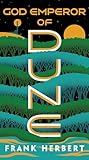
Paul Atreides is gone. His twin children, Leto II and Ghanima, inherit both his bloodline and his terrifying prescience — while a crumbling empire and Alia's increasingly erratic regency threaten to consume everything Paul built and sacrificed.
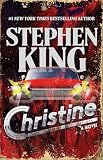
A nerdy teenager falls obsessively in love with a rusted-out 1958 Plymouth Fury named Christine — a car with a murderous will of its own. Stephen King turns adolescent longing and Detroit chrome into one of his most unsettling parables about possession.
Jace has disappeared — taken and bound to Sebastian Morgenstern — and Clary must go undercover to find him, pretending to join Sebastian while searching for a way to free Jace from the demonic tie that controls him. The stakes are higher than ever as Sebastian prepares to raise an army.
Thomas Paine's incendiary 1776 pamphlet that helped spark the American Revolution. Written in plain, electrifying prose for ordinary readers, Common Sense made the radical case for American independence from Britain and for republican government, becoming one of the most influential political documents ever written.
The prequel to The Hate U Give — seventeen-year-old Maverick Carter navigates early fatherhood, gang loyalty, and the decision of who to become in Garden Heights in 1998.
The second novel in Gibson's Sprawl trilogy follows three intersecting storylines — a young hacker, a mercenary, and an art dealer — across a near-future world where the AIs of Neuromancer have fragmented into something resembling the voodoo loa.
The second Harlem Shuffle novel — Ray Carney navigates 1970s Harlem through three interlinked stories spanning 1971, 1973, and 1976, as the neighbourhood burns, rebuilds, and transforms around him.
The Hildebrandt family — a suburban Chicago minister, his unhappy wife, and their four children — navigate a single December day and week in 1971 in the first volume of a planned trilogy.
The sequel to A Wild Sheep Chase: the same nameless narrator returns to the Dolphin Hotel in Hokkaido — now replaced by a gleaming luxury development — and finds the Sheep Man waiting for him. The investigation that follows involves a missing woman, a boy with psychic powers, and an old high-school friend who has become a celebrity actor. The darkest and most culturally specific of Murakami's early novels, explicitly about what Japan lost in the 1980s economic boom.
Disclosure: Editors Reads is a participant in the Amazon Services LLC Associates Program. When you click an Amazon link and make a purchase, we may earn a commission at no additional cost to you. This helps fund our independent editorial team.
We use cookies to understand how visitors use our site (Google Analytics). No data is collected until you accept.
Privacy Policy