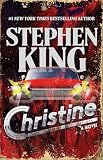
Editors Reads Verdict
King fuses coming-of-age heartbreak with supernatural menace as Arnie Cunningham restores a haunted automobile that slowly restores — and ruins — him. Equal parts hot-rod nostalgia and creeping dread, Christine is a story about how the things we love can drive.
What We Loved
- Vivid early-1980s teenage voice and aching coming-of-age friendship
- A genuinely original monster — a car — handled with total conviction
- Tight escalation from grease-monkey nostalgia to outright terror
Minor Drawbacks
- The mid-book point-of-view shift can feel jarring
- Some 1950s rock-and-roll references date the prose
Key Takeaways
- → Christine is King's definitive 'haunted object' novel, swapping a haunted house for a haunted car
- → The book is as much about toxic obsession and lost youth as it is about supernatural evil
- → Arnie's transformation mirrors classic possession narratives without ever leaving the high-school parking lot
- → King's command of teenage friendship grounds the horror in real emotional stakes
| Author | Stephen King |
|---|---|
| Publisher | Scribner |
| Pages | 656 |
| Published | September 3, 2024 |
| Language | English |
| Genre | Horror, Thriller, Fiction |
| Difficulty | Intermediate |
| Best For | Readers who love King's small-town horror and anyone drawn to stories where an ordinary object becomes a vessel for evil. |
How Christine Compares
Christine at a glance against 3 similar books readers weigh alongside it.
| Book | Author | Rating | Best for |
|---|---|---|---|
| Christine (this book) | Stephen King | ★ 4.1 | Readers who love King's small-town horror and anyone drawn to stories where an |
| It | Stephen King | ★ 4.4 | Horror readers willing to commit to an epic-length novel |
| Pet Sematary | Stephen King | ★ 4.3 | Horror readers who want emotionally serious fiction about grief and loss |
| Salem's Lot | Stephen King | ★ 4.3 | Horror |
Few writers could make a four-wheeled hunk of Detroit steel feel like a predator, but Christine is Stephen King operating at the height of his powers as a horror craftsman who understands that the scariest monsters are the ones we invite into our lives willingly. Published in 1983 and still in print today through Scribner, the novel takes a deceptively simple premise — a teenage boy buys a beat-up old car — and steers it into a chilling meditation on obsession, jealousy, and the loss of innocence.
A love story with a body count
The story belongs first to Dennis Guilder, the narrator and best friend of Arnold “Arnie” Cunningham, a bespectacled, acne-scarred outcast who has spent his high-school years being bullied and managed by overbearing parents. Everything changes the day Arnie spots a rusted, junked 1958 Plymouth Fury rotting on a suburban lawn with a FOR SALE sign in its cracked windshield. Against all reason, Arnie falls in love. He names her Christine, and he sinks every dollar and every spare hour into restoring her.
What follows is one of King’s most insidious slow burns. As Christine’s chrome gleams back to life, Arnie himself transforms — gaining confidence, shedding his glasses, attracting the beautiful new girl Leigh Cabot, and growing colder, crueler, and more alien to the friend who loves him. The restoration runs both directions. The more Arnie pours into the car, the more the car pours something ancient and hungry back into Arnie. King lets the reader feel the heartbreak of watching a decent kid disappear inside the thing he adores.
The brilliance of the setup is how plausibly it begins. Every teenager who has ever wanted a car, a way out of their parents’ house, or a reinvention of themselves recognizes Arnie’s hunger. King never asks us to believe in the supernatural before we believe in the boy. By the time Christine’s malevolence becomes undeniable, we are already complicit, already rooting for Arnie’s freedom even as it curdles into something monstrous. That emotional sleight of hand is what separates a great horror novel from a cheap scare, and King pulls it off with a magician’s confidence.
The genius of the haunted object
King had already perfected the haunted house in The Shining and the haunted town in ‘Salem’s Lot, but with Christine he miniaturizes evil into something you could park in your driveway. The car becomes a perfect vessel for the novel’s themes: status, mobility, sexual awakening, and the very American belief that the right machine can remake a man. Christine’s previous owner, the malevolent Roland LeBay, lingers in the upholstery like a stain, and King is canny enough never to fully explain the mechanics of the haunting. Is it LeBay’s ghost? Is it the car itself? The ambiguity is the point.
The novel’s structure is unusual and occasionally divisive. The first and final thirds are narrated by Dennis in the first person, but the middle section shifts to a close third-person perspective when Dennis is sidelined by a football injury. Some readers find the transition abrupt; others appreciate that it lets King roam beyond his narrator’s knowledge at exactly the moment the story needs to widen. Either way, the choice underscores how the horror metastasizes once nobody is watching Arnie closely enough.
Craft, nostalgia, and dread
Christine is soaked in the iconography of 1950s and 1980s car culture — drive-ins, rock-and-roll on the AM dial, the smell of motor oil and possibility. King uses song lyrics and chapter epigraphs to evoke a vanished America of cruising and chrome, and that nostalgia makes the eventual carnage hit harder. There is real menace in the image of Christine’s odometer running backward, her body repairing itself overnight, her headlights blazing down an empty road with no driver behind the wheel.
What elevates the book above gimmick is King’s bone-deep understanding of adolescence. The friendship between Dennis and Arnie is rendered with such tenderness that its corrosion becomes the true tragedy. Leigh’s growing terror, the disapproving adults, the local bullies who underestimate exactly what they’re dealing with — every relationship is calibrated to make Christine’s influence feel like a betrayal of the human bonds around her.
Where it sits in the King canon
Coming between Cujo and Pet Sematary in King’s relentlessly productive early-’80s run, Christine shares DNA with both — the animal-as-threat of the former and the grief-and-corruption engine of the latter. Fans of his small-town tapestries will recognize the lived-in suburban geography, the casually cruel teenagers, and the adults who notice too late. If It is King’s epic about childhood friendship surviving evil, Christine is the darker mirror: a story about friendship that evil dismantles one weld at a time.
It is not flawless. The pacing sags slightly in the middle, and a few period references feel dated decades on. But the central image is indelible, the emotional stakes are real, and the climax — a duel of machines in a darkened garage — delivers the kind of pulpy, propulsive terror that made King a household name. Christine proves that in the right hands, even a car can become a character you’ll never forget, and never want to ride in.
For readers building a King horror shelf alongside It, Pet Sematary, and ‘Salem’s Lot, Christine is essential — a reminder that obsession is its own kind of haunting, and that some loves really will drive you to the grave.
Our rating: 4.1/5 — A wickedly original haunted-object novel that turns teenage longing into mechanical menace; uneven structure aside, Christine remains one of King’s most unforgettable monsters.
Frequently Asked Questions
What is "Christine" about?
A nerdy teenager falls obsessively in love with a rusted-out 1958 Plymouth Fury named Christine — a car with a murderous will of its own. Stephen King turns adolescent longing and Detroit chrome into one of his most unsettling parables about possession.
Who should read "Christine"?
Readers who love King's small-town horror and anyone drawn to stories where an ordinary object becomes a vessel for evil.
What are the key takeaways from "Christine"?
Christine is King's definitive 'haunted object' novel, swapping a haunted house for a haunted car The book is as much about toxic obsession and lost youth as it is about supernatural evil Arnie's transformation mirrors classic possession narratives without ever leaving the high-school parking lot King's command of teenage friendship grounds the horror in real emotional stakes
Is "Christine" worth reading?
King fuses coming-of-age heartbreak with supernatural menace as Arnie Cunningham restores a haunted automobile that slowly restores — and ruins — him. Equal parts hot-rod nostalgia and creeping dread, Christine is a story about how the things we love can drive.
Ready to Read Christine?
Check the current price on Amazon.
Check Price on Amazon (paid link)Prices and availability are subject to change. See Amazon for current price.
Review last updated: