On an island that is the last refuge of humanity after an apocalyptic fog killed the rest of the world, someone has murdered the scientist maintaining the barrier that keeps the fog at bay. If the murderer isn't found in 107 hours, the barrier falls and everyone dies. Turton's most structurally inventive mystery: a closed-room that is an entire civilisation.
A radical reimagining of the life of Christ — depicting Jesus as a man torn between the flesh and the spirit, tempted on the cross by a vision of the ordinary human life he might have lived.
Mary Karr's landmark memoir of a turbulent Texas childhood. With ferocious honesty, dark humor, and dazzling prose, Karr recounts growing up in a gritty oil town with a hard-drinking father, a brilliant, volatile, much-married mother, and family secrets that threaten to destroy them all.
Sarah Waters's slow-burning Gothic novel. In postwar England, a country doctor becomes entangled with the genteel, declining Ayres family and their crumbling estate, Hundreds Hall — where a series of disturbing events suggests something malevolent, or something all too human, at work.
A research-based portrait of how America's wealthy actually think and behave — the habits, values, and choices that lead to financial success, based on surveys of over 1,000 millionaires.
A glamorous film star buys a grand house in St. Mary Mead, and at her welcome party a starstruck local woman is poisoned. The intended victim seems obvious — yet the truth lies in a frozen look on the actress's face and a single line of poetry that Miss Marple cannot forget.
When the universally disliked Colonel Protheroe is found shot dead in the vicarage study, the quiet English village of St. Mary Mead erupts with suspects, false confessions and gossip — and an elderly spinster proves the sharpest mind for miles around.
Jim Nashe, a former firefighter driving aimlessly through America with his inheritance, picks up a young gambler named Pozzi — and after losing everything in a card game against two eccentric millionaires, they find themselves building a medieval wall in a Pennsylvania field to pay off their debt.
When Emily Inglethorp is found dead at Styles Court, her stepson calls in his Belgian refugee friend Hercule Poirot to investigate. Christie's debut novel introduces one of fiction's most beloved detectives and establishes the country-house mystery template.
Norman Mailer's monumental debut, drawn from his service in the Pacific. Following an army platoon during the invasion of a Japanese-held island, the novel renders the brutality, boredom, and power struggles of war while probing the authoritarian impulses lurking within the American character.
The sixth and final Earthsea novel revisits the question that has haunted the series since The Farthest Shore — the nature of death and the afterlife in the world of the Archipelago. A sorcerer haunted by the dead comes to Roke, and the answer found will transform Earthsea's understanding of what comes after.
Nikolai Gogol's immortal short story, one of the most influential ever written. A poor, downtrodden St. Petersburg clerk scrapes together everything he has for a new overcoat — only to have it stolen, with devastating and uncanny consequences. A founding masterpiece of Russian fiction.
Gerald Durrell's first book, an account of his animal-collecting expedition to the Cameroons in 1947-48. The book that launched his career and established his voice as one of the finest natural history writers in English.
Wallace's unfinished posthumous novel follows IRS agents in a Midwest tax processing centre, examining boredom, attention, and the ethical weight of choosing to care about something the world deems worthless.
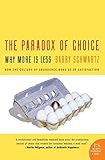
A psychologist argues that the explosion of choice in modern life, while seemingly liberating, actually produces anxiety, paralysis, and dissatisfaction.
Crime reporter Jack McEvoy refuses to believe his twin brother, a homicide detective, killed himself. Digging into the death, McEvoy uncovers a pattern: detectives across the country dying in staged suicides, each marked with a line of Edgar Allan Poe. He has stumbled onto a serial killer — and a story that could destroy him.
Science journalist Catherine Price argues that what most people call 'fun' — passive screen consumption, scrolling, numbing out — is not actually fun in the meaningful sense, and that true Fun requires the combination of three elements: playfulness, connection, and flow.
Journalist Jon Ronson tumbles down a rabbit hole into the world of psychopaths — meeting diagnosed psychopaths, the psychiatrists who identify them, the CEOs who may be among their number, and the critics who question whether the entire diagnostic enterprise makes sense. The result is a darkly funny, genuinely unsettling investigation into madness, power, and the humans who get to decide who is sane.
A broke, freshly minted law graduate takes on a billion-dollar insurance company over a denied claim that cost a young man his life. With nothing but nerve and a paralegal sidekick, Rudy Baylor walks into his first-ever trial against a battalion of corporate lawyers.
Carter and Sadie Kane discover they are descended from the most powerful magicians in ancient Egypt. When their father accidentally unleashes the chaos god Set, the siblings must master Egyptian magic fast enough to prevent Set from destroying the world — and find out why their family has been lying to them.
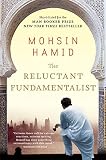
Mohsin Hamid's Booker-shortlisted novel. In a Lahore café, a bearded Pakistani man named Changez tells a nervous American stranger the story of his life — his Princeton education, his Wall Street success, and his disillusionment with America after 9/11 — in a tense, ambiguous monologue.
Arthur Dent and his improbable companions dine at Milliways — the restaurant at the literal end of the universe — while continuing to flee Vogons, encounter the man who rules the universe, and discover the deeply unsatisfying truth about the planet Earth.
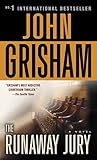
In a landmark tobacco liability trial in Mississippi, a mysterious juror named Nicholas Easter appears to be manipulating the outcome from inside the jury box — while his accomplice outside works both sides of the case for an enormous payout.
Nicholas Carr's Pulitzer Prize finalist argues that the internet is reshaping human cognition — training brains for distraction, skimming, and rapid switching at the expense of deep reading and sustained thought.
Disclosure: Editors Reads is a participant in the Amazon Services LLC Associates Program. When you click an Amazon link and make a purchase, we may earn a commission at no additional cost to you. This helps fund our independent editorial team.
We use cookies to understand how visitors use our site (Google Analytics). No data is collected until you accept.
Privacy Policy