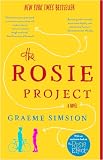
Editors Reads Verdict
Graeme Simsion's debut is a warm, consistently funny novel that uses its narrator's neurodivergent perspective to examine romantic conventions from the outside. While the love story follows a predictable arc, Don Tillman is such a genuinely original creation that the journey never feels formulaic.
What We Loved
- Don Tillman is one of the most distinctive and endearing narrators in recent romantic fiction
- The comedic misunderstandings generated by Don's literal worldview are inventive and consistently funny
- The novel handles neurodivergence with empathy without turning Don into a puzzle for others to solve
- The pace is brisk and the plot mechanics are satisfying without being mechanical
Minor Drawbacks
- The emotional arc is entirely predictable from the novel's first pages
- Rosie herself is underwritten compared to Don, functioning more as catalyst than fully realized character
- Some readers find the portrayal of Asperger's traits overly schematic
Key Takeaways
- → Social scripts that seem irrational from outside often serve important functions that only become visible when they are absent
- → Genuine connection can develop between people who seem incompatible by any rational measure
- → Optimizing for the wrong criteria can systematically exclude exactly what you need
| Author | Graeme Simsion |
|---|---|
| Publisher | Simon & Schuster |
| Pages | 295 |
| Published | October 1, 2013 |
| Language | English |
| Genre | Contemporary Fiction, Romantic Comedy, Humor |
| Difficulty | Beginner |
| Best For | Readers who enjoy romantic comedies with unconventional narrators, fans of character-driven humor, and those interested in neurodivergent perspectives on social life. |
How The Rosie Project Compares
The Rosie Project at a glance against 3 similar books readers weigh alongside it.
| Book | Author | Rating | Best for |
|---|---|---|---|
| The Rosie Project (this book) | Graeme Simsion | ★ 4.0 | Readers who enjoy romantic comedies with unconventional narrators, fans of |
| A Man Called Ove | Fredrik Backman | ★ 4.5 | Readers who enjoy character-driven comedy with emotional depth, particularly |
| Normal People | Sally Rooney | ★ 4.1 | Literary fiction readers interested in contemporary Irish society, millennial |
| The Midnight Library | Matt Haig | ★ 4.2 | Readers who enjoy philosophically engaged fiction with emotional warmth, |
The Questionnaire as Comic Engine
Don Tillman, Associate Professor of Genetics at the University of Melbourne, has decided the problem of finding a life partner is soluble through rigorous methodology. The Wife Project is his solution: a sixteen-page questionnaire designed to eliminate candidates who smoke, drink excessively, arrive late, or hold any of several dozen other disqualifying characteristics. Don is a man who schedules every meal for the week in advance, who has timed his shower and morning routine down to the minute, and who can deliver a lecture on evolutionary psychology to undergraduates while remaining entirely baffled by the basic mechanics of social interaction.
Graeme Simsion’s masterstroke is placing this narrator inside a romantic comedy — a genre that operates almost entirely on the unspoken conventions Don cannot read. The result is a novel that generates its comedy not from mocking Don but from viewing the absurdity of romantic ritual through eyes that cannot filter it for acceptability. When Don observes that a date has communicated displeasure through a series of signals he catalogued only in retrospect, the observation is simultaneously funny and quietly sad. Simsion is careful never to let the joke be at Don’s expense alone; the conventions he fails to navigate often reveal how arbitrary and exhausting they actually are.
The Wife Project questionnaire is the book’s central comic device, but it is also a piece of genuine characterization. Don is not simply eccentric; he is someone who has developed systematic approaches to problems that defeat him socially, and whose intelligence is entirely real even when it leads him in spectacularly wrong directions. His expertise in genetics gives Simsion a secondary plot — Don helping Rosie identify her biological father — that provides structure without overshadowing the central relationship.
Rosie and the Limits of Logic
Rosie Jarman fails the Wife Project questionnaire at almost every checkpoint. She smokes occasionally, arrives late as a matter of principle, and works as a bartender while completing a PhD in psychology — a combination Don finds incoherent. She is also, from the first scene in which she appears, clearly the protagonist of every romantic comedy ever written. The pleasure of the novel is not in whether Don will end up with Rosie — this is never in serious doubt — but in watching Don arrive at that destination via a route that bypasses every conventional signpost.
The Father Project, Rosie’s quest to identify which of her mother’s associates is her biological father, gives the novel its second-act plot engine. Don applies his genetics expertise with characteristic efficiency; the case itself involves satisfying detective-story mechanics and allows Simsion to develop the central friendship in environments — bars, formal dinners, New York — that test Don’s adaptability in different ways. The New York section in particular is well-handled, transplanting the story to a context where Don’s social rigidity reads differently and where his genuine capabilities are more visible.
Rosie’s relative underdevelopment is the novel’s most significant limitation. She is compelling in scenes with Don but exists primarily as a function of his growth rather than as a person with her own internal life. Simsion’s first-person narration makes this structural, but it does mean the romantic payoff relies more on Don’s transformation than on any deep sense of who Rosie is choosing to be with him.
A Narrator Who Earns His Happy Ending
What distinguishes The Rosie Project from lighter romantic comedies is that Don’s growth feels genuinely earned rather than schematic. His final decisions — which involve meaningful sacrifices of the routines that structure his life — register as real change because Simsion has spent the novel establishing how much those structures cost him to maintain and how much they protect him. Don does not become neurotypical; he becomes someone who has found a context in which his particular configuration of qualities can coexist with connection.
The novel is the first in a trilogy, and its success rests substantially on whether readers find Don a character they want to spend more time with. Most do. He is one of those narrators — alongside Ove, alongside Hermione — whose worldview is specific enough to feel entirely original and legible enough to feel entirely relatable. Simsion handles the neurodivergence with sufficient nuance that Don reads as a person rather than a condition, which is the foundational requirement for everything else the novel attempts. For readers who meet him on those terms, The Rosie Project is a generous, funny, and quietly affecting book.
Our rating: 4.0/5 — A witty and warmhearted romantic comedy elevated by one of contemporary fiction’s most original narrators, even if Rosie herself never quite catches up to Don.
A Romance Told From an Unusual Mind
The freshness of The Rosie Project comes from its narrator. Don Tillman, a brilliant genetics professor whose rigidly logical, socially oblivious mind is strongly suggested to be on the autism spectrum, sets out to find a wife through a detailed questionnaire designed to screen out unsuitable candidates — and then meets Rosie, who fails almost every criterion and upends his carefully ordered life. Simsion tells the whole story in Don’s precise, literal, endearing voice, and the comedy comes from the gap between how Don sees the world and how the reader knows it works. It is a romantic comedy structured around a character who does not understand romance, which is exactly what makes it work.
Warmth Without Mockery
The risk in a premise like this is that the humour might come at Don’s expense, turning his differences into a joke. Simsion mostly avoids that trap; the reader laughs with Don’s logic as often as at his blunders, and the novel treats his way of being as a genuine and valuable perspective rather than a deficit to be cured. Some readers have debated its handling of autism, and it is fair to read it as a warm-hearted comedy rather than a clinical portrait. But its affection for its hero is real, and the love story works because Rosie comes to value Don for who he is rather than wishing him different. It is a charming, funny, feel-good novel that became an international bestseller by making an unconventional mind the source of both its comedy and its heart.
Reading Guides
- Books Like Remarkably Bright Creatures: 11 Novels of Grief, Warmth, and Unexpected Connection
- 20 Best Cozy Mystery Books to Read Next
- 20 Best Beach Reads for Summer 2026
- 25 Best Summer Reading Books for 2026
- 20 Best Books to Read on a Plane (That You Won
- Bill Gates Reading List: Every Book He Has Recommended (2026)
Frequently Asked Questions
What is "The Rosie Project" about?
Don Tillman, a brilliant but socially rigid genetics professor, designs the Wife Project — a rigorous questionnaire to identify the perfect partner — only to find himself derailed by Rosie, who fails every criterion.
Who should read "The Rosie Project"?
Readers who enjoy romantic comedies with unconventional narrators, fans of character-driven humor, and those interested in neurodivergent perspectives on social life.
What are the key takeaways from "The Rosie Project"?
Social scripts that seem irrational from outside often serve important functions that only become visible when they are absent Genuine connection can develop between people who seem incompatible by any rational measure Optimizing for the wrong criteria can systematically exclude exactly what you need
Is "The Rosie Project" worth reading?
Graeme Simsion's debut is a warm, consistently funny novel that uses its narrator's neurodivergent perspective to examine romantic conventions from the outside. While the love story follows a predictable arc, Don Tillman is such a genuinely original creation that the journey never feels formulaic.
Ready to Read The Rosie Project?
Check the current price on Amazon.
Check Price on Amazon (paid link)Prices and availability are subject to change. See Amazon for current price.
Review last updated: