20 Best Cozy Mystery Books to Read Next
The best cozy mysteries and cozy-adjacent reads: charming amateur detectives, atmospheric small towns, low violence, and the pleasure of a puzzle with a satisfying answer.
There is a particular kind of reading pleasure that the mystery genre, at its warmest, delivers better than almost any other form of fiction: the feeling of being settled into a world you understand, among characters you have come to care about, while a puzzle slowly assembles itself around you. The cozy mystery is that pleasure in its purest form. No graphic violence. No genuine threat to the protagonist. No lingering dread after the final page. Just a tightly contained community, an amateur sleuth who knows its inhabitants better than any detective ever could, and the deep satisfaction of seeing disorder resolve into order.
The term “cozy” has a history. It emerged as a marketing category in the 1980s to describe the tradition that descended from Agatha Christie’s Miss Marple stories: small-town settings, amateur investigators, murders that occurred off-page, and resolutions that restored the social fabric. Christie herself never used the word — she simply wrote the books that defined the form. In the decades since, the genre has produced thousands of entries, ranging from gentle humour to genuine literary accomplishment. The best of them offer what Christie’s best work always offered: the pleasure of a puzzle constructed with care, placed inside a world that is warm enough that you want to stay in it long after the case is closed.
This post covers the full range of that pleasure. The first section focuses on books that sit squarely within the cozy tradition — Richard Osman’s care-home retirees, Louise Penny’s small Québec village, the English village as Christie reimagined it. The second covers literary mysteries with a cozy sensibility: atmospheric, puzzle-driven, low on violence, high on place and character. The third takes in what might be called cozy-adjacent fiction — warm, intelligent novels that have mystery elements or a mystery’s structural satisfactions without quite fitting the genre’s conventions. Not every book here is a strict cozy mystery, and the descriptions say so where relevant. What they share is the register: the world they create feels safe enough to inhabit, and the puzzles they pose are worth solving.
Quick answer: Start with The Thursday Murder Club by Richard Osman. It is the most widely read and universally beloved cozy mystery of the past decade, and it demonstrates every quality the genre offers at its finest.
Classic Cozy Mysteries
The books in this section belong to the tradition that Christie established and that has flourished ever since. Amateur detectives, contained communities, violence kept at a discreet distance, and a faith in the puzzle as the organising principle of the story.
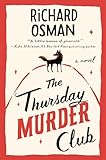
The Thursday Murder Club by Richard Osman
Four residents of a comfortable retirement village in Kent — Elizabeth, Joyce, Ibrahim, and Ron — meet every Thursday to review unsolved cold cases. When a property developer connected to the village turns up dead, they find themselves investigating a live one. Richard Osman, long known as the co-host of British quiz show Pointless, published this debut novel in 2020 and it immediately became the fastest-selling debut crime novel in British publishing history.
What makes it exceptional is not just its warmth — which is considerable — but its intelligence. Elizabeth, the group’s de facto leader, has a past she is careful not to disclose, and Osman deploys her formidable competence for comic and dramatic effect in equal measure. The foursome’s relationship with the local police is one of the funniest ongoing elements in the series. The mystery itself is fairly complex, with multiple threads, and the solution is genuinely earned.
The series now runs to four novels. For a full guide to the reading order and what to expect from each book, see our Richard Osman reading guide.
Still Life by Louise Penny
The first novel in Louise Penny’s Inspector Gamache series, set in the fictional village of Three Pines, deep in the Québec countryside. A beloved resident of the village is found dead in the woods on the morning after Thanksgiving, and Chief Inspector Armand Gamache of the Sûreté du Québec arrives with his team to investigate. The victim was hit by an arrow. No one in the village was known to be an archer.
Penny’s great achievement is Three Pines itself. The village — its bistro, its bookshop, its handful of permanent residents — is one of the most fully realised settings in cozy fiction, a place readers consistently describe as somewhere they wish existed. The community feels earned rather than constructed, and the relationships within it carry real weight. Gamache himself is a different kind of detective: warm, unhurried, interested in moral truth as much as factual truth. The series runs to over twenty novels, each one deepening the world Penny has built.
Still Life won the Arthur Ellis Award for Best First Novel and was the beginning of one of the most successful mystery series of the past two decades. If you enjoy Three Pines, every subsequent book adds to it.
The No. 1 Ladies’ Detective Agency by Alexander McCall Smith
Precious Ramotswe, “traditionally built” and deeply wise, sets up Botswana’s only female-run detective agency in a small office in Gaborone. Her cases tend toward the domestic and social: missing husbands, suspected witchcraft, a question about a child’s parentage. What McCall Smith has built across the now-twenty-plus novels in this series is less a procedural than a portrait of a country and a moral philosophy — Ramotswe approaches every case with patience, an understanding of human weakness, and a conviction that most people, given the chance, will do the right thing.
The books are unusually short and unusually quiet. There is no violence. There is barely any tension in the conventional thriller sense. What there is, in abundance, is human warmth and a meditation on what it means to live well. The first novel is under 250 pages, and it is entirely possible to read two or three of them in a weekend.
The Man Who Died Twice by Richard Osman
The second Thursday Murder Club novel, and by most readers’ reckoning the point at which Osman hit his full stride. Elizabeth is approached by a man she was once very close to — a man the world believes is dead — who is in possession of stolen diamonds and would very much like her help. The rest of the club, inevitably, becomes involved.
Osman deepens every character from the first novel here, particularly Joyce, whose diary entries are among the funniest passages in contemporary British fiction. The plot is more ambitious than the debut, the stakes are higher, and the emotional underpinning — the novel is more seriously interested in aging, loss, and late-life love than it might initially appear — is more fully developed.
Crooked House by Agatha Christie
One of Christie’s own favourite novels, and among her darkest, despite operating entirely within cozy conventions. The Leonides family patriarch is poisoned at the family compound, and the investigation must work through the family itself — a memorably odd collection of personalities who all had access and most of whom had some kind of motive. Christie said she was most proud of this book’s ending, which she kept secret from her publisher until the last possible moment.
The opening fifty pages, which establish the family and the compound, are among the finest scene-setting Christie ever wrote. The book demonstrates that the cozy mode does not require cosiness in the reader’s relationship with the characters — it requires only that the violence remain contained and the puzzle remain central.
Literary Mysteries with a Cozy Feel
These books are firmly in the mystery tradition but carry the weight of literary fiction. The investigations are serious, the prose is ambitious, and the resolutions arrive with a satisfying completeness — but the experience of reading them is closer to atmospheric immersion than genre entertainment.
In the Woods by Tana French
Tana French’s Dublin Murder Squad series begins here, and while it is not a cozy mystery — it is too psychologically dark and too formally ambitious for that — it shares the cozy tradition’s deep investment in place as atmosphere and community as the terrain of investigation. Detective Rob Ryan was, as a child, the sole survivor of a mysterious event in the woods near Dublin. Twenty years later, he is investigating a murder at an archaeological dig in those same woods.
French is a literary novelist who has chosen crime fiction as her form, and the prose throughout is of a quality rarely found in genre fiction. The village and surrounding woodland are rendered with unusual specificity, and the social world of the investigation — the archaeologists, the locals, the history — feels as fully inhabited as anything in Christie or Penny. The novel’s ending deliberately leaves one thread unresolved, which some readers find frustrating. It is an honest choice, not a failure.
For a full guide to the series and how it develops across six novels, see our Tana French reading guide.
Where the Crawdads Sing by Delia Owens
Kya Clark — the Marsh Girl — has raised herself alone in the tidal flats of the North Carolina coast after her family abandoned her one by one. When the town’s golden boy is found dead at the base of a fire lookout tower, suspicion settles on Kya, the outsider the community has always regarded as feral and strange. The novel runs on two timelines: Kya’s life in the marsh across the 1950s and 1960s, and the murder investigation and courtroom sequences in 1969.
This is cozy-adjacent rather than strictly cozy — the social world Owens builds around Kya is more hostile than the typical cozy village, and the novel’s final revelation produces a more complicated emotional response than the genre’s conventions usually allow. But the deep investment in a single community, the puzzle-forward structure, and the warmth Owens brings to the natural world and to Kya herself place it firmly in the family of books that cozy mystery readers tend to love.
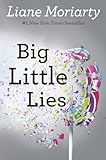
Big Little Lies by Liane Moriarty
Three women on the New South Wales coast — Madeline, Celeste, and Jane — meet at their children’s school, and their interlocking lives lead to a death at the school’s trivia night. Moriarty tells the story through police interviews conducted after the fact, so readers know from the opening pages that someone has died. The tension comes not from whether a crime occurred but from the slow uncovering of what everyone was hiding.
Moriarty is one of the most skilled practitioners of the literary cozy: her domestic settings are warmly realised, her characters are funny and fully human, and the mystery underneath the social comedy is taken seriously. Big Little Lies deals with domestic violence with more precision and intelligence than almost any other popular novel of the past decade, and it does so without abandoning the warmth and readability that define the cozy tradition.
The Last Thing He Told Me by Laura Dave
Hannah Hall’s husband Owen disappears the same day his tech company collapses under the weight of a federal investigation. He leaves her a note that says: “Protect her.” Hannah — who has been stepmother to Owen’s teenage daughter Bailey for only a year — must figure out who Owen really was, what he was hiding, and why someone might want to harm the people he loved. Laura Dave’s novel is the most propulsive book in this section and the one that leans hardest into thriller conventions, but the central relationship — between Hannah and Bailey, two strangers who must trust each other completely — gives it the emotional warmth that places it alongside the cosier titles here.
The plotting is extraordinarily efficient. Dave never lets the pace drop, and the unravelling of Owen’s past identity is constructed with real care. For readers who want the puzzle and the warmth but also a faster heartbeat, this is the pick.
Warm Fiction with Mystery Elements
These books are not mysteries in the genre sense — they do not centre on solving a crime — but they share the cozy tradition’s investment in community, warmth, and the pleasure of revelation. Each contains a mystery of sorts: a question about a character’s past, a secret that gradually comes to light, a puzzle of human behaviour that the narrative slowly assembles. For readers who love cozy mysteries but also want something that sits closer to literary fiction, these are the natural next step.
Remarkably Bright Creatures by Shelby Van Pelt
Tova Sullivan is a recently widowed woman who has worked the night-cleaning shift at the Sowell Bay Aquarium for years. Marcellus is the aquarium’s resident giant Pacific octopus, who observes the humans around him with detached intelligence and narrates alternating chapters with a dry precision that is one of the great pleasures of recent fiction. Cameron is a young man drifting up the Pacific coast in search of his absent father. The three of them are moving toward each other, and toward a mystery about a young man who disappeared thirty years ago.
Van Pelt’s novel works as a mystery — there is a disappearance, a question about what happened, and an eventual answer — but it works equally well as a meditation on grief, connection, and the strange ways that strangers can become essential to each other. Marcellus’s chapters are warm and funny and surprisingly moving. This is a book that cozy mystery readers consistently discover and immediately recommend to everyone they know.
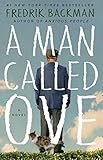
A Man Called Ove by Fredrik Backman
Ove is the most rigid man in his neighbourhood: he checks that the car park barriers are properly closed, enforces the no-driving rule on the residential paths, and regards most of his neighbours as fundamentally incapable of organising their own lives. He is also, since his wife’s death, trying to die. What prevents him — a young Persian woman named Parvaneh, her chaotic family, a stray cat, and a series of neighbours who keep requiring rescue — is the subject of one of the most beloved novels in recent translated fiction.
This is not a mystery at all by genre convention. But Backman structures the novel as a gradual revelation: Ove’s past, his marriage, and the reasons for his rigidity are parcelled out across the narrative in the same way that a cozy mystery parcels out its clues. The reader assembles a picture of a character, and the completed picture is the emotional payoff. For readers who love cozy mysteries because they love that accumulative structure of discovery, A Man Called Ove delivers it with unusual force.
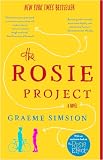
The Rosie Project by Graeme Simsion
Don Tillman is a genetics professor whose social interactions follow protocols he has developed over decades of careful research. He has decided it is time to find a partner and has designed an extraordinarily rigorous questionnaire to identify suitable candidates. Rosie Jarman, who fails almost every criterion, is introduced as a candidate, and she has a project of her own: she wants to find her biological father, a man who was a medical student at the university some years before. Don brings his considerable analytical skills to bear on the problem.
The mystery at the heart of this novel — who is Rosie’s father? — is a genuine puzzle, constructed with care and resolved with a satisfying click. But the novel’s real pleasure is Don himself: his literal-mindedness, his unexpected competencies, and the gradual, entirely unplanned transformation of his emotional world. Simsion writes the whole thing with a lightness that makes it irresistible. Two sequels continue the story with the same warmth.
The Midnight Library by Matt Haig
Nora Seed finds herself, at her lowest point, in a library between life and death — the Midnight Library — where every book contains a version of the life she could have lived if she had made a different choice. She can enter any of them, experience what that life actually feels like, and return to the library before committing to it. The mystery she is trying to solve is not who killed someone but who she actually is: what version of herself, among infinite possible versions, constitutes a life worth returning to.
Haig’s novel is structured around the same accumulative revelation that defines the cozy tradition — the reader assembles a picture of Nora and her choices the way a detective assembles a picture of a case — and it resolves with the same satisfying completeness. It is warm and philosophically serious in equal measure, and it is the kind of book that readers who love the cozy mystery’s fundamental optimism — the belief that the world can be set right — tend to respond to deeply.
The Seven Husbands of Evelyn Hugo by Taylor Jenkins Reid
Aging Hollywood icon Evelyn Hugo summons unknown journalist Monique Grant to write her biography and tells her the truth about her life: seven marriages, a decades-long secret love, and the compromises she made to survive and thrive in a world that did not fully accommodate who she was. The mystery structure is embedded in the narrative — who Evelyn really loved, and why she chose Monique to tell her story — and Reid parcels out the answers with real skill.
This is literary fiction with the pacing of a thriller and the warmth of a cozy. Evelyn’s voice is compelling and morally complex, and the accumulative portrait of her life — assembled piece by piece across the interviews Monique conducts — uses the mystery genre’s tools in service of something more character-driven than plot-driven. For readers who move between cozy mysteries and character-led literary fiction, this is an ideal bridge novel.
A Note on the Cozy-Adjacent Titles
Several of the books in the second and third sections — In the Woods, Where the Crawdads Sing, Remarkably Bright Creatures, A Man Called Ove — are not cozy mysteries in the genre’s formal sense. They have been included because they share the quality that makes cozy mysteries appealing: the world they create feels safe enough to inhabit, the revelations are structured to satisfy rather than disturb, and the ending restores a kind of order, even if it is not the order the reader expected.
The best test for whether a book belongs in this company is not its genre label but the feeling it produces: do you close it with a sense of warmth and resolution, however much it may have moved you along the way? By that measure, all the books here qualify. For readers who are building a cozy reading list and want to expand beyond the genre’s strict boundaries, these are the natural directions to explore.
Where to Start
First-time cozy mystery reader: Begin with The Thursday Murder Club by Richard Osman. It is the most universally loved entry point into the contemporary cozy, and it demonstrates every quality the genre offers at its best.
Literary mystery reader: Begin with Still Life by Louise Penny. The Inspector Gamache series is the most critically acclaimed cozy mystery series currently being written, and Three Pines is one of fiction’s most fully realised settings.
Reader who prefers character to puzzle: Begin with Remarkably Bright Creatures by Shelby Van Pelt. It has a genuine mystery at its heart, but the novel’s real achievement is emotional, and it is one of the most warmly received novels of recent years.
For readers of cozy-adjacent literary fiction: Begin with A Man Called Ove by Fredrik Backman. It shares the cozy tradition’s belief that people are, at bottom, worth caring about — and that the world, properly understood, is a place where that care matters.
For the Best Mystery and Crime Books
For the definitive guide to mystery and crime fiction — from Agatha Christie to Tana French — see our Best Mystery Books of All Time list.
Affiliate disclosure: Links on this site are affiliate links. We earn a small commission at no extra cost to you. This does not influence our editorial recommendations.
Frequently Asked Questions
What makes a book a 'cozy mystery'?
A cozy mystery typically features an amateur detective (not a professional investigator), a contained setting like a small town or village, minimal graphic violence (the murder happens off-page or is described discreetly), and a focus on community, relationships, and the puzzle itself rather than danger or darkness. The tone is warm rather than threatening.
What is the difference between a cozy mystery and a thriller?
Thrillers generate tension through danger to the protagonist — the threat is ongoing and physical. Cozy mysteries generate tension through the puzzle: who did it, how, and why. The reader is in the position of the detective, not the victim. Violence in cozy mysteries tends to happen off-page; the story focuses on the social world of the suspects and the satisfaction of the eventual solution.
Who are the best cozy mystery authors to start with?
Agatha Christie is the originator of the form and remains the best single entry point — start with And Then There Were None or Murder on the Orient Express. For contemporary cozy mysteries, Richard Osman's Thursday Murder Club series is the most widely read series of the past decade. For a literary take on cozy atmosphere, Louise Penny's Inspector Gamache series, beginning with Still Life, is the most acclaimed.
Are cozy mysteries only set in English villages?
The English village setting is the archetype — Agatha Christie's St Mary Mead is its template — but the form has expanded considerably. Contemporary cozy mysteries are set in Scottish islands, Canadian towns, American small cities, and even care homes. What defines the form is not geography but tone: a community that readers come to know, an amateur detective who belongs to it, and a puzzle that resolves without leaving the reader feeling genuinely disturbed.
What are 'cozy-adjacent' books?
Cozy-adjacent is an informal term for literary fiction and character-driven novels that share the cozy mystery's warmth, low-violence approach, and puzzle-forward satisfaction, without strictly fitting the genre's conventions. Books like Remarkably Bright Creatures, A Man Called Ove, and The Midnight Library have mystery elements — or simply a mystery-like structure of revelation and resolution — wrapped in the same comforting register that draws readers to cozies. This post includes both.