20 Best Books to Read on a Plane (That You Won't Want to Put Down)
The best books for a long flight: gripping thrillers, propulsive science fiction, emotional page-turners, and compulsive mysteries that make hours disappear.

The experienced traveller will tell you that the quality of a long flight depends less on the airline than on the book. A gripping novel makes a ten-hour journey feel like four. The wrong book — dense, slow to start, or requiring the kind of concentrated attention that a middle seat at 35,000 feet cannot reliably deliver — makes those same ten hours feel like twenty.
The criteria for a great plane book are specific and differ meaningfully from the criteria for great books in general. A plane book must open immediately: not in the first chapter, not by page fifty, but in the first few pages. It must sustain momentum without demanding that you remember intricate backstory you absorbed between the gate and cruising altitude. It needs to survive interruption — the meal service, the turbulence announcement, the passenger asking to squeeze past — and draw you back in without requiring you to reread three pages to re-establish your bearings. And it should not leave you in ruins. A novel that produces genuine grief is a wonderful thing, but it is not a wonderful thing at passport control.
The books on this list meet all of those criteria. They cover a range of genres — science fiction, psychological thrillers, literary fiction with real pace, mysteries with genuine wit — but each one shares the quality that matters most at altitude: once you start, you will not want to stop.
Quick answer: For a long-haul flight, the single best option is Project Hail Mary by Andy Weir — it opens in the middle of the action, sustains momentum for 480 pages, and ends completely. For psychological thrillers, The Housemaid and The Last Thing He Told Me are both impossible to put down. For something lighter, The Rosie Project or The Thursday Murder Club will carry you through any journey with genuine pleasure.
Science Fiction That Moves Fast
The best science fiction for planes is the kind built on momentum rather than world-building. These are books that introduce a compelling problem within pages and spend the rest of their length solving it — where the ideas are delivered through action and character rather than through dense expository passages that demand rereading.
The Martian by Andy Weir
Mark Watney is an astronaut stranded alone on Mars with limited supplies, no means of communication with Earth, and a mordant sense of humour that keeps the tone from ever becoming oppressive. Weir’s novel is structured as a sequence of problems: Watney identifies a way he might die, works out a solution using the tools and science available to him, and moves on to the next problem. This format is hypnotic on a plane. Each problem-and-solution unit is satisfying in itself, so the book rewards short reading windows as much as long ones. The science is explained clearly and entertainingly, which means no pausing to look things up. Watney’s voice — sarcastic, self-deprecating, genuinely funny — is one of the most irresistible first-person narrators in recent popular fiction. You will arrive at your destination surprised by how much you care about a man growing potatoes in Martian soil.
Project Hail Mary by Andy Weir
If The Martian is Weir’s first great plane book, Project Hail Mary is his masterpiece. Ryland Grace wakes alone on a spaceship with no memory of who he is or why he is there. The answers to both questions arrive gradually, through a structure that interleaves the present-tense mission with flashbacks that restore his memory piece by piece. Weir calibrates the revelations with the precision of a thriller writer: every time you think you understand the full situation, the next chapter adds something that reframes it. The friendship that develops at the novel’s midpoint is one of the most genuinely moving relationships in recent science fiction, and it arrives so naturally from the plot that it never feels engineered. At 480 pages, this is a book you will consider pretending to miss your connection in order to finish.
Ready Player One by Ernest Cline
A vast virtual world called the OASIS has become the primary space where most people spend their lives. Its creator has died and left a hidden treasure — full control of the OASIS and his entire fortune — inside it, in the form of three puzzles built from his obsessive knowledge of 1980s pop culture. Wade Watts, a teenager living in a trailer stacked in a vertical slum called “the Stacks,” is one of millions competing to find it. Cline’s novel is unapologetically propulsive: the central quest structure means there is always a next thing happening, always a new puzzle to solve or adversary to outmanoeuvre. The 1980s nostalgia is so specific and enthusiastic that it functions as entertainment in itself even for readers who didn’t live through the era. This is pure page-turning pleasure at altitude.
Thrillers and Mysteries You Won’t Solve Early
The best thrillers for planes operate on a principle of sustained uncertainty: you believe you understand what is happening, and then you don’t, and then you do, and then you don’t again. The experience of reading them is essentially the experience of not being able to stop. These are also books that survive interruption well — the tension re-engages immediately when you return.
The Housemaid by Freida McFadden
Millie Calloway takes a live-in job as a housemaid for the Winchesters, a wealthy family in a house that looks perfect and feels wrong from the first page. McFadden is a clinical psychiatrist who writes psychological thrillers with the precision of someone who understands how suspense actually works neurologically: she gives you information at exactly the rate needed to keep you reading rather than resting, and withholds the key piece for far longer than you expect. The novel’s structure — narrated from alternating perspectives that complicate each other — means your understanding of who to trust shifts with almost every chapter. It is not a long book, which makes it ideal for medium-length flights, but it is dense with incident. The twist is genuinely unexpected.
The Last Thing He Told Me by Laura Dave
Hannah’s husband Owen disappears the day his tech company becomes the subject of a federal investigation. He leaves a single note: Protect her. Her. His teenage stepdaughter Bailey, who has never much liked Hannah and who clearly knows more than she is saying. Dave structures the novel around the investigative momentum of Hannah piecing together what Owen’s life actually was — and what he was running from. The chapters are short and end on forward hooks, which makes this a book that is almost physically hard to close. The relationship between Hannah and Bailey, which transforms from friction into something deeply protective as the stakes rise, is the emotional engine that elevates this above standard thriller fare.
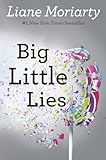
Big Little Lies by Liane Moriarty
The genius of Moriarty’s structure is that you know from the opening page that someone has died at a school trivia night — but you don’t know who is dead or who is responsible, and the novel spends its entire length letting you believe you’ve figured it out before gently repositioning things. Set in a wealthy suburb on the New South Wales coast, Big Little Lies follows three women — Madeline, Celeste, and Jane — whose lives intersect at their children’s primary school and move toward a collision. The social satire is sharp and frequently funny, the characters are fully human in their flaws and their loyalties, and the secret at the novel’s centre is darker and more real than the frothy setting initially suggests. For flights where you want something both entertaining and genuinely substantial, this is close to the ideal combination.
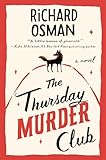
The Thursday Murder Club by Richard Osman
Four residents of a luxurious retirement village in Kent meet every Thursday to discuss unsolved cold cases — until a real murder lands on their doorstep and they find themselves investigating it. Osman’s novel is charming in the best sense: the characters are warm and funny, the mystery is intricate without being exhausting, and the writing has a lightness of touch that makes 400 pages feel like 200. Elizabeth, Joyce, Ibrahim, and Ron are among the most enjoyable ensemble casts in recent British crime fiction, and their combination of intellectual sharpness, accumulated life experience, and cheerful willingness to bend rules is enormously entertaining. This is the book that will make the person in the next seat wonder why you keep smiling.
In the Woods by Tana French
Detective Rob Ryan has a secret: as a child, he was the only survivor of an incident in the woods outside Dublin that killed his two best friends and left him with no memory of what happened. Years later, a girl’s body is found in the same woods, and Ryan is assigned to the case. French’s debut is one of the finest crime novels published in the last two decades: the atmosphere is dense and unsettling, the prose is genuinely literary without sacrificing pace, and the mystery at the novel’s heart refuses the tidy resolution that most crime fiction offers as a matter of contract with the reader. It is not a comfortable book, but it is a compulsive one — the kind that makes you look up from the page and realise the cabin crew are collecting the last of the meal trays.
Emotional Novels With Real Momentum
The distinction between a propulsive novel and a slow one is not a quality judgement — some of the greatest novels are deliberately unhurried. But at altitude, emotional investment needs to be supported by forward movement. These are books that make you care deeply and keep you turning pages to find out what happens next — feeling and plot in equal measure.
Where the Crawdads Sing by Delia Owens
Kya Clark raises herself alone in the tidal marshes of coastal North Carolina after her family gradually abandons her — first her mother, then her siblings, finally her father. She becomes an expert naturalist and, years later, a suspect in the death of a local man whose body is found at the base of a fire tower. Owens weaves between Kya’s childhood and adolescence in the 1950s and 60s and the murder investigation in 1969, and the two timelines create a momentum that neither could sustain alone. The natural world of the marsh is rendered with a specificity that is gorgeous without being slow, and the question of what Kya did or did not do — and whether it matters — is one that holds your attention from the first chapter to the last.
The Midnight Library by Matt Haig
Nora Seed, at the lowest point of her life, finds herself in a library that exists between life and death — the Midnight Library — where each book contains a different version of the life she could have lived had she made different choices. She can open any book and enter that life. Haig’s novel is a philosophical argument dressed as a page-turner, and the structure — trying on alternate lives one at a time, each one illuminating a different regret — creates a forward drive that keeps the philosophical content from feeling heavy. This is a book ideally suited to the contemplative mood that long-distance travel can produce: you spend hours at altitude thinking about where you’ve been and where you’re going, and The Midnight Library meets you in exactly that space.
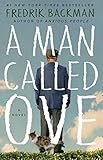
A Man Called Ove by Fredrik Backman
Ove is a curmudgeon of the first order: meticulous, rule-obsessed, profoundly isolated since his wife’s death, and fully intending to join her. What prevents him, repeatedly, is the insistent community of neighbours who keep requiring his grudging assistance. Backman’s novel is structured as a series of interactions that gradually reveal the person Ove was and the losses that produced the person he has become, and the tonal movement from comic irritation to genuine tenderness is executed with precision. At around 330 pages, this is a book you can complete on a medium-length flight, which makes it particularly satisfying: arriving at your destination having finished it — and having cried, quietly, behind dark glasses in the back of the plane — is a complete experience.
Remarkably Bright Creatures by Shelby Van Pelt
Tova Sullivan is a widow in her seventies working the night shift at the Sowell Bay Aquarium, where she has formed an unlikely friendship with Marcellus, a giant Pacific octopus with a philosophical inner monologue and an exceptional ability to observe human beings. When Cameron, a young man drifting through life after his mother’s death, arrives in Sowell Bay looking for a father he never knew, all three lives begin to converge. Van Pelt’s novel is carried by three things: Marcellus’s narration, which is one of the most inventive perspectives in recent fiction; the mystery of what happened to Tova’s son thirty years earlier; and the quiet emotional precision with which Van Pelt renders grief and its long aftermath. It is warm without being saccharine, and the forward pull of the central mystery keeps it moving.
The Seven Husbands of Evelyn Hugo by Taylor Jenkins Reid
Ageing Hollywood icon Evelyn Hugo summons unknown journalist Monique Grant to write her biography, and proceeds to tell the unvarnished truth about her life: seven marriages, a decades-long secret love affair, and the precise calculations she made to become one of the most famous women in the world. Reid controls narrative revelation with the skill of the best thriller writers — the question of who Evelyn really loved, and why she hid it, is managed across the full length of the novel. Each of Evelyn’s seven marriages is its own narrative unit with its own arc and its own emotional payoff, which means the book has a natural episodic momentum that suits plane reading perfectly. You are always at the beginning of something, always wanting to know how this one will end.
The Four Winds by Kristin Hannah
Texas, 1934. Elsa Martinelli has spent her life on her family’s wheat farm, which is now dying in the worst drought the Great Plains has ever seen. When the dust storms begin to bury everything her family has built, she must choose between staying and fighting or taking her children west to California and the uncertain promise of agricultural work. Hannah’s novel is as much historical epic as propulsive fiction: the scale of the Dust Bowl and its human cost is rendered with extraordinary vividness, and the physical hardship of Elsa’s journey west gives the narrative a relentless forward energy. The emotional register is high throughout, but the historical stakes provide the momentum to carry you through even the most harrowing sections.
Feel-Good and Funny
Not every flight calls for a thriller or an emotional workout. Sometimes the right book for a journey is one that simply delivers pleasure — wit, warmth, and the consistent satisfaction of a story that knows exactly what it is trying to do and does it well.
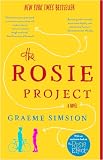
The Rosie Project by Graeme Simsion
Don Tillman is a genetics professor who is exceptionally brilliant, deeply logical, and almost entirely unable to read social situations. He has designed an elaborate questionnaire — the Wife Project — to identify a scientifically compatible romantic partner. Rosie Jarman is a bartender who smokes, is chronically late, and fails every single one of his criteria. She also needs his help to identify her biological father. Simsion’s novel is comic in the best sense: the humour comes entirely from character rather than situation, and Don’s narration — describing social interactions with the precision of a scientist reporting experimental results — produces moments of genuine hilarity. But the novel is also quietly moving, and the care with which it renders Don’s particular way of experiencing the world gives the romance a foundation that is earned rather than assumed.
Daisy Jones and the Six by Taylor Jenkins Reid
Told entirely through oral history — interviews with the members of a fictional 1970s rock band, their managers, their families — Daisy Jones and the Six reconstructs the rise and abrupt breakup of one of the most successful bands of their era. The format is inspired: the competing memories, self-justifications, and selective omissions of the various interviewees produce a portrait of creative collaboration, romantic entanglement, and addiction that feels completely lived-in. Each interview subject has a distinctive voice, which means the novel never drags, and the structural question — what actually happened, and who is telling the truth — keeps you reading with the urgency of a thriller while the material itself is purely pleasurable. Perfect for flights where you want to feel like you have stumbled onto something irresistible.
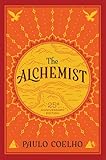
The Alchemist by Paulo Coelho
Santiago, a young shepherd, dreams of treasure hidden near the Egyptian pyramids and sets out from Spain to find it. What he encounters along the way — a king in disguise, an alchemist in the desert, love in a Saharan oasis — is less a plot than a series of encounters designed to teach him how to read the signs the universe offers. Coelho’s fable is short (under 200 pages), luminous in its simplicity, and carries the quality of a story heard for the first time at exactly the right moment. For flights where you want something that asks to be read slowly and thought about rather than consumed at speed, The Alchemist is among the most portable meditations in popular fiction. You will finish it before you land, and sit with it for a long time after.
The best plane books do not simply pass the time — they make the time irrelevant. When you look up to find that the flight map shows two hours to landing, and you were certain it was four, a good book has done exactly what it was supposed to do. Whether you want the cold mathematics of a scientist solving problems on Mars, the dizzy pleasure of a Hollywood icon’s confessions, the chill of a thriller that won’t declare its hand, or the quiet warmth of a Norwegian curmudgeon reluctantly accepting his neighbours, there is a book on this list for your next journey.
The only rule is to start before take-off.
For the Best Thriller Books
For the definitive guide to thriller fiction — psychological thrillers, legal thrillers, and spy novels — see our Best Thriller Books of All Time list.
More Essential Reading Lists
- Best Audiobooks of All Time: Across Every Genre
- Best Funny Books: Novels and Non-Fiction That Are Genuinely Comic
- Best Beach Reads: Summer Fiction Worth the Suitcase Space
Affiliate disclosure: Links on this site are affiliate links. We earn a small commission at no extra cost to you. This does not influence our editorial recommendations.
Frequently Asked Questions
What makes a book good for reading on a plane?
The best plane books hook you within the first few pages, move at a propulsive pace, and are self-contained enough that you don't need to remember details from previous volumes. They reward short reading sessions (during meals, turbulence, landing) and long ones equally. Gripping thrillers, fast-moving science fiction, and compulsive mysteries all work well. Avoid dense literary fiction with slow builds, multi-generational sagas that require constant backstory retrieval, or anything so emotionally heavy that you land in a depleted state.
What is the best book to read on a long-haul flight?
For a long-haul flight of eight hours or more, Project Hail Mary by Andy Weir is close to the ideal plane book: it opens mid-action, the plot moves at speed, the humour keeps the mood light, and it is self-contained. The Housemaid by Freida McFadden and The Last Thing He Told Me by Laura Dave are equally propulsive if you prefer psychological thrillers. All three are difficult to put down at any point in the journey.
Should I read fiction or non-fiction on a plane?
Fiction is generally better for plane reading because narrative momentum does the work of holding your attention through tiredness, engine noise, and interruption. Non-fiction that tells a story — memoir, narrative journalism — can work just as well. Dense analytical non-fiction is harder to engage with in a disrupted environment where you cannot take notes or reread passages with full concentration.
What books are good for a short flight?
For flights under three hours, choose something with very short chapters so you can read in natural segments: The Thursday Murder Club by Richard Osman, Big Little Lies by Liane Moriarty, and The Rosie Project by Graeme Simsion all have brisk, chapter-length scenes that work well in a limited window. A Man Called Ove by Fredrik Backman is also short enough to finish on a medium-length flight.
What books should I avoid on a plane?
Avoid books with very slow openings, complex multi-character casts that require careful tracking, or heavy emotional content that might leave you visibly distressed in a confined public space. Series openers that end on cliffhangers are also risky — landing at your destination with 200 pages left of an unresolved story is its own kind of turbulence. Books that require maps, family trees, or glossaries at the back are better suited to reading at home.