25 Best Audiobooks of All Time (Across Every Genre)
The best audiobooks ever recorded — across fiction, non-fiction, memoir, and thriller. Books that are genuinely better listened to than read, with narrators who transform the experience.
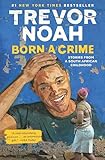
An audiobook is not simply a book in a different format. The best audiobooks are performances — they use voice, pacing, and characterisation to do things that the printed page cannot. Trevor Noah’s reading of Born a Crime is the definitive version of that memoir: his South African accents, his timing, his grief when he reaches certain passages, are inseparable from what the book means. Michelle Obama reading Becoming transforms an already powerful text into something more intimate. The Martian read aloud has a comic timing that requires the narrator’s delivery to land.
Not every book benefits from audio. Dense academic texts, heavily footnoted works, and books with complex visual structures are typically worse in audio than on the page. But the books on this list are all genuinely better — or at least fundamentally different — in audio, and the best of them are among the most absorbing listening experiences available.
Quick answer: For memoir, start with Born a Crime (Trevor Noah narrating) or Becoming (Michelle Obama narrating). For fiction, The Martian or Project Hail Mary. For non-fiction, Sapiens or Atomic Habits.
Best Audiobooks at a Glance
| Book | Author | Best for |
|---|---|---|
| Born a Crime | Trevor Noah | Anyone interested in apartheid South Africa |
| Becoming | Michelle Obama | Anyone interested in American political history |
| The Glass Castle | Jeannette Walls | Readers of narrative memoir, especially those |
| The Martian | Andy Weir | Science fiction readers and anyone who enjoys |
| Project Hail Mary | Andy Weir | Science fiction readers who want accurate science |
| Daisy Jones and the Six | Taylor Jenkins Reid | Readers who love music history, 1970s nostalgia |
| Gone Girl | Gillian Flynn | Readers who want their thrillers to also function |
| Where the Crawdads Sing | Delia Owens | Readers who enjoy literary fiction with a sense |
| The Midnight Library | Matt Haig | Readers who enjoy philosophically engaged fiction |
| A Man Called Ove | Fredrik Backman | Readers who enjoy character-driven comedy |
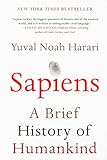
| Sapiens | Yuval Noah Harari | Curious readers of all backgrounds who want |
| Atomic Habits | James Clear | Anyone who wants to build better habits, break |
| The Subtle Art of Not Giving a F*ck | Mark Manson | Anyone exhausted by relentless optimism culture |
| Man’s Search for Meaning | Viktor Frankl | Anyone confronting meaninglessness, loss |
| Thinking, Fast and Slow | Daniel Kahneman | Investors, doctors, lawyers, managers |
| The Psychology of Money | Morgan Housel | Anyone who earns money and wonders why smart |
| The Silent Patient | Alex Michaelides | Psychological thriller readers |
| Big Little Lies | Liane Moriarty | Readers who enjoy domestic fiction with comic |
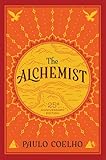
| The Alchemist | Paulo Coelho | Anyone at a crossroads, seeking purpose |
Memoirs Best Heard in the Author’s Voice
Born a Crime by Trevor Noah
The standout audiobook of the past decade, and not only because Noah is one of the finest comedic storytellers alive. The memoir covers his childhood in apartheid and post-apartheid South Africa, his complicated relationship with his extraordinary mother, and what it meant to exist in a country where his very birth was illegal. Noah narrates with a full command of South African English, Zulu, Afrikaans, Xhosa, and several other languages that appear throughout — the multilingual texture of South Africa’s social fabric is audible in a way that footnotes in a printed edition could never replicate. Deeply funny in places and genuinely devastating in others.
Becoming by Michelle Obama
Obama’s memoir is more emotionally resonant in audio because her narration conveys the specific quality of her voice — the warmth, the precision, the occasional catch — that her prose aspires to but cannot fully achieve on the page. The sections about her father’s multiple sclerosis and her mother’s quiet strength are particularly affecting when read aloud. At 19 hours, this is a long audiobook, but it sustains attention throughout.
The Glass Castle by Jeannette Walls
Walls’s memoir about her itinerant childhood with charismatic, irresponsible parents is one of the most gripping memoirs of the past twenty years, and the audio version — narrated by Walls herself — matches the text’s strange combination of affection and clear-eyed honesty. Her voice when describing her parents has a quality of adult understanding and lingering hurt that is more apparent in performance than on the page.
Fiction That Comes Alive in Audio
The Martian by Andy Weir
Mark Watney stranded on Mars, improvising his survival with the tools available and a genuinely exceptional sense of humour about his situation. R.C. Bray’s narration of Watney’s log entries captures the comic timing that makes the novel work — the jokes land in audio in a way they might not quite hit on the page for all readers. Weir’s science is accurate, his problem-solving is genuinely interesting, and the audiobook makes the experience of being marooned with an optimistic botanist-astronaut feel almost appealing.
Project Hail Mary by Andy Weir
Weir’s follow-up is, for many readers, even better than The Martian. A lone astronaut wakes up with no memory on a spacecraft heading away from Earth, and must reconstruct both who he is and what his mission requires. The friendship at the novel’s centre — between the astronaut and an alien he encounters — is one of the most moving relationships in recent science fiction, and Ray Porter’s narration handles the tonal transitions between problem-solving comedy and emotional weight with considerable skill.
Daisy Jones and the Six by Taylor Jenkins Reid
Daisy Jones is written as an oral history — interviews with the fictional band members, intercut with third-party accounts — and the audiobook is recorded as a full cast production with a different narrator for each character. This is the definitive version of the book: the oral history format demands voices, and the cast brings the 1970s rock world to life in a way the printed page approximates rather than achieves. One of the best arguments for the audio format as the primary version of a text.
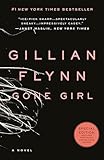
Gone Girl by Gillian Flynn
Dual narration — a male and female voice for Nick and Amy — is essential to Gone Girl’s effect, and the audiobook delivers it well. The unreliable dual perspective, the way each narrator is presenting themselves as well as describing events, is more audible than it is legible. The growing dissonance between the two accounts has a quality in audio that approaches the uncanny.
Where the Crawdads Sing by Delia Owens
Cassandra Campbell’s narration of the North Carolina marshland is one of the best vocal performances of the decade — her Kya sounds exactly as the novel requires: wary, precise, shaped by solitude. The natural world descriptions that some readers find slow in print become atmospheric and immersive in audio.
The Midnight Library by Matt Haig
Carey Mulligan narrates the audiobook of Haig’s novel about the infinite library between life and death, and her performance is exceptional. The emotional directness that defines Haig’s writing is amplified rather than diluted by Mulligan’s delivery, and the central premise — what might your life have been? — lands with more weight when heard than when read.
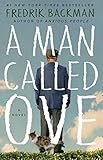
A Man Called Ove by Fredrik Backman
George Newbern’s narration of Ove’s cantankerous Swedish pensioner brings the character’s precise irritability and concealed tenderness to life in ways that work differently in audio than on the page. The humour depends significantly on timing, which Newbern gets right.
Non-Fiction Worth Every Listening Minute
Sapiens by Yuval Noah Harari
Derek Perkins’s narration of Harari’s sweep through 70,000 years of human history has the quality of the best documentary — authoritative, accessible, and genuinely illuminating. At 15 hours, Sapiens rewards the commute in a way few non-fiction audiobooks match. The material rewards multiple listens.
Atomic Habits by James Clear
Clear narrates his own book and his delivery — calm, precise, unhurried — suits the material perfectly. The practical advice in Atomic Habits is arguably easier to retain in audio than in print because the logical structure of each chapter is reinforced by the rhythm of the narration.
The Subtle Art of Not Giving a F*ck by Mark Manson
Roger Wayne’s narration gives the book’s profanity-laced anti-self-help philosophy a deadpan quality that suits it perfectly. The audiobook has a stand-up comedy timing that makes the philosophy go down easier than it might in cold print.
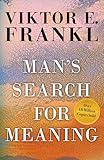
Man’s Search for Meaning by Viktor Frankl
Frankl’s account of survival in Auschwitz and Dachau and his subsequent development of logotherapy is one of the most important books of the twentieth century. The audiobook — narrated by Simon Vance — conveys the specific quality of Frankl’s measured, analytical prose: the way he applies the same careful observation to suffering that he would apply to a scientific problem. Unforgettable.
Thinking, Fast and Slow by Daniel Kahneman
At 20 hours this is a demanding audiobook, but Kahneman’s exploration of the two systems of human cognition rewards the investment. Patrick Egan’s narration is measured and clear. Best approached in chapters rather than as a continuous listen.
The Psychology of Money by Morgan Housel
Chris Hill’s narration of Housel’s essays on financial behaviour is clear and businesslike — the right register for a book that works through short, self-contained chapters. Particularly good for the commute because each chapter is a complete argument that can be absorbed in 15-20 minutes.
Thrillers and Literary Fiction
The Silent Patient by Alex Michaelides
A dual-narrator production gives Theo’s investigation and Alicia’s diary entries different voices, which deepens the unreliable-narrator effect. The twist hits differently when you hear the retroactive wrongness in the narration.
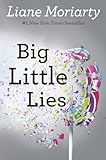
Big Little Lies by Liane Moriarty
Caroline Lee and Davina Porter alternate narration across the three main characters with a comic lightness that suits Moriarty’s domestic satire. One of the most enjoyable thriller audiobooks for readers who want the genre without oppressive darkness.
The Alchemist by Paulo Coelho
Jeremy Irons’s narration of Coelho’s philosophical fable is one of the best-matched pairings of voice and text in the audiobook catalogue. Irons’s measured, slightly grave delivery suits the parable structure perfectly and gives the familiar wisdom a new authority.
For the Best Fiction Books
For the definitive guide to fiction — the greatest novels across literary fiction, classics, and contemporary writing — see our Best Fiction Books of All Time list.
More Essential Reading Lists
Affiliate disclosure: Links on this site are affiliate links. We earn a small commission at no extra cost to you. This does not influence our editorial recommendations.
Frequently Asked Questions
What makes a good audiobook?
The best audiobooks combine a well-written text with a narrator who genuinely enhances it. Full-cast productions, celebrity authors narrating their own memoirs, and stories with strong dialogue all tend to work particularly well in audio. Books with dense footnotes, complex tables, or highly visual elements often work less well.
Is it better to read or listen to books?
Research suggests that comprehension and retention are similar for audiobooks and printed books, with listening sometimes outperforming reading for narrative retention. The format that works depends on the book and the listener. Audiobooks are generally excellent for narrative non-fiction and memoir; less ideal for highly technical or academic texts.
What are the best platforms for audiobooks?
Audible (Amazon) is the largest platform with the widest catalogue and highest production values. Libro.fm supports independent bookshops. Many public libraries offer free audiobooks via Libby/OverDrive. Spotify has a growing audiobook catalogue included in premium subscriptions.
Do authors narrate their own audiobooks?
Some authors narrate their own books and the result can be exceptional — Trevor Noah reading Born a Crime and Michelle Obama reading Becoming are the clearest examples of an author's voice being essential to the experience. Other authors are less natural readers and professional narrators improve on the written-word experience.
What is the best audiobook for a long drive?
For long drives, the best audiobooks are propulsive thrillers (Gone Girl, The Silent Patient), lighter fiction with strong momentum (The Martian, Project Hail Mary), or engaging narrative non-fiction (Sapiens, Born a Crime). Avoid books that require careful attention to detail or that you might fall asleep during.