A New Year's Eve death on a military base in 1990 pulls Major Jack Reacher into a murder investigation as the Cold War ends. Lee Child rewinds the clock to Reacher's army days, delivering a tense, procedural prequel and a rare look at the man in uniform.
Science journalist Annie Murphy Paul synthesizes research showing that human cognition extends beyond the brain into body, space, and relationships — with practical implications for how we learn and think.
A sequel to The Family Upstairs: Rachel Rimmer goes to France to attend the funeral of a woman who may have been her mother — and discovers connections to the dark Chelsea house of her past. Simultaneously, Detective Inspector Samuel Owusu investigates a body found in the Thames. Two investigations converge on the same terrible story.
Seven years after the Shades of Magic trilogy, the four Londons are uneasy. A rebellion stirs, a new Antari emerges, and old favorites return as V.E. Schwab launches a sweeping sequel series about who deserves power and what it costs to hold the worlds together.
The fourth and final Wayfarers novel. When a technical disaster strands a handful of alien travelers together at a remote spaceport, strangers from different species must share days of forced proximity — and discover their commonalities and differences in Chambers's signature gentle science fiction.
NPR foreign correspondent Eric Weiner travels to ten countries ranked at the extremes of happiness surveys — Netherlands, Bhutan, Qatar, Iceland, Switzerland, Thailand, India, Moldova, Britain, and the USA — to investigate what makes some places measurably happier than others.
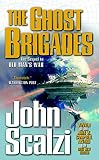
The Special Forces soldiers of the Colonial Defense Forces are the Ghost Brigades — created from the DNA of the dead, with no memories of previous lives. When a traitor's consciousness is inserted into one of them, Scalzi explores identity and loyalty in a worthy sequel to Old Man's War.
Richard Dawkins makes the case that belief in a personal God is not merely wrong but irrational — that the existence of any supernatural creator is a scientific hypothesis that the evidence decisively refutes, and that religion is neither necessary for morality nor harmless in its effects.
Two elderly cousins and a boy go to live in a treehouse in a chinaberry tree rather than conform to the small town's expectations, and the town decides to bring them down. Capote's most gentle novel is a celebration of eccentricity, chosen family, and the prose is some of the most beautiful he ever wrote.
The definitive account of the 1929 stock market crash — the speculative bubble, the collapse, and the economic consequences that shaped modern financial regulation.
Quincy Miller has spent twenty-two years on death row for the murder of a small-town Florida lawyer, a crime he insists he did not commit. When a handwritten letter reaches a small innocence organisation, its director takes on the case — knowing that the real killer is still out there and still dangerous.
Herodotus's account of the Greco-Persian Wars — from Croesus of Lydia through the Persian invasions of Greece, culminating in Marathon, Thermopylae, Salamis, and Plataea. Along the way, extensive digressions on Egypt, Scythia, Babylon, and the customs of peoples across the known world.
The second Merlin novel covers Arthur's childhood in hiding, his education, and his discovery of Excalibur — following Merlin as he watches over the boy who will become High King from a careful, loving distance. Less structurally ambitious than The Crystal Cave but emotionally rich.
Lily Bart, beautiful, brilliant, and financially precarious, navigates New York society's marriage market and slowly loses ground in a game she was not born to win.
Dick Young, staying at his friend's house in Cornwall, takes an experimental drug that sends him back to fourteenth-century Cornwall — where he becomes obsessed with the lives of a long-dead woman and her circle.
Dodie Smith's beloved children's classic, the basis for the Disney films. When their fifteen puppies are stolen by the fiendish Cruella de Vil, the Dalmatians Pongo and Missis set out across the English countryside to rescue them — and the ninety-seven others marked for her fur coats.
Nine financial rules so simple they fit on an index card — save 10–20% of your income, pay off credit cards, invest in low-cost index funds, and ignore financial TV.
Paul Auster's first major work in two parts: A Portrait of an Invisible Man, written after his father's sudden death, an attempt to understand a man he never truly knew; and The Book of Memory, an autobiographical meditation on solitude, fatherhood, memory, and the act of writing.
Ludvik Jahn writes a postcard joking about the Party to impress a girl; the Party expels him, sends him to a labour battalion, and destroys his life — for a joke. Kundera's first novel is his most political: a study of totalitarianism's inability to tolerate irony, and of revenge as a futile response to power.
The fifth and final novel of the main Witcher saga. As the war between the Northern Kingdoms and Nilfgaard reaches its bloody climax and Ciri's destiny draws her between worlds, Sapkowski brings the stories of Geralt, Yennefer, and Ciri to a haunting, melancholy close.
A false Aslan, an ape called Shift, and the Calormenes threaten Narnia in its final days. The seventh and final Narnia chronicle is Lewis's Revelation — an apocalyptic ending to a children's fantasy that is also a theological argument about the nature of reality.
Suspended from the LAPD and ordered into therapy after assaulting his commanding officer, Harry Bosch turns his enforced downtime toward the one case he could never close: the unsolved murder of his own mother, a prostitute killed when he was a boy. The investigation forces him to confront the wound that made him.
The third book of Mary Stewart's Merlin trilogy. With Arthur crowned and Camelot rising, Merlin reaches the height of his powers and the beginning of his decline, narrating the king's early reign, the shadow of Mordred, and the enchantment that will end the wizard's story.
Two love stories set forty years apart — Jennifer Stirling in 1960s London, trapped in a loveless marriage, and journalist Ellie Haworth in the present day — are connected by a cache of passionate letters discovered in a newspaper archive.
Disclosure: Editors Reads is a participant in the Amazon Services LLC Associates Program. When you click an Amazon link and make a purchase, we may earn a commission at no additional cost to you. This helps fund our independent editorial team.
We use cookies to understand how visitors use our site (Google Analytics). No data is collected until you accept.
Privacy Policy