In the four days before Vesuvius erupts in 79 AD, a young Roman engineer named Attilius discovers that the great aqueduct serving the Bay of Naples has been poisoned — and that the corruption he uncovers runs as deep as the mountain's roots.
The Pevensie children return to Narnia to find it transformed: a thousand years have passed, the Narnian world has been suppressed by the Telmarines, and Caspian, the rightful king, is fighting to restore the old ways.
Lestat's rock concert awakens Akasha, the six-thousand-year-old progenitor of all vampires. She emerges with a plan to create a paradise on Earth — by killing most of the men in it. The ancient vampire world must unite or be annihilated.
Locke Lamora and Jean Tannen have fled Camorr for Tal Verrar, where they plan the most ambitious con of their careers — robbing the impregnable Sinspire casino — until a naval commander forces them to become pirates instead.
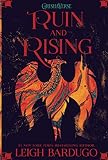
Alina is trapped underground, her power diminished and her allies scattered. To defeat the Darkling and end the Fold, she must find the firebird — the third amplifier — before he does. The fate of Ravka and all of its Grisha rests on a choice that will cost Alina everything.
Mickey Sabbath is 64, a former puppeteer, recently fired, grieving his mistress of thirteen years who has died of cancer. He is considering suicide. The novel is his furious, obscene, grief-saturated attempt to make sense of a life spent in obsessive pursuit of women and pleasure — and the losses that have accumulated.
A time-travel investigator in the twenty-fifth century investigates an anomaly that appears across centuries: 1912 British Columbia, 2020 New York, 2203 on the moon. Mandel's most formally ambitious novel braids pandemic themes with time-travel structure into a meditation on art, simulation, and what human beings owe each other across time.
Grant Cardone argues that everything in life is a sale and that mastering the art of selling — yourself, your ideas, your products — is the most important skill you can develop.
A fictionalized account of Pakistani politics during the Zia ul-Haq era, told through the story of Omar Khayyam Shakil and two families — one a corrupt political dynasty, the other a military one — whose daughters embody the shame the novel's title names. Rushdie's satirical fable is more direct and controlled than either Midnight's Children or The Satanic Verses, and its portrait of how shame operates as political control is as precise as anything he has written.
A linen weaver falsely accused of theft retreats into misanthropy and the hoarding of gold — until his gold is stolen and a golden-haired foundling child appears at his hearth, drawing him slowly back into human life.
A standalone novella set in the Crowns of Nyaxia world, in which a dying woman strikes a desperate bargain with a reclusive vampire to save her plague-stricken village — and finds far more than a cure.
A young bride buys an English seaside house and finds it uncannily familiar — she knows where a hidden door once was and recoils from a memory of a strangled woman on the stairs. Miss Marple warns her to let sleeping murder lie, but the past will not stay buried.
Shep Knacker has saved his whole life for an early retirement in a developing country — until his wife Glynis is diagnosed with a rare and ruinously expensive cancer. A devastating examination of the American healthcare system through the lives of ordinary people it destroys.
The third volume in Ryan Holiday's Stoic trilogy argues that stillness — inner calm and focus — is the competitive advantage that all great achievers across history have cultivated.
The second volume of Memory, Sorrow and Thorn expands the world of Osten Ard while multiple groups pursue their separate quests toward the gathering storm. Simon is growing up; the Storm King's power is growing; and the three swords of the title prophecy become clearer in their significance.
Two strangers meet on a train: Guy Haines, an architect trying to escape his unhappy marriage, and Charles Bruno, a wealthy charming sociopath. Bruno proposes a perfect crime — they will swap murders, each killing the other's problem person. Guy refuses, but Bruno kills his wife anyway, then demands Guy complete the bargain. Highsmith's debut novel and the template for her entire career: the complicity between the guilty and the innocent, the creeping contamination of violence.
New York Times reporter Mike Isaac's definitive account of Uber's spectacular rise and reckoning. From Travis Kalanick's ruthless ambition to the toxic culture, surveillance, and scandals that nearly destroyed the company, Super Pumped is a gripping, deeply reported portrait of Silicon Valley at its most aggressive.
Three years after the trial that made his name, Jake Brigance is handed a stunning case: a dying white millionaire hangs himself and leaves his entire fortune to his Black housekeeper, cutting out his family. The contested will reopens old wounds in a Mississippi town still divided by race.
When Kinsey Millhone's elderly neighbor needs live-in care, a seemingly perfect nurse named Solana Rojas arrives to look after him. But Solana is not who she claims — she is a predator who steals identities and bleeds the vulnerable dry, and Kinsey is the only one who senses the danger before it's too late.
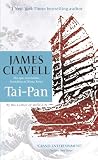
The second volume of Clavell's Asian Saga follows Dirk Struan — the Tai-Pan, supreme leader of a powerful trading company — as he fights to establish the British colony of Hong Kong in 1841, battling rivals, Chinese tongs, and the forces that seek to destroy everything he has built.
Ursula K. Le Guin's collection of five stories and an essay deepening the world of Earthsea. Ranging across the archipelago's history — from the founding of the wizards' school on Roke to the eve of the events of The Other Wind — these tales enrich one of fantasy's most beloved creations.
Eleven interconnected stories set in Firozsha Baag, a Parsi apartment complex in Bombay — a community portrait that introduces many of the themes and the compassionate vision that would define Mistry's later novels.
A curated anthology of Fortune magazine articles spanning five decades, edited by Carol Loomis, that traces Warren Buffett's rise from obscure Omaha investor to the world's most celebrated businessman. The collection captures Buffett's evolving philosophy, sharp wit, and uncommon candor across a remarkable career.
When a colonisation vessel suffers critical damage to its deceleration system, its crew of fifty find themselves unable to slow down — accelerating ever closer to the speed of light, watching millennia pass outside while they age normally within. A masterpiece of hard science fiction that takes Einstein's equations to their most terrifying logical conclusion.
Disclosure: Editors Reads is a participant in the Amazon Services LLC Associates Program. When you click an Amazon link and make a purchase, we may earn a commission at no additional cost to you. This helps fund our independent editorial team.
We use cookies to understand how visitors use our site (Google Analytics). No data is collected until you accept.
Privacy Policy