Joel Greenblatt's Magic Formula investing strategy — a simple, systematic approach to finding good companies at cheap prices that has beaten market averages over time.
David Grann investigates the disappearance of British explorer Percy Fawcett, who vanished in the Amazon in 1925 while searching for an ancient lost civilization he called Z.
Jason wakes up on a school bus with no memory of who he is. Piper and Leo think he's their friend, but nothing about his past is real. Drawn into the world of Greek and Roman demigods, Jason must discover his true identity while leading a quest to free the goddess Hera and prevent an ancient enemy from waking.
David Schwartz argues that the size of your success is determined by the size of your belief — and provides practical techniques for cultivating bigger thinking in every area of life.
Nicholas Urfe, a young Englishman who has taken a teaching position on a remote Greek island, becomes entangled in the elaborate psychological games of Maurice Conchis, a wealthy and enigmatic recluse who stages increasingly disturbing theatrical scenarios — blurring the line between performance and reality.
Lucrezia de' Medici, married at fifteen to Alfonso II d'Este, Duke of Ferrara, suspects her new husband intends to kill her. O'Farrell reimagines the brief life of the young Duchess of Ferrara — likely the subject of Browning's 'My Last Duchess' — through a portrait sitting that becomes a meditation on art, survival, and female agency.
Maggie Tulliver grows up on the River Floss, trapped between her fierce intelligence and her society's refusal of it, between loyalty to her beloved but conventional brother Tom and her own ungovernable desires — Eliot's most autobiographical and psychologically penetrating early novel.
Luna's penal colony population, assisted by a self-aware computer, organises a revolution against Earth's authority in this Hugo Award-winning political science fiction novel.
Moraes 'Moor' Zogoiby narrates his family's baroque history in Bombay across four generations — Jewish, Christian, Muslim, Hindu blood tangled in a story of art, crime, love, and political violence. Rushdie's return to the multigenerational family epic after The Satanic Verses is his warmest and most humorous novel, full of Bombay's culinary, linguistic, and cultural richness.
James Axton, a risk analyst working in Athens in the early 1980s, becomes entangled with a cult that commits murders based on alphabetical correspondences between victims' initials and the place-names where they are killed. DeLillo's most purely thriller-shaped novel is also his most explicit meditation on language: the cult's strange grammar of death is the extreme version of the novel's central question — what is the relationship between words and the world?
Drawing on Stoic philosophy and historical examples, Ryan Holiday argues that the obstacles we face are not impediments to success but the very material from which it is made.
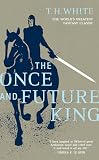
T.H. White's retelling of the Arthurian legends follows Arthur from his education by the wizard Merlin — who lives backwards through time — through the founding of the Round Table, the love triangle with Lancelot and Guinevere, and the final destruction of Camelot.
Andrew Tobias's perennially updated personal finance classic — covering spending, saving, insurance, taxes, and investing with wit, clarity, and common sense.
In 1959, Baptist preacher Nathan Price moves his wife and four daughters from Georgia to the Belgian Congo to serve as a missionary — and the novel, narrated by the five women whose lives he commands, traces the consequences of his rigid certainty against the backdrop of Congolese independence.
Daniel Pink uses surveys, psychological research, and interviews to argue that regret — typically treated as a negative emotion to be minimised — is actually one of our most useful and clarifying feelings, and that engaging with regret honestly can improve decision-making, performance, and sense of meaning.
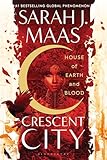
A standalone epic fantasy featuring three women across three continents facing the return of a world-ending dragon, woven through with questions of faith, queerness, and the nature of historical truth.
Albertine is living with the narrator in Paris, and he is consumed by jealousy, surveillance, and the impossibility of knowing another person's inner life — Proust's most claustrophobic and psychologically intense volume.
Martin Amis's debut novel, winner of the Somerset Maugham Award, follows Charles Highway — nineteen years old, vain, bookish, and obsessively calculating — as he pursues and wins Rachel, then discovers that getting what you want is not the same as wanting what you've got.
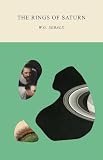
W. G. Sebald's hypnotic account of a walking tour along the Suffolk coast. As the narrator wanders a landscape of ruin and decline, his mind ranges across history, memory, and catastrophe — from silkworms to colonialism to the herring fisheries — in an unclassifiable meditation on time and loss.
In an alternate-history United Isles of America, Joel attends Armedius Academy alongside Rithmatists — students who can bring chalk drawings to life as warriors. When Rithmatist students begin disappearing, Joel and his unconventional mentor Professor Fitch must investigate before the killings reach the school itself.
Rachel Carson's National Book Award–winning portrait of the ocean. With scientific authority and lyrical grace, she tells the story of the sea — its origins, its tides and currents, its hidden depths and teeming life — in one of the most beloved works of nature writing ever published.
A double agent for the Russian embassy in London is ordered to commit a terrorist act that can be blamed on anarchists. Conrad's London novel — simultaneously thriller, black comedy, and study of how political violence is always manipulated by those who profit from its effects.
A year after a boy was murdered on the grounds of a Dublin girls' boarding school, a card appears on the school's anonymous message board: 'I know who killed him.' Detective Stephen Moran sees his chance to make the Murder Squad.
Disclosure: Editors Reads is a participant in the Amazon Services LLC Associates Program. When you click an Amazon link and make a purchase, we may earn a commission at no additional cost to you. This helps fund our independent editorial team.
We use cookies to understand how visitors use our site (Google Analytics). No data is collected until you accept.
Privacy Policy