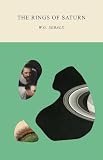
Editors Reads Verdict
A singular, mesmerizing blend of travelogue, essay, history, and memoir. Sebald's melancholy meditation on a Suffolk walk becomes a profound rumination on decay, memory, and the catastrophes of history — unlike anything else in literature.
What We Loved
- A wholly original blend of travel, essay, history, and memoir
- Hypnotic, melancholy, endlessly associative prose
- Profound rumination on decay, memory, and history
Minor Drawbacks
- Plotless and digressive — a walk, not a story
- Demands patient, unhurried, attentive reading
Key Takeaways
- → Every landscape is layered with the ruins of the past
- → History is, in part, a long record of decline and catastrophe
- → The wandering, associative mind is its own form of knowledge
| Author | W. G. Sebald |
|---|---|
| Publisher | New Directions |
| Pages | 296 |
| Published | January 1, 1995 |
| Language | English |
| Genre | Literary Fiction, Essays |
| Difficulty | Advanced |
| Best For | Readers drawn to unclassifiable, essayistic literary work and melancholy meditations on history, memory, decay, and place. |
How The Rings of Saturn Compares
The Rings of Saturn at a glance against 3 similar books readers weigh alongside it.
| Book | Author | Rating | Best for |
|---|---|---|---|
| The Rings of Saturn (this book) | W. G. Sebald | ★ 4.3 | Readers drawn to unclassifiable, essayistic literary work and melancholy |
| Austerlitz | W. G. Sebald | ★ 4.4 | Readers of serious literary fiction drawn to melancholy, formally daring |
| The Reader | Bernhard Schlink | ★ 4.2 | Readers of literary fiction interested in postwar Germany, moral ambiguity, and |
| The Years | Annie Ernaux | ★ 4.2 | Literary fiction readers comfortable with formal experimentation |
A Walk Through Time
W. G. Sebald’s The Rings of Saturn, published in German in 1995, is one of the most original and mesmerizing books of the late twentieth century — an unclassifiable work that takes the simple frame of a walking tour along the Suffolk coast and transforms it into a vast, melancholy, endlessly associative meditation on history, memory, decay, and the catastrophes of the modern world. Sebald, the German émigré who lived and taught in England, invented a form entirely his own: prose that blends travelogue, essay, history, biography, memoir, and fiction into a single hypnotic flow, illustrated with grainy black-and-white photographs, circling obsessively around loss and the passage of time. The Rings of Saturn is perhaps the purest expression of that form, a book that is impossible to categorize and impossible to forget.
The premise could not be simpler: the narrator, a Sebald-like figure, undertakes a walking tour through the county of Suffolk in eastern England, partly to dispel an emptiness that has overtaken him. But the walk is merely the thread on which everything else is strung. As he wanders through a landscape of faded seaside towns, eroding coastline, ruined estates, and emptied fishing villages — a region in visible decline — his mind ranges freely across an astonishing array of subjects, each suggested by something he sees or remembers: the herring fisheries and the natural history of the herring; the silkworm and the history of silk; the Battle of Sole Bay; the writer Thomas Browne and the fate of his skull; Joseph Conrad and the horrors of the Belgian Congo; the Taiping Rebellion; the destruction of the Suffolk countryside; colonialism, war, and the long human record of violence and ruin. The book proceeds by association and digression, drifting from the present landscape into history and back, accumulating into a profound rumination on entropy, memory, and the catastrophes that underlie the apparently peaceful surfaces of the world.
The Singular Sebald Method
What makes The Rings of Saturn extraordinary is the seamlessness and power of its method. Sebald’s prose — in Michael Hulse’s fine translation — has the same hypnotic, grave, flowing quality as in Austerlitz: long, intricate, melancholy sentences that carry the reader through history and reflection in an unbroken meditative drift. The genius of the book lies in its associative structure, the way one subject flows into another through unexpected but resonant connections, so that a herring leads to a battle, a battle to a writer, a writer to a genocide, building a vast web of correspondences around the central themes of decline, destruction, and the persistence of the past. The photographs deepen the effect, lending the meditations the weight of documentary evidence while subtly unsettling the boundary between fact and fiction, memory and invention.
Beneath the wandering surface runs a coherent and profound vision. The Rings of Saturn is, finally, a meditation on entropy and catastrophe — on the way all human works and natural forms tend toward ruin, on the layers of violence and loss buried beneath the placid English countryside, on memory and forgetting, on the melancholy knowledge that everything declines and passes. Sebald finds in a quiet coastal walk the whole sorrowful history of the modern world, and renders it with a tenderness, erudition, and gravity that are unmistakably his own. It is a deeply melancholy book, but also a strangely consoling one, finding in attention, memory, and the act of writing a way of honoring what has been lost.
The Demands of the Drift
Honesty requires noting, as with all of Sebald, that The Rings of Saturn is plotless, digressive, and demanding. There is no story in the conventional sense, no characters to follow, no narrative arc — only the walk, the wandering mind, and the accumulating meditations. The book proceeds by association rather than plot, and its long, unhurried sentences and constant historical digressions require patient, attentive, unhurried reading. Readers who need narrative momentum, drama, or resolution will find it static and diffuse; this is a book to be absorbed slowly and contemplatively, surrendered to rather than consumed.
This is, again, inseparable from its nature and its rewards: the drift is the book, enacting the wandering of memory and the layering of history. But it does mean The Rings of Saturn asks for a particular kind of reading — slow, receptive, willing to follow Sebald wherever his associations lead. Those who can give themselves to it find one of the most distinctive and rewarding experiences in modern literature; those seeking a conventional narrative should be prepared for its unconventional shape.
A Singular, Unforgettable Book
The Rings of Saturn stands as one of W. G. Sebald’s masterpieces and one of the most original works of recent literature — a singular, mesmerizing blend of travelogue, essay, history, and memoir that turns a melancholy Suffolk walk into a profound meditation on decay, memory, and the catastrophes of history. Plotless and demanding, it rewards the patient reader with a reading experience unlike any other: hypnotic, erudite, deeply melancholy, and quietly profound. It is a book to be read slowly and returned to, and one that permanently alters how you see a landscape, a ruin, or the passage of time.
For readers drawn to unclassifiable, essayistic literary work and to melancholy meditations on history and memory, The Rings of Saturn is an essential and unforgettable read — the work of one of the most original minds in modern letters.
Final Verdict
Our rating: 4.3/5 — A singular, mesmerizing blend of travelogue, essay, history, and memoir. Sebald’s melancholy meditation on a Suffolk walk becomes a profound rumination on decay, memory, and the catastrophes of history. Plotless and demanding, but hypnotic, erudite, and unlike anything else in literature.
For more meditations on memory and history, see Austerlitz, The Reader, and The Years.
Frequently Asked Questions
What is "The Rings of Saturn" about?
W. G. Sebald's hypnotic account of a walking tour along the Suffolk coast. As the narrator wanders a landscape of ruin and decline, his mind ranges across history, memory, and catastrophe — from silkworms to colonialism to the herring fisheries — in an unclassifiable meditation on time and loss.
Who should read "The Rings of Saturn"?
Readers drawn to unclassifiable, essayistic literary work and melancholy meditations on history, memory, decay, and place.
What are the key takeaways from "The Rings of Saturn"?
Every landscape is layered with the ruins of the past History is, in part, a long record of decline and catastrophe The wandering, associative mind is its own form of knowledge
Is "The Rings of Saturn" worth reading?
A singular, mesmerizing blend of travelogue, essay, history, and memoir. Sebald's melancholy meditation on a Suffolk walk becomes a profound rumination on decay, memory, and the catastrophes of history — unlike anything else in literature.
Ready to Read The Rings of Saturn?
Check the current price on Amazon.
Check Price on Amazon (paid link)Prices and availability are subject to change. See Amazon for current price.
Review last updated: