Easter in Three Pines: a séance in the old Hadley house ends in death, and Chief Inspector Gamache must determine whether it was fright, murder, or something more sinister. The third Gamache novel deepens the series' psychological and spiritual preoccupations.
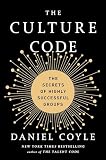
Coyle investigates what makes the world's best groups — the Navy SEALs, Pixar, the San Antonio Spurs, the US Women's Volleyball team — tick. The answer is culture: three specific skills that successful groups share and that anyone can learn to build.
Roland Deschain reaches the Dark Tower at last. Every thread of the series converges: the Crimson King rages on the Tower's balcony, the Beams must be defended, Patrick Danville's strange gift is the key to everything, and the fates of every character in the ka-tet are decided. King includes a foreword warning readers that the destination may not be what they expect — a warning that has generated debate ever since.
Johnny Smith wakes from a four-year coma to discover he has psychic powers — a touch reveals things about people and events. When he shakes the hand of a rising politician and sees a future of nuclear catastrophe, Johnny faces the most impossible moral question: is it right to kill one person to prevent mass destruction?
Giovanni Boccaccio's fourteenth-century masterpiece. As the Black Death ravages Florence, ten young men and women flee to the countryside and pass the time telling stories — one hundred tales of love, wit, fortune, lust, and folly that founded the European prose tradition.
1634. A merchant ship departs Batavia for Amsterdam carrying a disgraced detective, his bodyguard, a mysterious prisoner, and a demon that appears to be killing the passengers. Samuel Pipps must solve an impossible mystery from the ship's hold while his bodyguard Arent Hayes investigates on deck above. Turton's locked-room mystery at sea.
In a nanotechnology-driven future of neo-Victorian societies, a young girl from the underclass receives an illegal interactive primer that teaches her to think, adapt, and eventually to lead a revolution.
Rin survived the Burning of Speer, but the gods she channelled nearly destroyed her mind. Now she fights for the Nikara Republic against an Imperial loyalist faction — until she discovers the Republic has its own agenda, and her foreign allies have a plan for the south that looks disturbingly like colonialism. The Poppy War series darkens further.
Burton Malkiel and Charles Ellis distil a lifetime of investing wisdom into five simple elements: save, index, diversify, avoid complexity, and keep costs low.
Sam Hill is born with ocular albinism, giving him red eyes that make his childhood in a Catholic community of 1960s Northern California an endless trial of cruelty, faith, and unexpected friendship — and set the course of a life he must learn to claim.
The second novel of Pat Barker's Regeneration Trilogy. London, 1918: Billy Prior, recovered enough to return to intelligence work, is caught between his duties and his sympathies as the state turns on pacifists and homosexuals, while Dr. Rivers treats minds the war has split.
Magic is draining out of Earthsea. Wizards are forgetting their spells. Ged and the young prince Arren must sail to the farthest reaches of the world to find the source of the wound in the world — and the entity responsible for it. The concluding volume of the original Earthsea trilogy is Le Guin's meditation on death, courage, and the limits of power.
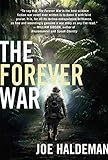
A soldier fighting an interstellar war discovers that time dilation means each tour of duty lasts years, while centuries pass at home — making Earth progressively unrecognisable.
The third and final volume of Gerald Durrell's Corfu trilogy, completing the story of the family's years on the Greek island before the outbreak of World War II drove them back to England.
Nabokov's last Russian-language novel follows young émigré poet Fyodor in 1920s Berlin as he writes, falls in love, and constructs an audacious biography of Russian literary critic Nikolai Chernyshevsky — an account of what it means to be a Russian writer in exile.
A woman disappears from a container ship. Her half-brother tends bar at a remote hotel on Vancouver Island. A financier runs a Ponzi scheme that will destroy hundreds of lives. Mandel's companion novel to Station Eleven weaves together haunted characters across a story of fraud, ghosts, and the way money makes certain people invisible.
Punished by Zeus, the god Apollo crashes to Earth as a flabby, mortal teenager named Lester Papadopoulos. Rick Riordan launches The Trials of Apollo with a vain, hilarious narrator who must claw back his divinity through humility, humor, and a return to Camp Half-Blood.
The third Housemaid novel follows Millie Calloway into a new domestic situation — a family with secrets that rival any she has encountered before. As Millie uncovers the truth about the Calloway household, she finds herself in danger of becoming the victim rather than the survivor, with a child's life tangled in the web.
Richard Tull is a failed literary novelist; his best friend Gwyn Barry is a massively successful one. Their friendship — strained for years by the disparity in their careers — collapses when Richard's envy produces a campaign of sabotage as petty, unsuccessful, and undignified as Richard himself.
Children with telekinetic and telepathic abilities are abducted from their homes and taken to a facility in rural Maine called The Institute, where their gifts are exploited for purposes they cannot initially understand. Twelve-year-old Luke Ellis, gifted beyond any previous subject, becomes the unlikely center of a resistance.
Pinker argues that language is a biological instinct — an evolved faculty, not a cultural invention. Weaving together linguistics, cognitive science, evolutionary biology, and neuroscience, he makes one of the most compelling cases in popular science.
When a local antiques dealer is murdered and a consignment of heroin goes missing, the Thursday Murder Club has a new case. But this investigation is personal — one of their own is directly connected to the dead man — and the answers they find will test the friendship at the heart of the group.
As Florida is progressively submerged by increasingly powerful hurricanes driven by climate change, Wren — born during a storm, named for the storm — grows up in a world in retreat, learning what persists and what must be abandoned as the state she knows slowly disappears beneath the water.
Secret Service agent Scot Harvath's first mission begins when the President of the United States is kidnapped on a ski trip and all the agents protecting him are killed — except Harvath.
Disclosure: Editors Reads is a participant in the Amazon Services LLC Associates Program. When you click an Amazon link and make a purchase, we may earn a commission at no additional cost to you. This helps fund our independent editorial team.
We use cookies to understand how visitors use our site (Google Analytics). No data is collected until you accept.
Privacy Policy